Dwi Wanna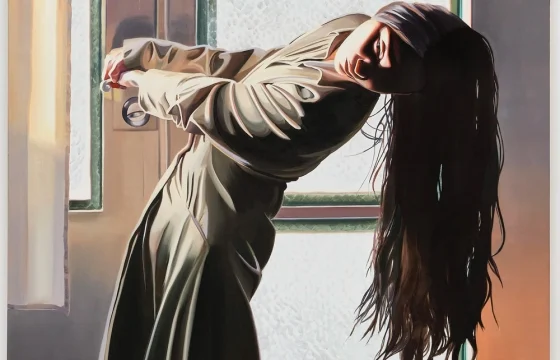
Main Facts: A Convergence of Light and Stillness
On the occasion of the vernal equinox—that celestial moment of perfect equilibrium between day and night—the New York art scene welcomes a profound new perspective from Los Angeles-based painter Molly Bounds. Her debut solo exhibition in New York, titled The Light That Loses, The Night That Wins, has officially opened at Mrs. gallery, located at 6040 56th Drive.
The exhibition serves as a definitive milestone in Bounds’ burgeoning career, marking her second collaboration with the gallery following a well-received presentation at The Armory Show in September 2025. Running through May 2, 2026, the exhibition invites viewers into a curated space where light acts not merely as an illumination tool, but as the central protagonist. Through a series of evocative, psychologically charged paintings, Bounds explores the threshold between stillness and urgency, capturing the precise moment when internal contemplation gives way to the inevitable passage of time.
Chronology: From The Armory to the Vernal Equinox
The trajectory leading to this solo exhibition has been one of deliberate, steady growth. Following her impactful debut at The Armory Show in the fall of 2025, which established Bounds as a voice capable of blending figurative intimacy with atmospheric tension, the artist retreated to her studio to refine the thematic concerns that would become the backbone of The Light That Loses, The Night That Wins.
The timing of the exhibition’s opening—coinciding with the vernal equinox—is far from incidental. It reflects the artist’s preoccupation with transition. Much like the shift from the dormancy of winter to the vitality of spring, Bounds’ subjects occupy a space of flux. The exhibition invites the public to witness this transformation in real-time, bridging the gap between the internal, often solitary experiences of the subject and the broader, external cycles of the natural world.
Supporting Data: An Anatomy of Interiority and Escapism
Bounds’ work functions as a psychological map, tracing the movements of the mind when the body is at rest. Her compositions are characterized by a duality: the domestic sanctuary and the encroaching unease of the unknown.
The Psychology of the Interior
In pieces such as The Armchair, Bounds demonstrates a masterful use of light to construct narrative tension. The painting juxtaposes the warm, inviting glow of a hearth against the sterile, cold blue of an early evening sky visible through a window. The viewer is confronted with a figure whose slumped posture suggests repose, yet whose expression reveals a deeper, more active state of mind. As the eye wanders across the canvas, the lush textures of the interior upholstery begin to appear frayed, mirroring the unraveling of the subject’s internal state. It is a portrait of "dwelling"—of scheming, planning, and existing in a state of purgatorial bliss.
The Influence of the Old Masters
The technical rigor of Bounds’ work is frequently compared to the luminism of the 17th-century masters. In Privacy Glass, the influence of Georges de La Tour is palpable. By utilizing glass as a medium for light diffusion, Bounds obscures the subject’s features, forcing the viewer to engage with the silhouette and the draped fabric. This technique echoes the vanitas tradition, where the interplay of shadow and light serves as a memento mori—a reminder of the fleeting nature of time and the eventual, inevitable descent into darkness.
The Landscapes of Renewal
Contrasting the stifling intimacy of her interior portraits, Bounds offers a counter-narrative through her landscapes. Works like It Sings in Me and Among of Green, Again depict figures navigating expansive, vibrant green hills under a relentless sun. These scenes operate as a form of "curated escapism." Whether these landscapes are grounded in reality or are the product of the artist’s imagination is, according to Bounds, secondary to the intent: the cultivation of optimism. These works communicate a sense of urgency, celebration, and the possibility of rebirth, serving as the necessary antidote to the pensive, dark interiors of her other works.
Official Responses and Curatorial Perspectives
The exhibition has been met with critical intrigue, with curators noting the rare synchronicity between Bounds’ technical ability and her conceptual depth. According to representatives at Mrs. gallery, the decision to host the exhibition during the spring months was intended to mirror the "forward movement of time" that permeates every canvas in the show.
"Molly Bounds does not just paint figures; she paints the atmosphere that surrounds their thoughts," one gallery spokesperson noted. "By placing the viewer in front of these works on the vernal equinox, we are forcing an encounter with the same cycle of change that defines the human experience. It is a reminder that even in the most dormant states, there is an inherent potential for change."
The artist herself has spoken of the "unrelenting forward movement of time" as the silent engine of her practice. For Bounds, the "light that loses" is not a defeat, but a necessary surrender to the darkness that precedes a new dawn. This cyclical philosophy is central to the show’s reception, positioning Bounds as an artist who is deeply attuned to the rhythms of the natural world as much as the internal landscapes of the psyche.
Implications: The Future of Figurative Painting
The implications of The Light That Loses, The Night That Wins extend beyond the immediate aesthetic success of the exhibition. As figurative painting continues to evolve in the mid-2020s, artists like Bounds are redefining the genre by moving away from purely representative art toward a more visceral, psychological inquiry.
The Shift Toward Liminality
Bounds is part of a growing movement of contemporary painters who prioritize the "liminal moment"—the space between events. By focusing on the quiet, often ignored segments of daily life, she challenges the viewer to find meaning in the mundane. This focus on stillness as a site of intense activity creates a unique engagement model: the painting is not a static object, but a prompt for the viewer to reflect on their own periods of transition and contemplation.
Economic and Cultural Impact
The success of her Armory presentation and the anticipation surrounding this solo show suggest a significant market interest in works that prioritize mood and atmosphere over didactic storytelling. For collectors and institutions alike, Bounds’ ability to bridge the gap between classical art history and modern, existentialist themes positions her as a pivotal figure in the current landscape.
A Renewed Interest in Light
Technically, the exhibition highlights a renewed interest in the physics of light within contemporary painting. By exploring how light can conceal as much as it reveals, Bounds invites a technical appreciation for the medium that is rare in an era dominated by digital imagery. Her work demands that the viewer slow down, observe the subtle shifts in hue, and acknowledge the complexity of the shadows that define our reality.
Conclusion
The Light That Loses, The Night That Wins is more than an exhibition; it is an invitation to engage with the inevitable cycles of our own lives. Through her evocative use of light, color, and figure, Molly Bounds has crafted a body of work that is as intellectually stimulating as it is emotionally resonant.
As the exhibition continues through the spring at the Mrs. gallery location on 56th Drive, it stands as a testament to the power of the painted image to hold time still, even as the world around it moves relentlessly forward. Whether through the claustrophobic tension of an interior or the boundless optimism of a sun-drenched hill, Bounds asks the viewer to consider the nature of their own existence: the moments we lose to the night, and the moments we reclaim in the light of a new day. For those seeking a deeper connection to the human condition, this exhibition is an essential pilgrimage.

 Asep Darmawan
 Layla Zulfa