Ammar Sabilarrohman
The modern video game industry is currently weathering a storm of unprecedented intensity. With widespread studio closures, massive waves of layoffs, and a growing disconnect between the creative visions of developers and the mandates of their corporate overlords, the landscape of interactive entertainment has never felt more volatile.
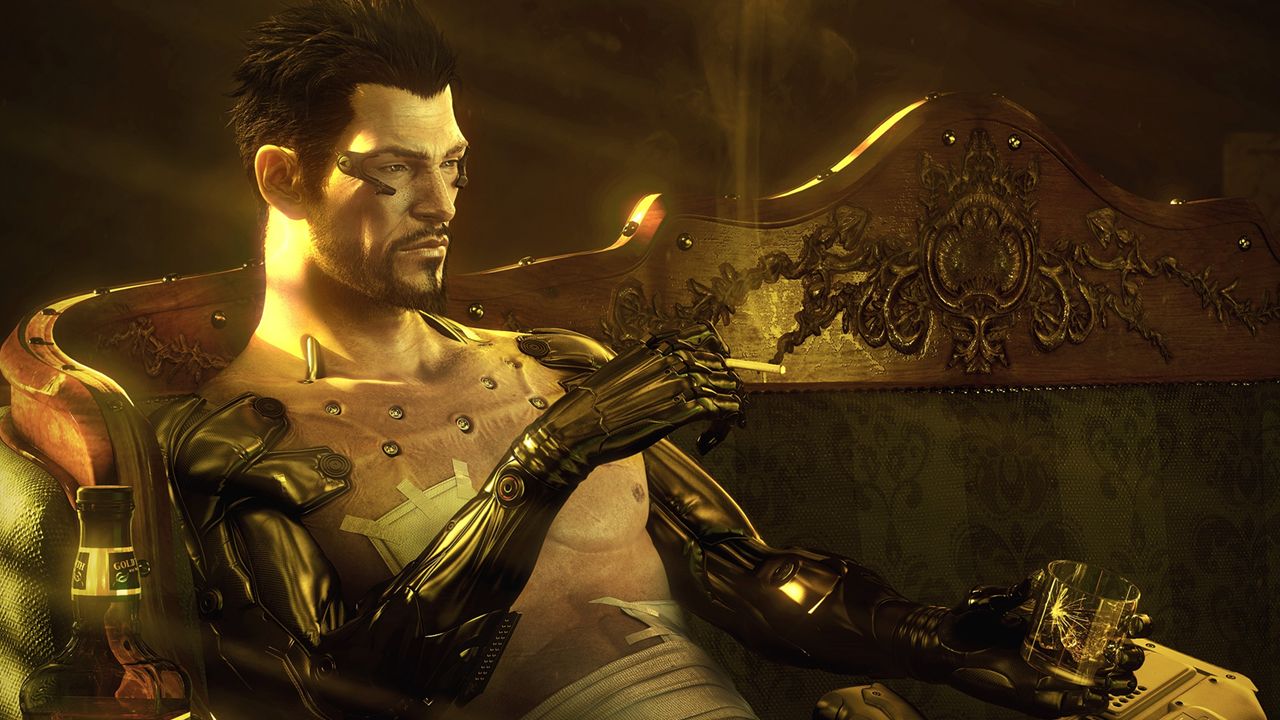
Amidst this turmoil, Stephane D’Astous, the founder and former general manager of Eidos Montreal—the studio responsible for the critically acclaimed Deus Ex reboots—has offered a sobering diagnosis. Speaking in a recent interview with Thunderpick, D’Astous posits that the shift in the gaming industry over the past 15 years is not merely a cycle, but a fundamental transformation of corporate DNA. The industry, he argues, has pivoted from a passion-driven pursuit of creative excellence to a cold, calculation-heavy environment dominated by "Excel-driven" decision-makers.
The Evolution of the 800-Pound Gorillas
To understand the current crisis, one must look at the shifting power dynamics of the last decade and a half. Fifteen years ago, the landscape was defined by traditional publishers who, while still profit-oriented, maintained a certain proximity to the medium. Today, the scale of capital involved has moved into the realm of sovereign wealth funds and massive global conglomerates.
"The big players 15 years ago are not necessarily the big players today," D’Astous noted. He points to the rise of Tencent—which, while present in the mid-2000s, has since become an all-encompassing titan—and the entrance of entities like Saudi Arabia’s Public Investment Fund (PIF). The latter has invested billions into companies like EA, Take-Two, and Capcom, turning major publishers into acquisition targets rather than autonomous entities.
This consolidation has led to a fundamental change in the "decision-making DNA." When companies were smaller and more focused on game-making, executives were often veterans of the medium. Today, the influx of massive, diversified capital means that those at the helm are often tasked with satisfying a different kind of shareholder—one interested in short-term quarterly growth rather than the long-term health of an intellectual property or a creative team.
A Chronology of Corporate Consolidation and Crisis
The transition from the "Passion Era" to the "Spreadsheet Era" did not happen overnight. It is a story told through a decade of shifting financial strategies.
- 2010–2015: The Rise of Live Services: The industry began experimenting with recurring revenue models. As studios realized that long-term engagement could yield higher profits than a one-time unit sale, the shift toward "games as a service" (GaaS) began.
- 2016–2020: The Consolidation Gold Rush: Companies like Embracer Group began their aggressive, debt-fueled acquisition spree, buying up dozens of studios to build a massive library of assets, often without a clear roadmap for how those studios would function together.
- 2020–2022: The Covid-19 Investment Spigot: The pandemic caused a surge in gaming engagement, leading to a massive injection of venture capital. According to D’Astous, this was a turning point for the worse. Money was poured into projects that lacked viable concepts, creating a bubble of unsustainable production budgets.
- 2023–Present: The "Great Correction": As the bubble burst, the industry faced a harsh reality. With interest rates rising and project costs ballooning, companies began aggressive cost-cutting measures, leading to the layoff of over 20,000 game industry workers in 2023 and 2024 alone.
Supporting Data: The Cost of Unrealistic Ambition
The disconnect between corporate expectations and the reality of software development has become a recurring theme in industry reporting. D’Astous highlights an alarming trend: executives frequently demand "Witcher 3-like" quality on a fraction of the budget and in less than half the time, often with newly assembled, inexperienced teams.
This "magical thinking" is not just poor management; it is a mathematical failure. Developing an AAA game today can cost upwards of $200 million and take five to seven years to complete. When corporations attempt to truncate this process to satisfy investor expectations, the result is often a buggy, unfinished product that fails to meet sales targets, leading to the very layoffs that the company was trying to avoid in the first place.
Furthermore, the "Covid-19 money" that D’Astous referenced has created a backlog of projects that are currently hitting the market. As these titles fail to meet the hyper-inflated expectations of their corporate backers, we are likely to see even more turbulence in the near future. The industry is currently paying the price for a period of "easy money" that fueled reckless expansion.
Official Responses and Industry Sentiment
While most major publishers remain tight-lipped about the internal shift in philosophy, the trend is visible in the way they communicate with shareholders. Earnings calls have shifted from discussing "gameplay innovation" and "creative direction" to focusing on "monetization strategies," "long-term retention metrics," and "operational efficiency."
The gaming community has been vocal in its pushback. The backlash against "boneheaded" decisions—such as the shuttering of legendary support studios like Sony’s Bluepoint (in some capacities) or the sudden closure of studios after a single failed project—has created a rift between fans and the industry. When corporations prioritize "golden parachutes" for departing CEOs while mass-laying off the staff who actually built the products, the optics are disastrous.
Implications for the Future of Gaming
What does this mean for the future of the medium? The current trajectory suggests a bifurcated market.
On one side, we have the "Mega-Blockbusters," developed by massive, risk-averse teams under the control of global conglomerates. These games will likely become increasingly homogenized, featuring safe, proven mechanics designed to maximize in-game spending.
On the other side, we have the "Indie Renaissance." As major studios become more bureaucratic and risk-averse, the creative talent is increasingly migrating to the independent sector. In this space, the "passion-driven" development that D’Astous longs for is still alive and well. Games like Hades, Balatro, and Outer Wilds prove that the desire for high-quality, singular creative visions hasn’t disappeared—it has simply moved away from the corporate giants.
However, the middle class of the gaming industry—the mid-sized studios that produced the AA games of the 2000s—is effectively being erased. These were the training grounds for the industry’s greatest talent. Without them, the pipeline of experienced developers is drying up, leaving a dangerous void in the industry’s talent pool.
Conclusion
Stephane D’Astous’ warning is clear: the gaming industry has reached a point of institutional maturity that has stripped away much of its youthful, creative spontaneity. While it is true that the "good old days" were never as perfect as memory suggests, the current environment is objectively more hostile to the artistic process.
The industry is at a crossroads. It can continue down the path of maximizing shareholder value at the expense of its employees and its product, or it can attempt to find a balance where business stability and creative passion can coexist. As it stands, the "Excel-driven" approach is currently winning the battle, but at the risk of losing the very audience that keeps the industry alive. For those who care about the future of games, the current era of "bad news" and "boneheaded decisions" serves as a stark reminder that when the passion dies, the pixels lose their meaning.


 Asro
Asro
 Muslim