Pevita Pearce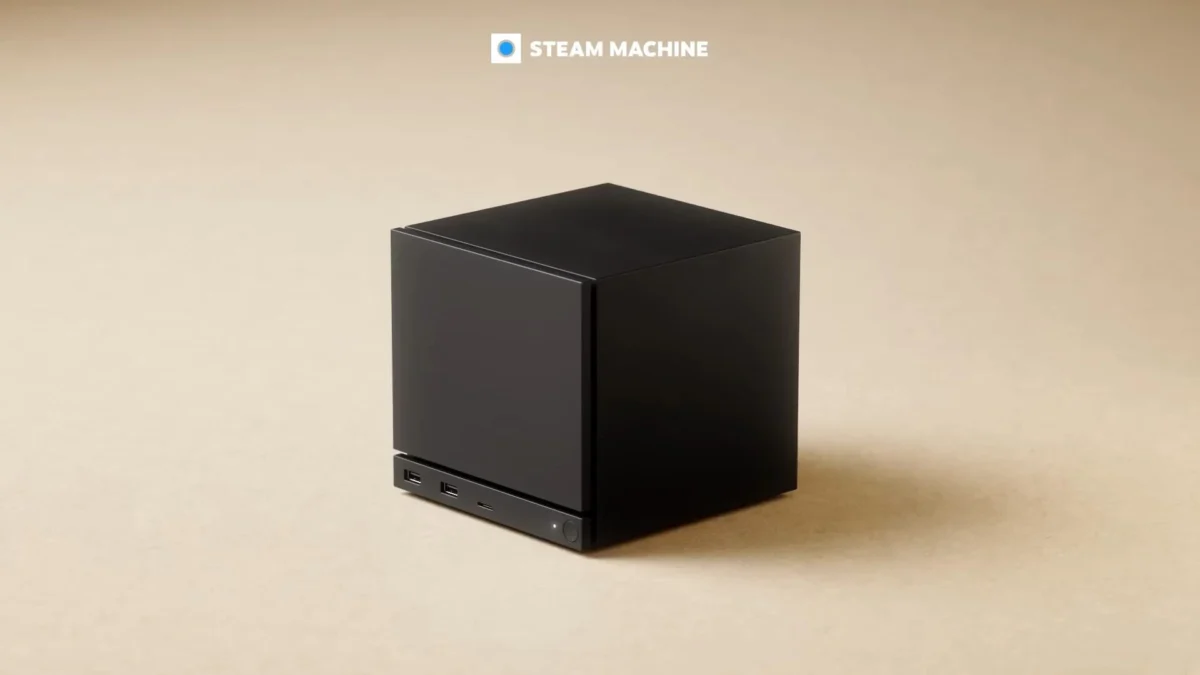
REDMOND, WA – June 3, 2026 – Valve Corporation, the enigmatic gaming giant behind Steam and iconic franchises like Half-Life and Portal, has officially announced the launch date for its highly anticipated Steam Machine. Set to debut on June 30, 2026, the device aims to bridge the gap between high-end PC gaming and the casual living room console experience. With two distinct models unveiled and a unique reservation system in place, Valve is poised to make a significant play in the evolving landscape of interactive entertainment.
The core promise of the Steam Machine is to deliver the vast library and flexibility of PC gaming into the comfort of the living room, powered by Valve’s own Linux-based SteamOS. The flagship models and their pricing have been confirmed: a 512-gigabyte model, offered without a Steam Controller, will be available for $1,049. For enthusiasts seeking the complete Valve experience, a more robust two-terabyte model, bundled with the innovative Steam Controller and two extra customizable faceplates, is priced at $1,428. This strategic pricing positions the Steam Machine as a premium gaming device, aiming to offer more versatility than traditional consoles while being more accessible than building a custom high-end gaming PC from scratch.
Reservations for these groundbreaking devices are currently underway, meticulously managed by Valve to ensure a fair distribution process. The reservation window extends until June 25 at 10:00 a.m. PT / 1:00 p.m. ET, allowing interested users ample time to sign up. Valve has emphasized that this multi-day sign-up period is designed to foster a "more fair for everyone" environment, actively combating automated bot accounts through rigorous validation checks. To qualify, applicants must possess a Steam account in good standing and have made at least one purchase on the Steam platform prior to April 27, 2026. Furthermore, a strict limit of one sign-up per household has been enforced to maximize accessibility. Successful applicants will be selected through a randomized draw and notified via email during the week of June 29, just days before the official launch. The stage is set for a new era of living room PC gaming, championed by Valve’s audacious hardware venture.
Chronology: The Evolution of Valve’s Living Room Ambition
Valve’s journey toward the Steam Machine has been a long and iterative one, marked by years of experimentation, innovation, and a clear vision to redefine PC gaming.
Early Concepts and Rumors: The "Steam Box" Era
The whispers of Valve entering the hardware space began circulating long before any official announcements. For years, industry insiders and enthusiastic gamers speculated about a "Steam Box" – a dedicated gaming PC from Valve designed to bring the Steam ecosystem to the television. These rumors gained traction in the early 2010s, fueled by Valve’s increasing focus on Steam’s Big Picture Mode, an interface specifically designed for TV screens and controller navigation. The company’s growing interest in Linux as a viable gaming platform also hinted at a desire to break free from the traditional Windows ecosystem, paving the way for a more open and controlled hardware environment. These early speculations laid the groundwork for the ambitious projects that would eventually materialize.
The Grand Unveiling: Steam Machine, SteamOS, and Steam Controller
The conceptual phase transitioned into concrete reality in late 2025. In a pivotal announcement in November 2025, Valve officially pulled back the curtain on its comprehensive living room strategy. This grand unveiling introduced not just the Steam Machine, but also its foundational operating system, SteamOS (a Linux-based gaming OS), and the revolutionary Steam Controller. The vision was clear: a cohesive ecosystem where dedicated hardware, a custom operating system, and an innovative input device would combine to deliver an unparalleled PC gaming experience in the living room. This announcement was met with a mixture of excitement and skepticism, as Valve, primarily a software and platform company, was venturing deep into the competitive hardware market. The initial reveal showcased prototypes and outlined Valve’s ambitious goals, setting the stage for months of development and refinement.
Development, Beta Phases, and Refinements
Following the initial announcement, Valve embarked on an intensive development cycle, involving both internal teams and a select group of external beta testers. Hundreds of prototypes of the Steam Machine and Steam Controller were distributed to developers and dedicated community members for rigorous testing and feedback. This beta phase was crucial for ironing out hardware and software kinks, optimizing SteamOS for a wide range of games, and refining the unique haptic feedback and dual trackpad design of the Steam Controller. Early feedback highlighted challenges with game compatibility on Linux, controller learning curves, and performance optimizations. Valve, true to its iterative development philosophy, incorporated much of this feedback, leading to significant improvements in both the hardware’s thermal management and the software’s performance and user experience. The journey from prototype to production model involved numerous tweaks and enhancements, reflecting Valve’s commitment to delivering a polished product.
The Current Reservation Phase
As the June 30 launch date rapidly approaches, Valve has initiated a carefully managed reservation process. Unlike traditional pre-orders, this system is designed to allocate the initial batch of Steam Machines through a lottery-like draw. The sign-up period, which commenced recently and concludes on June 25, is a testament to Valve’s commitment to fairness and preventing market speculation. By requiring existing Steam accounts with a purchase history and implementing anti-bot measures, Valve aims to ensure that genuine enthusiasts and long-time community members have the best chance to acquire the inaugural units. This method, while potentially frustrating for those not selected, underscores Valve’s desire to build a loyal user base and ensure a smooth initial rollout, avoiding the pitfalls of scalping and immediate stock depletion often seen with high-demand hardware launches.
Launch and Beyond: The Future of Living Room Gaming
The impending June 30 launch signifies more than just the release of new hardware; it marks a pivotal moment for Valve and the broader PC gaming industry. With the Steam Machine, Valve is not merely selling a product but championing a new paradigm for gaming – one that blurs the lines between console convenience and PC power. The launch will be followed by intense scrutiny from critics and consumers alike, evaluating not only the hardware’s performance but also the robustness of SteamOS, the breadth of game compatibility, and the efficacy of the Steam Controller. Valve’s long-term success in this venture will depend on continued software updates, strong developer support, and a compelling user experience that can truly carve out a unique space in the crowded gaming market.
Supporting Data: Deep Dive into the Steam Machine Ecosystem
To fully appreciate the Steam Machine’s potential impact, it’s essential to examine the technical specifications, the underlying software, and its unique peripherals.
Technical Specifications: Powering the Living Room Experience
While Valve has focused on the user experience, the hardware under the hood is crucial. The two models offer distinct performance tiers:
-
512GB Model (Base Configuration): Priced at $1,049, this model is expected to feature a mid-range, yet highly capable, configuration designed for 1080p gaming at high frame rates. We anticipate an AMD Ryzen 5 series CPU or an Intel Core i5 equivalent, paired with a dedicated GPU in the NVIDIA GeForce RTX 3060 or AMD Radeon RX 6700 XT class. RAM is likely to be 16GB DDR5, offering ample memory for modern titles. Storage will be a 512GB NVMe SSD, ensuring rapid load times. Connectivity will include multiple USB 3.2 ports, HDMI 2.1 output for 4K/120Hz support, Gigabit Ethernet, Wi-Fi 6E, and Bluetooth 5.2. This configuration aims to offer a significant upgrade over current-generation consoles in terms of raw CPU and GPU power, leveraging the open nature of PC components.
-
2TB Model (Premium Configuration): At $1,428, this model represents the enthusiast’s choice, built for higher resolutions and frame rates, potentially pushing into 1440p or even entry-level 4K gaming. This unit is rumored to house an AMD Ryzen 7 or Intel Core i7 processor, coupled with a more powerful GPU such as an NVIDIA GeForce RTX 4070 or AMD Radeon RX 7800 XT. RAM would likely be bumped to 32GB DDR5, providing future-proofing for demanding titles. The substantial 2TB NVMe SSD offers generous space for a large game library. All the connectivity options of the base model would be present, with potential enhancements like additional high-speed USB ports or even Thunderbolt 4. The premium model’s price point includes the Steam Controller and extra faceplates, adding value beyond just the internal hardware. Both models are expected to feature custom-designed, compact chassis optimized for quiet operation and efficient cooling, crucial for a living room device.
SteamOS and the Linux Gaming Frontier
At the heart of every Steam Machine lies SteamOS, Valve’s bespoke Linux-based operating system. This move away from Windows is a bold strategic decision, offering Valve greater control over the hardware and software stack, potentially leading to more optimized performance and a more secure, open ecosystem. However, it also presents challenges, primarily in game compatibility. While Valve has invested heavily in Proton, a compatibility layer that allows Windows games to run on Linux, the performance and stability can vary. The success of SteamOS hinges on its ability to run the vast majority of Steam’s Windows-native library seamlessly and for developers to actively support Linux versions of their games. The promise of SteamOS is an unencumbered, gaming-first OS that could foster greater innovation and provide an alternative to the walled gardens of console platforms.
The Steam Controller: Redefining Input
The Steam Controller, bundled with the 2TB model and available separately, is perhaps the most unconventional aspect of Valve’s hardware suite. Moving beyond traditional dual-analog stick designs, it features dual haptic-enabled trackpads, a single analog stick, and a customizable button layout. The trackpads are designed to offer the precision of a mouse for genres like real-time strategy or first-person shooters, while still providing the tactile feedback and comfort of a gamepad. The inclusion of two extra faceplates with the 2TB model hints at Valve’s vision for user customization and personalization. The controller’s steep learning curve for some users has been a point of discussion, but its potential for versatility and game remapping is immense, aiming to make games previously unplayable with a controller accessible in the living room.
Competitive Landscape and Target Audience
The Steam Machine enters a fiercely competitive market. It directly competes with:
- Traditional Consoles: PlayStation 5, Xbox Series X/S, and potentially new iterations by 2026. While offering a more curated experience, consoles typically lack the raw power and open-ended nature of a PC.
- Gaming PCs: Custom-built or pre-built gaming desktops offer ultimate power and flexibility but often come with a higher price tag, a larger footprint, and require more technical know-how.
- Gaming Laptops: Portable but often compromise on power for size and thermal management.
- Other Living Room PC Solutions: Small Form Factor (SFF) PCs or mini-PCs, which require manual setup and software installation.
Valve’s target audience appears to be a hybrid:
- PC Gamers who want a simplified, console-like experience in their living room without sacrificing their existing Steam library or the flexibility of PC hardware.
- Console Gamers who are intrigued by the vastness and affordability of PC games, the open platform, and the potential for higher fidelity, but are intimidated by the complexity of traditional PC builds.
- Linux Enthusiasts who have long awaited a mainstream, gaming-focused Linux device.
The Steam Machine aims to carve out a niche by offering a turn-key, living-room-friendly PC gaming experience that is more powerful than a console and more accessible than a custom PC.
Official Responses: Valve’s Vision and Community Engagement
Valve’s communication regarding the Steam Machine has been characteristic of the company: measured, strategic, and often focused on the long-term vision rather than short-term hype.
Valve’s Vision: "An Open Platform for Everyone"
In a recent press briefing, Gabe Newell, co-founder and president of Valve, elaborated on the company’s philosophy behind the Steam Machine. "Our goal has always been to remove barriers between players and the games they love," Newell stated, his voice reflecting a blend of passion and pragmatism. "With Steam Machine, we’re not just selling hardware; we’re offering an open platform. We want to democratize the living room, bringing the incredible depth, innovation, and choice of PC gaming to a broader audience. SteamOS is a critical part of that, allowing for a more controlled, optimized, and ultimately, a more fair ecosystem for both players and developers."
He further emphasized the rationale behind the unique reservation system. "We’ve seen the challenges of high-demand hardware launches. Bots and scalpers can ruin the experience for genuine fans. Our reservation system, with its account validation and lottery-based selection, is our attempt to create a ‘more fair for everyone’ launch, ensuring that our loyal community members have a real chance to get their hands on a Steam Machine." This commitment to an open yet controlled ecosystem highlights Valve’s ongoing efforts to balance innovation with community well-being.
Developer Reactions: Navigating a New Landscape
The introduction of Steam Machine and SteamOS has garnered a mixed but generally optimistic response from the game development community. While many developers are excited by the prospect of a new, potentially vibrant platform, concerns about Linux compatibility and the additional development workload persist. "Porting to a new platform always presents challenges," noted Emily Chen, lead engineer at an indie studio known for its Linux support. "But Valve’s commitment to Proton and their deep integration with the Steam ecosystem makes it a much less daunting task than it might appear. We’re cautiously optimistic that SteamOS could open up new avenues for our games and reach a fresh audience." Larger studios, while more cautious, are closely monitoring the initial sales and adoption rates, recognizing the potential for Steam Machine to become a significant player if the user base grows substantially. The open nature of SteamOS is particularly appealing to indie developers who often seek alternatives to proprietary console development kits.
Community Reception: Excitement Meets Skepticism
The gaming community’s reaction has been vibrant and multifaceted. Forums and social media platforms are abuzz with discussions ranging from enthusiastic anticipation to critical skepticism. Many long-time PC gamers express excitement about the prospect of a dedicated living room PC that integrates seamlessly with their existing Steam library. "Finally, a PC that doesn’t look like a spaceship under my TV!" exclaimed one user on Reddit. Others voiced concerns about the pricing, which sits above traditional consoles, and the perceived learning curve of the Steam Controller. "I love Valve, but $1,400 for the top model is a big ask, especially with Linux compatibility still being a question mark for some games," commented another user on a popular gaming forum. The reservation system, while praised for its anti-bot measures, has also generated anxiety among those hoping to secure a unit, underscoring the high demand and the competitive nature of the selection process. The community is undeniably engaged, eagerly awaiting the June 30 launch to form their final judgments.
Implications: The Ripple Effect of Valve’s Hardware Play
The launch of the Steam Machine carries significant implications that could reshape various facets of the gaming industry.
Impact on PC Gaming: Bridging the Divide
The Steam Machine has the potential to fundamentally alter the perception and accessibility of PC gaming. By offering a streamlined, appliance-like experience, it could entice console players who have historically been deterred by the complexity and perceived high cost of traditional PC setups. This could lead to a broader adoption of PC gaming, blurring the lines between the "console gamer" and "PC gamer" identities. Furthermore, it validates the idea that high-fidelity PC gaming doesn’t need to be confined to a desk, potentially encouraging more developers to optimize their games for living room play and controller input, even for traditional PC titles. It pushes the narrative that a PC can be as simple to use as a console.
Impact on the Console Market: A New Contender?
While not a direct console competitor in the traditional sense, the Steam Machine represents a powerful alternative. Its open platform, upgradability (to a degree), and access to a vast, often more affordable, game library could exert pressure on traditional console manufacturers. This might push Sony and Microsoft to innovate further in areas like backwards compatibility, cross-platform play, and subscription services to retain their user base. The Steam Machine could carve out a "prosumer" niche, appealing to those who want more than a console but less hassle than a full PC, forcing the console market to adapt to a new form of competition.
Future of SteamOS and Linux Gaming: A Turning Point?
SteamOS and the Steam Machine are a massive gamble on Linux as a viable, mainstream gaming platform. If successful, it could be a watershed moment for Linux gaming, driving greater developer support and encouraging more users to explore the open-source operating system. Valve’s continued investment in Proton and its underlying technologies could significantly reduce the barriers to entry for Linux gaming, potentially leading to a more diverse and competitive operating system landscape beyond Windows. Conversely, if Steam Machine struggles, it could reinforce skepticism about Linux’s viability in the mainstream gaming market, making it harder for future initiatives.
Valve’s Hardware Strategy: A Growing Ecosystem
The Steam Machine is not an isolated product but part of a larger, evolving hardware strategy from Valve. Following the success of the Steam Deck, and with mentions of "Steam Frame" in earlier announcements, it’s clear Valve is committed to building a cohesive ecosystem of gaming hardware. This includes the Steam Controller, and likely future iterations of VR hardware. The Steam Machine’s performance will dictate the scale and ambition of Valve’s subsequent hardware ventures, signaling whether the company will continue to aggressively pursue diverse form factors and input methods to expand the reach of the Steam platform. It positions Valve as a comprehensive platform provider, encompassing software, services, and hardware.
Economic Impact: Market Shift and Ecosystem Growth
Economically, the Steam Machine could lead to significant revenue streams for Valve, not just from hardware sales, but also from increased game sales on Steam, particularly for Linux-compatible titles. It could stimulate a micro-economy around accessories, customizations (like the faceplates), and potentially even third-party hardware modules if the platform proves to be extensible. The success of Steam Machine could shift market share, albeit subtly, and reinforce Steam’s dominant position as the premier digital distribution platform, further entrenching Valve’s influence across the entire gaming value chain. The investment in this hardware platform is a testament to Valve’s belief in its long-term potential to drive ecosystem growth and user engagement.
As the countdown to June 30 begins, the gaming world watches with bated breath. Valve’s Steam Machine is more than just a new console; it’s a statement, an experiment, and a potential game-changer for how we experience PC gaming in our living rooms. Its success or failure will undoubtedly leave an indelible mark on the industry for years to come.


 Lina Irawan
 Sagoh
Sagoh