Nana Muazin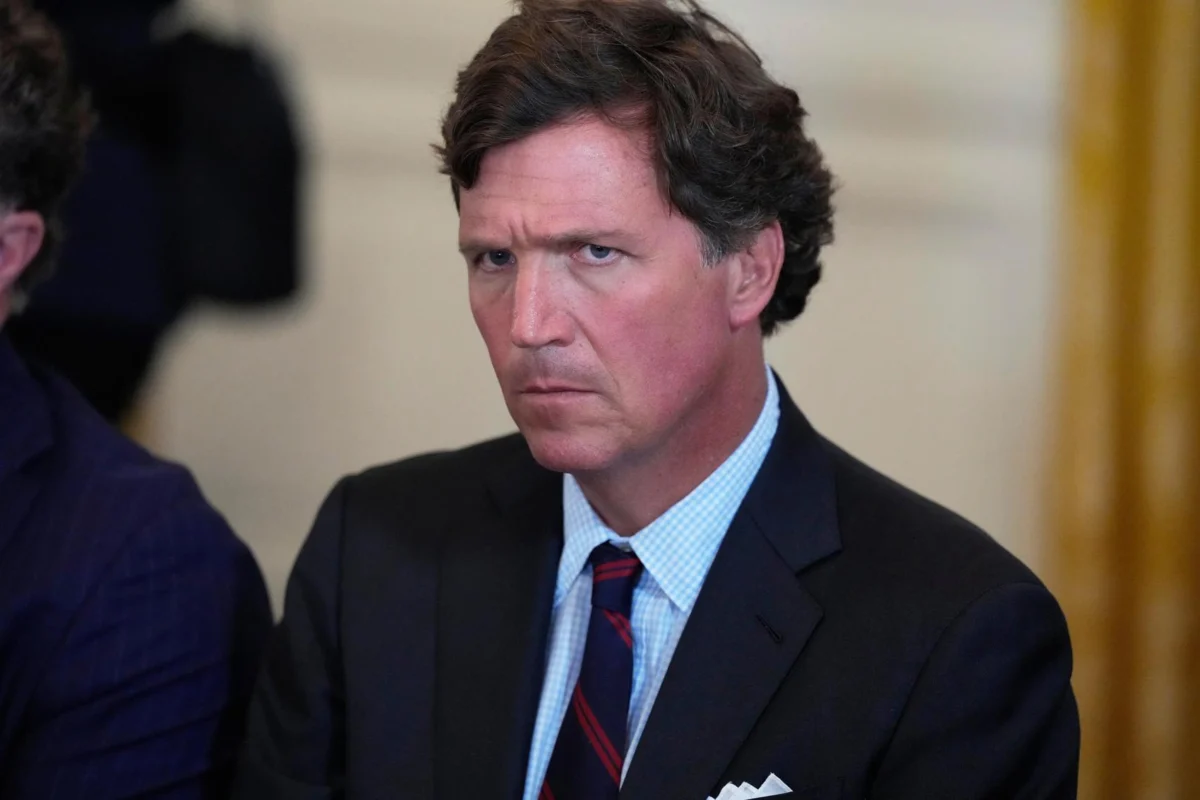
By Investigative Staff
In a development that signals a profound shift within the American right-wing media landscape, longtime conservative commentator Tucker Carlson has publicly declared that he will no longer support the Republican Party. The announcement, made during a recent appearance on the podcast Can’t Be Censored, marks a definitive break for a man who served for decades as a pillar of GOP ideological orthodoxy, most notably during his tenure as the primetime face of Fox News.
Carlson’s departure from party loyalty is not merely a personal change of heart; it represents a deepening schism between the traditional populist movement and the established GOP infrastructure. By labeling the party’s current trajectory as "treasonous" and "immoral," Carlson has placed himself in open opposition to the very political machine he once helped build.
The Chronology of Disillusionment
To understand the weight of Carlson’s recent declaration, one must examine the timeline of his evolving political philosophy. For over 35 years, Carlson operated as a consistent defender of the Republican establishment. Even after his high-profile exit from Fox News in 2023—a moment that freed him to pursue a more independent, unfiltered media venture—he remained an influential voice within the conservative sphere.
However, the seeds of his current stance were sown throughout the early months of 2026.
- Pre-2026: Carlson maintained a generally pro-Trump, pro-Republican stance, emphasizing cultural grievances and nationalist policies.
- February 2026: The turning point. Following President Donald Trump’s decision to authorize military action against Iran, Carlson’s rhetoric shifted sharply. He publicly apologized to his audience for his previous support of the candidate, admitting that he felt he had "misled people."
- Spring 2026: Carlson began utilizing his independent podcast platform to scrutinize the GOP’s foreign policy, specifically focusing on the intersection of American national interest and the influence of foreign lobbying.
- Late 2026: During the Can’t Be Censored podcast, Carlson finalized his break, explicitly stating, "I’ve been a consistent defender for 35 years of the Republican Party… but there’s no defending this. So no, I’m out."
The Catalyst: Foreign Policy and "Donor-Driven" Politics
The central pillar of Carlson’s critique rests on the accusation that the Republican Party has abandoned its mandate to prioritize the American citizen. His grievances are not focused on minor policy disagreements, but on what he describes as a structural moral failure.
"They are making decisions on the basis of other criteria," Carlson stated during the interview. "What’s best for this company, what’s best for Israel, what’s best for our donors. That’s not just, like, they are off in the wrong direction; that is unacceptable, it’s treasonous, it’s immoral, it can’t continue."
Carlson’s language suggests a belief that the GOP has been captured by external interests, rendering it ineffective at serving its domestic base. By targeting the influence of donors and foreign policy alignment—specifically regarding Israel—Carlson is tapping into a growing "America First" sentiment that views international military entanglements as a drain on domestic prosperity and national sovereignty.
Supporting Data: The Shifting Right-Wing Landscape
Carlson’s pivot comes at a time when the conservative coalition is increasingly fragmented. Public polling and internal data from mid-2026 suggest that the "populist" wing of the party is experiencing a crisis of confidence in the party’s leadership.
According to independent trackers, sentiment among non-college-educated, white, working-class voters—a key demographic for both Carlson and Trump—has shown a growing skepticism toward foreign military intervention. While the Republican base remained staunchly hawkish for decades, the post-2020 era has seen a marked shift toward isolationism.
Furthermore, the rise of independent media—exemplified by Carlson’s own post-Fox success—has diluted the influence of traditional partisan gatekeepers. The ability of a single commentator to reach millions without the vetting or corporate oversight of a major network provides a unique echo chamber where such "defections" can be amplified, potentially influencing millions of voters who feel equally disenfranchised by the two-party status quo.
Official Responses and Political Implications
The Republican National Committee (RNC) has largely remained silent on the record regarding Carlson’s comments, a tactical move designed to prevent giving the pundit further oxygen. However, behind closed doors, party strategists have expressed concern. The fear is not just that Carlson will withhold his vote, but that his rhetoric will provide a roadmap for other disillusioned conservatives to abandon the party—or worse, to start a splinter movement that could split the conservative vote in upcoming elections.
Democratic strategists, meanwhile, are monitoring the situation with cautious interest. While some see the chaos on the right as an opportunity to court moderate, disillusioned Republicans, others warn that Carlson’s focus on "donor-driven" politics could inadvertently pull the national conversation toward issues that transcend party lines, potentially damaging both major political institutions.
The "No-Man’s-Land" Strategy
Carlson’s declaration, "I don’t know what I’m going to do," highlights a strategic void. He has rejected the GOP but has been equally firm in his rejection of the Democratic Party. This "third way" approach leaves his audience in a state of political limbo. Whether this will evolve into a push for a third party, a movement toward political apathy, or a demand for a fundamental restructuring of the current GOP, remains the defining question of the next election cycle.
Implications: A New Era of Populist Punditry?
The broader implication of Carlson’s rhetoric is the potential for a "de-alignment" of the American electorate. When a figure who has served as a primary architect of conservative thought for over three decades walks away, it suggests that the ideological framework of the Republican Party is failing to contain the movements it once directed.
The Power of the Independent Platform
The fact that Carlson can make such a pronouncement on an independent podcast highlights the democratization of media. He no longer needs the Republican Party to reach his audience, nor does he need to answer to corporate shareholders. This autonomy allows him to pursue a line of reasoning that would have been prohibited at Fox News, creating a feedback loop where the commentator and his audience drive each other further away from the party center.
The Question of "Treason"
By using charged language such as "treasonous" to describe the GOP’s alignment with foreign interests, Carlson is raising the stakes of political discourse. He is moving the conversation away from tax rates and regulatory policy toward existential questions of national identity and sovereignty. This framing makes reconciliation between the party establishment and its populist base increasingly difficult, as the divide is no longer seen as a difference of opinion, but as a difference of morality.
Conclusion: The Path Ahead
As the midterms approach, the impact of Carlson’s defection will be measured in the shifting loyalties of his massive following. If he continues to advocate for a complete decoupling from the Republican Party, the organization may find itself fighting a war on two fronts: one against the traditional opposition, and another against a disillusioned base that no longer believes in the party’s stated mission.
Tucker Carlson’s decision to leave the Republican fold is more than a headline; it is a symptom of a political system under severe internal strain. Whether this leads to a reformation of the party or its gradual erosion remains to be seen. What is clear, however, is that the era of monolithic party loyalty is facing an unprecedented challenge, and the voices that once enforced that loyalty are now the ones most likely to lead the charge against it.
© Copyright 2026 The Associated Press. All rights reserved. This material may not be published, broadcast, rewritten or redistributed without permission.


 Neng Nana
 Asro
Asro