

SEOUL – A critical piece of infrastructure designed to cement the burgeoning alliance between Moscow and Pyongyang remains stalled, as fresh intelligence indicates that the much-anticipated road bridge spanning the Tumen River is far from operational. Despite high-level declarations and a mid-June target date that was touted as a milestone in bilateral cooperation, satellite imagery suggests the project is trapped in a logistical and bureaucratic limbo.
The 850-meter bridge, intended to serve as the first-ever direct road link between the two nations, has become a potent symbol of their intensifying partnership. However, as the summer months progress, the lack of progress on the Russian side of the border raises significant questions about the coordination, capacity, and ultimate intent of the two isolated regimes as they seek to bypass international sanctions and reshape their economic futures.
The Strategic Anatomy of the Tumen River Project
The project is far more than a mere engineering endeavor; it is a geopolitical statement. Historically, Russia and North Korea have been linked primarily by rail, specifically the Friendship Bridge, which handles freight but lacks the agility of a dedicated road crossing. The new bridge is designed to connect North Korea directly to Russia’s broader highway network, potentially serving as a bypass for North Korean trade that has, for decades, been almost exclusively funneled through China.
According to analysts at 38 North, a prominent Washington-based think tank specializing in North Korean affairs, the physical structure of the bridge itself appears complete. From the perspective of infrastructure, the "span" is ready. However, the functionality of such a crossing depends entirely on the Customs, Immigration, and Quarantine (CIQ) facilities that facilitate the flow of goods and people.
The Asymmetry of Readiness
The disparity between the two sides of the border is stark. Satellite imagery from July confirms that while the North Korean side is essentially "turnkey"—boasting a sprawling warehouse, a massive parking lot, newly paved access roads, and what appears to be a fully functional frontier post—the Russian side remains a construction site.
The Russian customs complex, which is projected to be at least three times the size of its North Korean counterpart, is far from complete. Earth-moving equipment, unpaved staging areas, and skeletal frameworks suggest that the site will not be ready to process commercial traffic for some time. For a project that was supposedly fast-tracked to serve as a symbol of the "new era" of friendship declared during Vladimir Putin’s historic visit to Pyongyang in June 2024, the slow pace of construction suggests that domestic Russian priorities or perhaps technical hurdles are hindering the grand political design.
A Chronology of Diplomatic Ambition
The timeline of this project has been marked by rapid political posturing contrasted with sluggish implementation.
- April 2024: The Russian Embassy in Pyongyang publicly announced that the bridge would be ready for operation by June 19. This date coincided with the buildup to President Putin’s state visit to the North Korean capital.
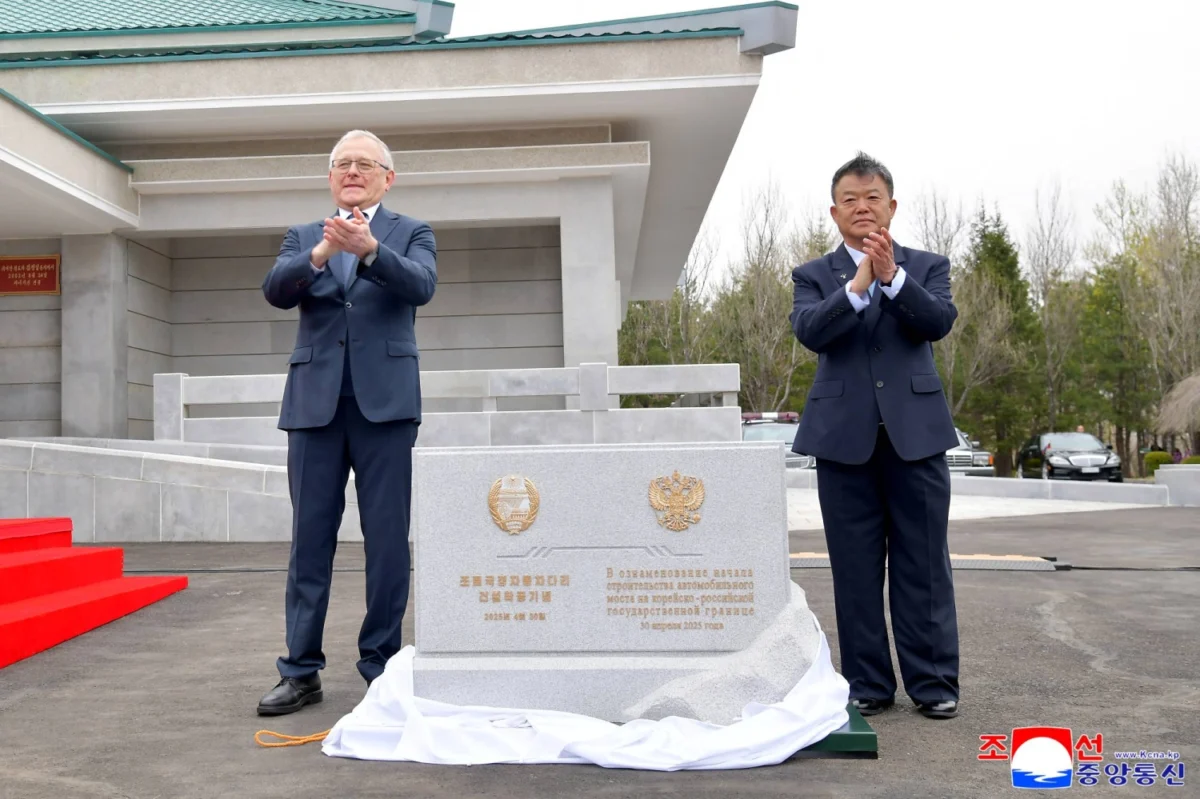
- April 2024 (Ceremonial): Both nations held a formal ceremony to mark the structural linking of the bridge. This event was heavily publicized by state media on both sides as a triumph of engineering and diplomatic unity.
- June 2024: President Putin and Kim Jong Un signed a comprehensive strategic partnership treaty in Pyongyang. While the bridge was expected to be a key talking point, the June 19 deadline passed without an official opening, leaving observers to speculate on the cause of the delay.
- July 2024: 38 North released its assessment of the site, officially confirming that the Russian infrastructure was incomplete, effectively shelving the mid-year deadline.
Analysts point out that the June target was never a realistic engineering deadline but rather a "political gift." By setting a date that aligned with the summit, both governments sought to project an image of efficiency and momentum. When the physical reality failed to meet the diplomatic calendar, it revealed a disconnect between the two nations’ administrative machinery.
Supporting Data and Economic Projections
The technical specifications of the bridge highlight the ambitious scope of the project. Once operational, the Russian Ministry of Transport has estimated that the crossing could accommodate up to 300 vehicles and 2,850 individuals per day.
Impact on Trade
For North Korea, the bridge represents a vital lifeline. Currently, approximately 90% of North Korea’s trade is routed through China. This extreme dependence has historically given Beijing significant leverage over Pyongyang, a dynamic that the North Korean leadership has long sought to dilute.
By diversifying its trade routes, Pyongyang hopes to:
- Reduce Economic Vulnerability: Increasing reliance on Russia creates a "triangular" dependency, giving Kim Jong Un more room to maneuver in regional politics.
- Increase Logistics Efficiency: Analysts suggest that the bridge could increase logistical activity by more than 40%. This is crucial for the transport of raw materials, consumer goods, and, according to Western intelligence, potential military supplies.
- Sanctions Evasion: A road link provides a more discreet method of transporting goods compared to rail or maritime routes, which are more easily monitored by international intelligence agencies.
However, Doo Jin-ho, head of the Eurasia Center at the Korea Research Institute for National Strategy (KRINS) in Seoul, cautions against overestimating the immediate economic impact. "The bridge is not going to solve North Korea’s systemic economic woes overnight," he notes. "The issue is more about trust and symbolism than immediate economic transformation."
Official Responses and Diplomatic Silence
The silence from official channels regarding the delay is as telling as the construction lag itself. When approached for comment, the Russian Ministry of Transport—the agency nominally responsible for the Russian-side logistics—declined to offer an explanation, citing the sensitive nature of the project.
Similarly, the North Korean Embassy in Moscow has remained tight-lipped. This lack of transparency is characteristic of the two nations, which prioritize state secrets and "image-management" over public accountability. The absence of a press statement suggests that the delay is either a point of internal embarrassment or, conversely, that the delay is so inconsequential to the strategic goals of the two leaders that it does not warrant an official acknowledgment.
Western observers, particularly in Washington and Seoul, remain vigilant. The bridge is viewed not just as a commercial project, but as a potential conduit for the illicit transfer of weapons and dual-use technology. The scrutiny from the U.S. and South Korea ensures that every stage of the bridge’s development is monitored by overhead satellite reconnaissance, turning the construction site into a theater of intelligence gathering.
Implications: A Partnership Under Scrutiny
The stalling of the Tumen River bridge raises fundamental questions about the depth of the Russia-North Korea relationship. Is this merely a case of bureaucratic incompetence, or does it signal a deeper hesitation within the Russian administration to fully integrate its economy with the pariah state?
The "Gift" vs. The Reality
Doo Jin-ho argues that the delay is a symptom of a relationship that is being pushed by political necessity rather than economic synergy. "When leaders meet and declare a project a priority, the bureaucracy scrambles to put on a show," he explains. "The June date was a political performance. Now, the reality of building a massive customs complex in a remote, cold, and challenging region is taking its toll."
Geopolitical Consequences
The bridge is a microcosm of the current global order. For Moscow, North Korea has become a vital source of munitions and labor as the war in Ukraine drags on. For Pyongyang, Russia is a source of diplomatic cover at the UN Security Council and a provider of essential energy and food supplies.
If the bridge eventually opens, it will signal a permanent shift in the regional status quo. It will solidify a land-based logistics corridor that allows Russia to bypass the watchful eyes of international maritime monitors. It will also provide North Korea with a physical "exit" from its total dependence on Beijing.
However, as long as the project remains incomplete, the bridge stands as a monument to the limitations of authoritarian cooperation. It suggests that while the leaders may be aligned in their defiance of the West, the capacity to execute complex, long-term infrastructure projects requires a level of institutional alignment that both nations, in their current isolated and sanctioned states, are struggling to maintain.
As the seasons change, the world waits to see whether the Tumen River crossing will eventually facilitate a new era of trade, or if it will remain a half-finished bridge to nowhere—a poignant metaphor for an alliance that, while loud in rhetoric, remains constrained by the hard realities of geography, logistics, and the scrutiny of an observing world.











