Jia Lissa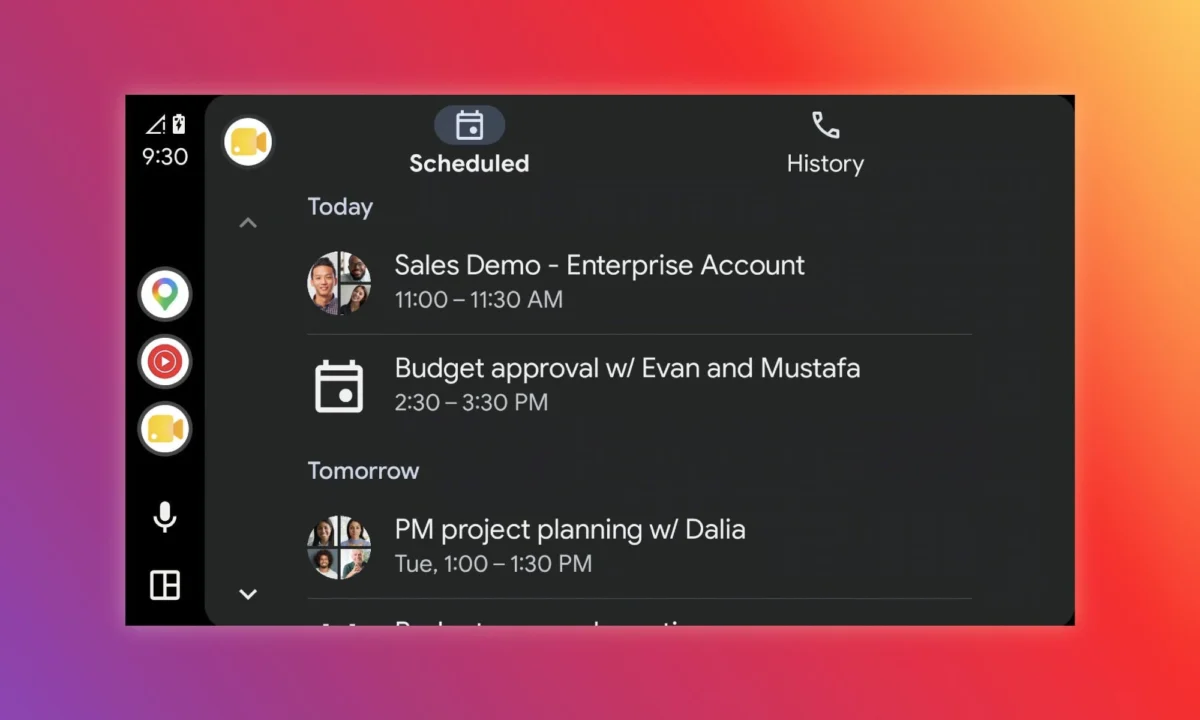
For years, Android users have watched from the passenger seat of progress as Apple CarPlay received feature after feature, often leaving the Google ecosystem playing catch-up. That narrative shifted significantly this week as Google officially rolled out native support for Google Meet on Android Auto. This long-awaited integration allows drivers to manage their professional and personal schedules directly from their vehicle’s dashboard, effectively bridging a gap that had persisted for months.
While the feature is a welcome addition for professionals on the move, it comes with strict limitations designed to prioritize driver safety. By stripping away visual distractions and focusing exclusively on audio, Google is attempting to balance the modern demand for constant connectivity with the non-negotiable requirement of keeping eyes on the road.
The Core Functionality: How It Works Behind the Wheel
The integration of Google Meet into Android Auto is designed to be as frictionless as possible. According to a recent announcement via the Google Workspace Updates blog, users who already have the Google Meet application installed on their Android smartphones will receive the update automatically.

The setup process is remarkably simple: a one-time restart of the application on the mobile device is all that is required to initialize the handshake between the phone and the car’s head unit. Once the device is connected to a compatible vehicle, the Android Auto interface populates a dedicated Google Meet icon. Upon launching, users are presented with a clean, two-tab interface:
- Scheduled Meetings: A list of upcoming events pulled directly from the user’s integrated calendar.
- Recent Contacts: A quick-access menu that allows users to redial recent callers with a single tap.
The "On the Go" Experience
Once a user selects a meeting to join, the application automatically transitions the phone into an "On the Go" mode. This is the cornerstone of Google’s safety-first design. In this mode, the video camera is permanently disabled, and the complex interface of a standard Google Meet call—including chat windows, hand-raising tools, polls, and Q&A boxes—is completely stripped away.
What remains is a minimalist, audio-focused interface. Drivers have access only to essential controls: muting/unmuting the microphone, toggling between audio output devices (such as the car’s Bluetooth speakers or a private headset), and the red "hang up" button. This reduction in cognitive load is critical for preventing the "distracted driving" that often accompanies complex smartphone interactions. However, it is worth noting that current reports indicate that instant, ad-hoc meeting links that have not been explicitly added to a calendar may not appear in the "Scheduled" tab, potentially limiting the ability to join spur-of-the-moment calls without manual intervention on the phone itself.

Chronology of the Rollout
The path to this integration has been characterized by a noticeable delay compared to its rival platform.
- April 2026: Google officially launched the audio-only Google Meet experience for Apple CarPlay. This move was met with frustration by the Android community, as users of Google’s own operating system were left without a native way to handle their Google-based meetings, despite the fact that competitors like Microsoft Teams had already secured a foothold on Android Auto.
- Mid-June 2026: Tech-watchers began noting the early rollout of the feature to specific regions. By June 18, reports from early adopters confirmed that the functionality was appearing for a broader set of users.
- June 23, 2026: The official announcement from Google confirmed that the feature was moving into a wider release cycle.
- June 26, 2026: This date marked the final phase of the rollout for "Scheduled Release" domains, ensuring that all Google Workspace customers, Workspace Individual subscribers, and personal account holders gained access to the feature.
This three-month gap between the Apple CarPlay launch and the Android Auto launch has sparked a conversation regarding Google’s internal priorities. While Google has not provided a specific reason for the delay, industry analysts suggest that the complexity of optimizing for the wide variety of head units in the Android ecosystem—compared to the more uniform CarPlay environment—likely contributed to the extended testing period.
Supporting Data and Technical Context
The introduction of Google Meet on Android Auto is not merely a convenience feature; it is part of a broader shift in how automakers and tech giants view the "third space" of the automobile. With the average American spending roughly 50 to 60 minutes commuting daily, the car has become an extension of the home office.

According to data from recent automotive tech surveys, over 65% of commuters in major metropolitan areas report using their commute to catch up on work-related calls. Prior to this integration, those users were forced to use Bluetooth-connected phone calls or third-party apps like Microsoft Teams. By bringing Google Meet natively into the dash, Google is attempting to capture this massive demographic of "mobile workers."
Furthermore, the implementation relies on the existing Google Workspace infrastructure. Unlike third-party integrations, this update does not require new permissions or complex API handshakes; it leverages the existing authentication tokens already stored on the Android device. This is why Google has not introduced specific administrative controls for organizations—the feature is treated as an extension of the user’s personal phone rather than an enterprise-level tool being pushed to the vehicle.
Official Responses and Developer Stance
Google has been careful to frame this update as a safety-conscious move. Chandu Thota, a key figure in Google’s product development, highlighted via social media that the primary goal was to allow users to "handle important meetings hands-free from behind the wheel."

The official stance from Google’s product team emphasizes that the limitation of features is a feature, not a bug. By forcing the "On the Go" mode, Google is insulating itself from liability regarding distracted driving. "As usual, the camera is off and meetings are audio-only so you can keep your eyes on the road," the company stated in its official documentation. This focus on "eyes-on-the-road, hands-on-the-wheel" methodology is designed to satisfy the safety standards required by both regulators and automotive manufacturers.
Implications for the Future of In-Car Productivity
The arrival of Google Meet on Android Auto has several significant implications for the automotive and tech industries.
1. Standardization of the Connected Commute
With Microsoft Teams and now Google Meet fully integrated into Android Auto, the "platform wars" for the dashboard are reaching a state of parity. Drivers are no longer tied to a specific smartphone ecosystem based on their meeting software preferences. This interoperability is likely to increase the reliance on voice-command AI, such as Google Assistant, which will eventually be expected to manage these calls entirely through voice prompts without the driver needing to touch the screen at all.

2. The Decline of "Hidden" Distractions
By providing a safe, native interface for meetings, Google is essentially discouraging the use of "unauthorized" workarounds. Before this, a driver might have propped up their phone on the dashboard to see a meeting link or used a speakerphone function that degraded call quality. By formalizing the process, Google is creating a "sanitized" environment that, while still a potential distraction, is significantly safer than the alternatives previously employed by busy professionals.
3. The Future of the "Office-on-Wheels"
As autonomous vehicle technology advances—and even within the current context of semi-autonomous driving—the pressure to turn the car into a mobile office will only increase. We are likely to see further integration of productivity suites, such as calendar management, task tracking, and potentially even voice-to-text document drafting, appearing in future Android Auto updates.
Conclusion
The launch of Google Meet on Android Auto is a belated but welcome milestone for Android enthusiasts and professionals alike. While the three-month wait behind Apple CarPlay was a point of contention, the final product is a refined, safety-first implementation that serves the needs of the modern commuter without compromising on road safety.

For the millions of drivers who rely on Google’s ecosystem to manage their daily workflows, this update provides one less excuse to skip a meeting and one more reason to appreciate the evolving utility of the modern dashboard. As the lines between our mobile devices and our vehicles continue to blur, this integration stands as a testament to how essential the car has become as a hub for both transportation and digital productivity. Whether this leads to increased efficiency or simply extends the reach of the workday into our commutes remains a matter of perspective, but for now, the path to the office just got a little more connected.

 Iffa Jayyana
 Suro Senen