

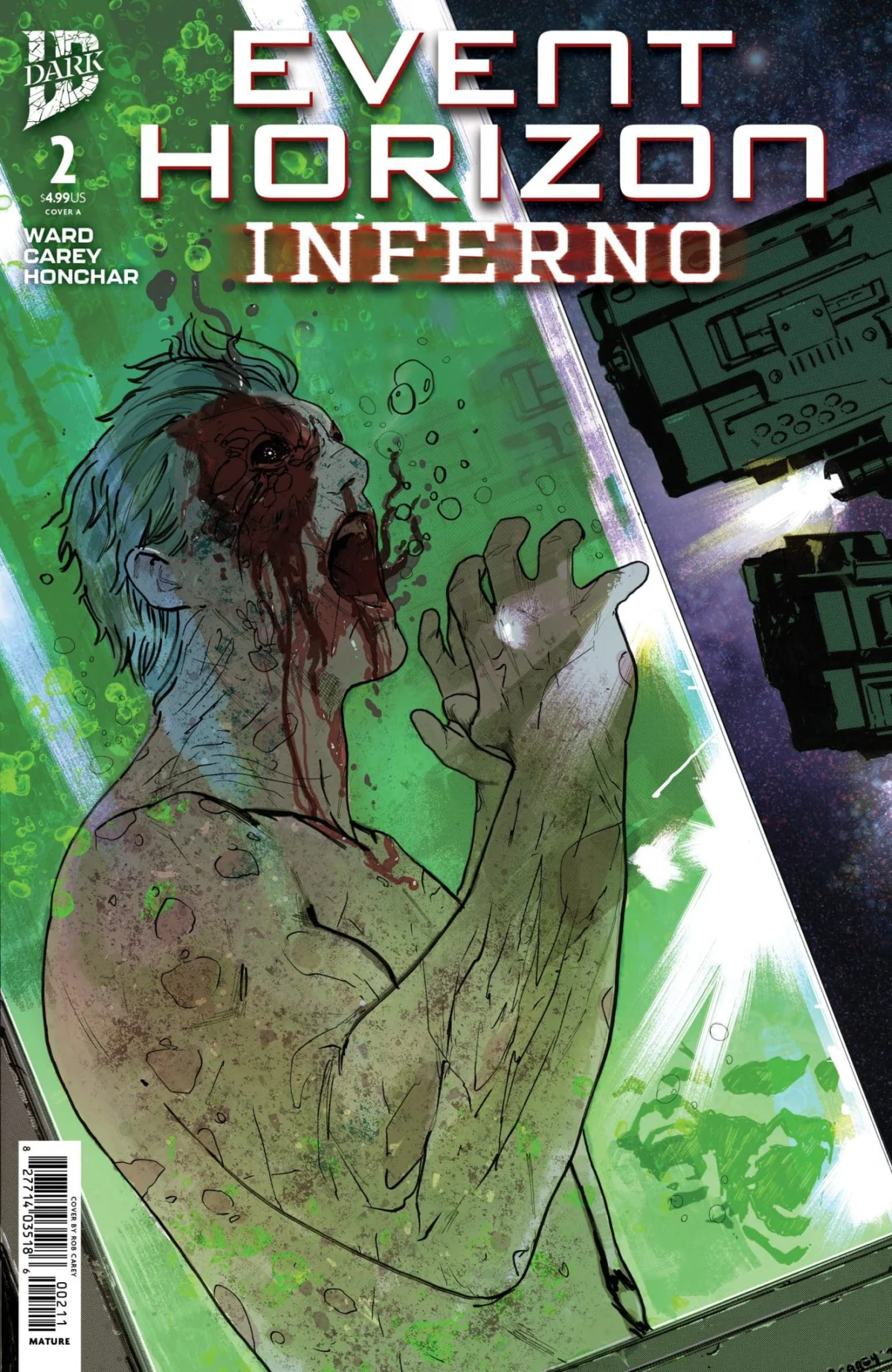
Two centuries after the infamous starship Event Horizon vanished into the void and returned—not as a vessel of exploration, but as a gateway to a dimension of pure, unadulterated torment—the nightmare has been reignited. In the second issue of the gripping sequel series Event Horizon: Inferno, writer Christian Ward and artist Rob Carey delve deeper into the cold, mechanical heart of the ship that defined cult-horror cinema.
While the original 1997 film was a singular descent into psychological madness, Inferno marks a strategic shift in the franchise’s DNA. By moving from the "haunted house in space" trope toward a high-stakes, military-industrial survival thriller, this comic series is successfully pivoting the franchise in a way that recalls the legendary transition from Ridley Scott’s Alien to James Cameron’s Aliens.
The Main Facts: A Billionaire’s Hubris
The narrative hook of Event Horizon: Inferno #2 centers on Daniel Durante, a man whose wealth is eclipsed only by his obsessive grief. Haunted by the death of his brother, Durante has bankrolled a private military operation to recover the wreckage of the Event Horizon.
As established in the series, the ship was torn asunder two centuries ago: one half lost to a hellish portal, the other drifting as a rusted, cursed tomb within our own solar system. Durante’s mission is clear, yet morally bankrupt. He isn’t merely looking for salvage; he is looking for a resurrection. He believes that the ship’s innate ability to bridge the gap between our reality and the afterlife can be harnessed.
However, the human cost of this endeavor is staggering. The issue specifically shifts the spotlight to Skylar, Durante’s ex-wife. Once thought to be ailing, it is revealed that her "medical treatment" is nothing more than a calculated deception. Skylar has been kept in stasis, not for her own protection, but because she serves as the "trauma engine"—a human battery required to jump-start the Event Horizon’s dormant, demonic systems.
Chronology of the Damned: A Timeline of Terror
To understand the gravity of the current mission, one must look back at the harrowing timeline of the Event Horizon saga:
- The Disappearance (200 Years Ago): The experimental vessel Event Horizon vanishes during its maiden voyage, equipped with a gravity drive designed to fold space-time.
- The Return: The ship reappears near Neptune, broadcasting a cryptic, blood-curdling distress signal. The rescue vessel Lewis & Clark is dispatched to investigate.
- The First Catastrophe: The rescue crew discovers that the ship has effectively "been to Hell and back." It is possessed by a malevolent entity. Most of the crew is slaughtered, and the ship is eventually severed in two before being abandoned.
- The Intervening Centuries: The wreckage remains a forbidden zone, a silent monument to the fragility of human consciousness in the face of the infinite.
- The Modern Era: Daniel Durante launches his corporate-backed expedition. He recruits a squad of private space marines, unaware that they are pawns in a much darker, occult game.
- Current Events (Inferno #2): The expedition reaches the wreckage. Tensions flare between the military contractors, who believe they are on a standard recovery mission, and the architects of the expedition, who know the true, dark nature of the ship’s engine.
Supporting Data: The Aliens Influence
Critics and readers alike have been quick to note the tonal shift in this sequel. If the Event Horizon film was an exercise in claustrophobic, psychological dread, Inferno is an exercise in tactical survival horror.
The inclusion of Lieutenant Starck—the sole survivor of the Lewis & Clark—adds a layer of franchise continuity that elevates the stakes. Much like Ellen Ripley in the Alien franchise, Starck serves as the audience’s tether to reality. She is the only one who truly understands the nature of the beast they are trying to wake.
The technical execution of this shift is noteworthy:
- The "Trauma Engine": The narrative introduces a new, terrifying mechanic: the ship requires human suffering to function. By centering Skylar as this catalyst, the writers have transformed the ship from a simple haunted object into a predatory entity that feeds on human biology.
- The Military Dynamic: Unlike the film’s ragtag crew, the military grunts in Inferno bring a sense of order that is destined to be dismantled. This contrast—highly trained, well-armed soldiers vs. an extra-dimensional, reality-warping entity—creates a unique brand of tension.
Official Responses and Creative Vision
The creative team behind Event Horizon: Inferno has been vocal about their desire to expand the lore without losing the "haunted" essence of the original property. Christian Ward’s writing has been praised for its pacing, particularly in how he manages the transition from character-driven drama to high-intensity survival horror.
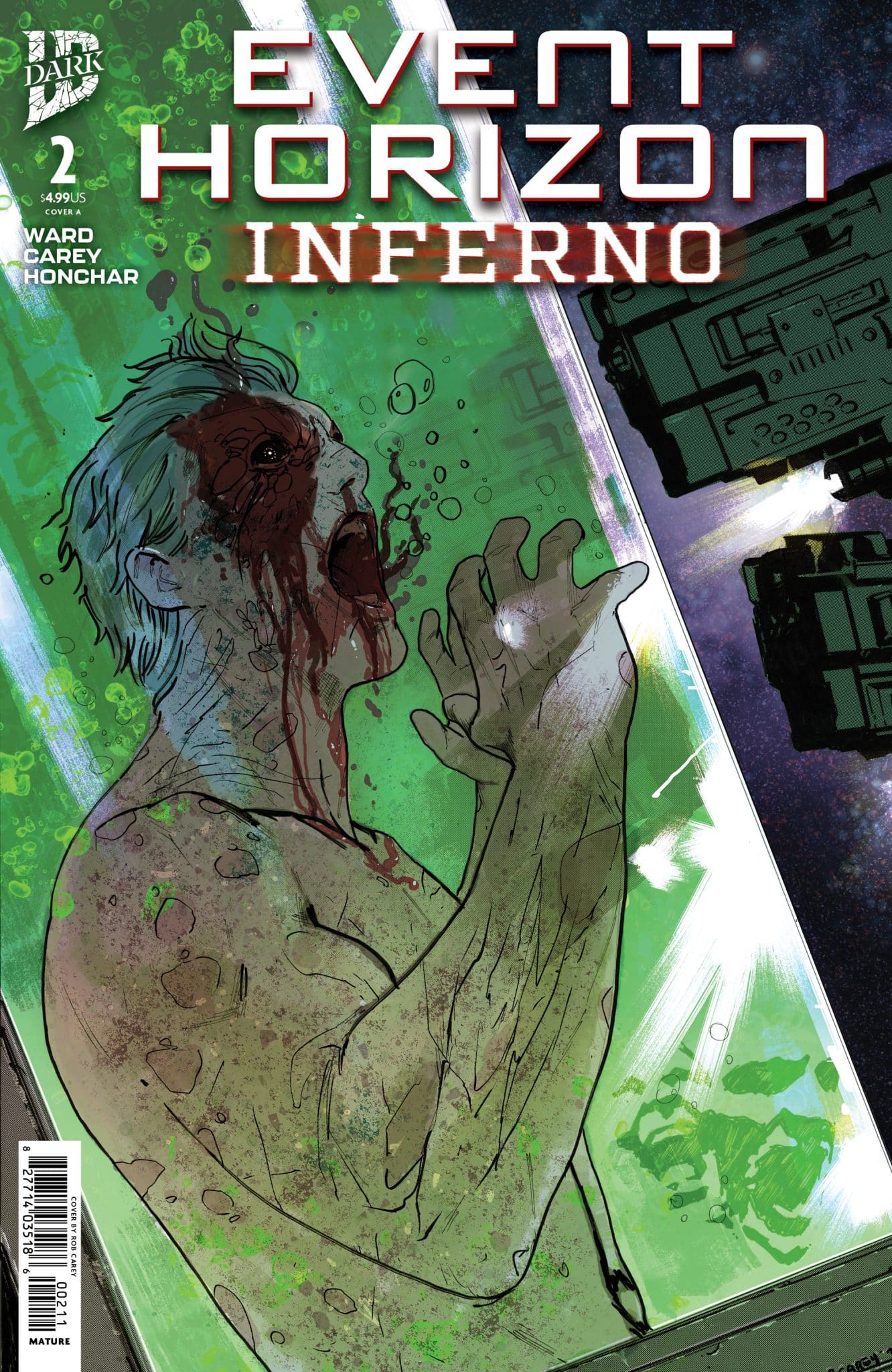
Rob Carey’s art direction has been a cornerstone of this success. By utilizing a "worn-in" aesthetic, Carey captures the grit of industrial sci-fi. The technology feels lived-in, rusted, and desperate. The use of lighting—or the lack thereof—emphasizes the encroaching shadows of the Event Horizon.
Colorist Xenon Honchar and letterer Alex Ray deserve significant credit for the cold, sterile, and ultimately suffocating atmosphere of the issue. The deliberate choice to avoid "gore for the sake of gore" in this early stage allows the reader to focus on the psychological disintegration of the crew, building a slow-burn tension that promises a catastrophic payoff in future issues.
Implications: The Future of the Franchise
The implications of Event Horizon: Inferno #2 are massive for the franchise’s expanded universe. By confirming that there are individuals who know about the demonic connection and are actively seeking to exploit it, the series moves away from a "freak accident" narrative toward one of "deliberate occult exploration."
- The Corporate-Occult Nexus: The story suggests a future where space exploration is inextricably linked to the dark arts. This opens the door for political intrigue, as other entities—perhaps government or competing corporate factions—might intervene.
- The Survival Horror Benchmark: By successfully emulating the Aliens transition, the Event Horizon franchise has proven that it can sustain a multi-issue narrative. The focus on Skylar as a victim-turned-focal-point provides a human element that prevents the story from becoming merely a series of "monster of the week" encounters.
- The Moral Dilemma: The core of the issue is the question of "how far would you go to save someone you love?" By pinning this question to the destruction of the universe, the story forces the reader to empathize with a villain (Durante) while simultaneously cheering for his downfall.
Final Assessment
Event Horizon: Inferno #2 is a masterclass in sequel-building. It respects the source material while refusing to be held hostage by it. It offers a fresh, brutal, and intellectually engaging take on the horror of the deep dark. Whether you are a long-time fan of the original 1997 film or a newcomer to this terrifying corner of science fiction, the second issue provides the perfect balance of character development and impending doom.
With an overall rating of 8.0/10, the comic is a must-buy for those who enjoy the intersection of high-concept sci-fi and occult terror. The question remains: can humanity ever truly walk away from the Event Horizon, or are we destined to keep returning until there is nothing left to consume? As the series continues, the answer seems increasingly, and frighteningly, clear.
Disclaimer: This review is based on a copy provided by IDW Publishing. For more information on the series or to purchase your copy, visit your local comic retailer or official distributors like Zeus Comics and digital platforms like Kindle.










No comments yet. Be the first to join the conversation!