Nana Wu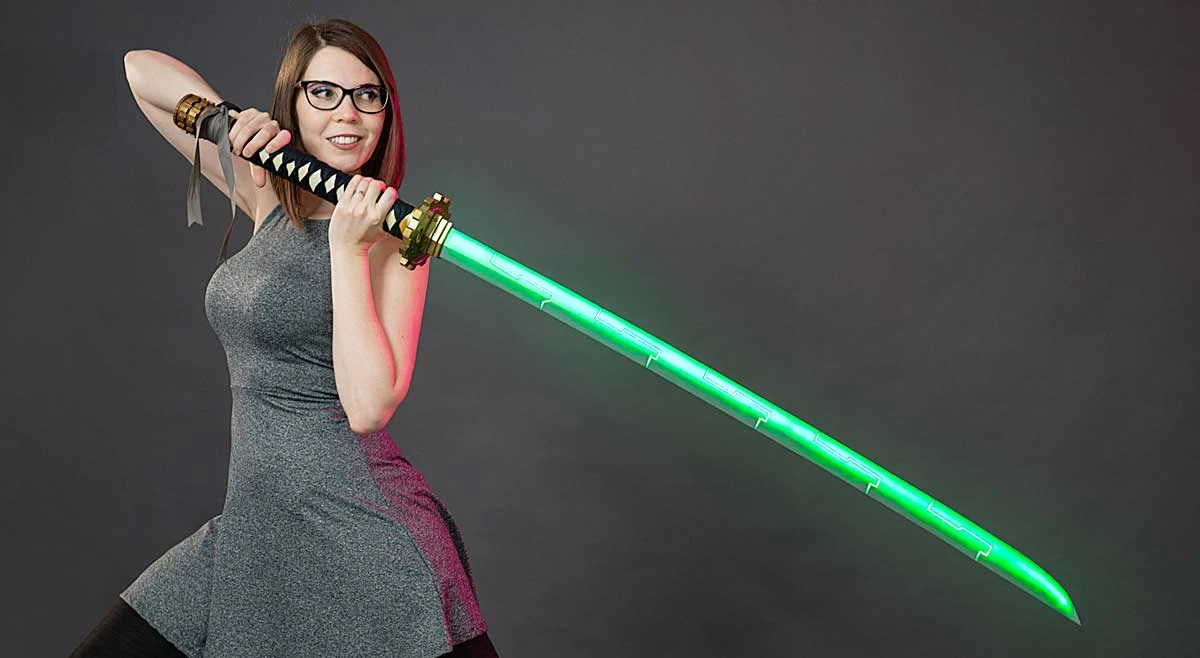
In the ever-evolving world of cosplay, the line between digital assets and physical craftsmanship has become increasingly blurred. Recently, renowned cosplay artists Kamui Cosplay—the duo of Svetlana and Benni Quindt—undertook an ambitious collaboration with Electronic Arts to bridge this gap. Tasked with bringing the iconic Karakuri Katana from the action-RPG Wild Hearts into the real world, the duo successfully engineered a high-fidelity, light-up, sound-enabled prop that stands as a testament to the capabilities of modern maker culture.
Main Facts: The Intersection of Gaming and Fabrication
The project centers on the Karakuri Katana, the signature weapon of the Wild Hearts universe, known for its intricate mechanics and glowing, ethereal aesthetic. Electronic Arts commissioned Kamui Cosplay to produce a screen-accurate replica that not only captured the weapon’s visual complexity but also mirrored its in-game functionality, specifically its unique glowing "special attack" sequence.
The result is a fully functional, 3D-printed prop that incorporates complex LED arrays and custom audio integration. This is not merely a static display piece; it is an interactive engineering feat. The duo has since made the project accessible to the wider community by offering the 3D print files through their online shop, allowing enthusiasts to manufacture their own versions of the blade.
A Chronological Breakdown of the Build
The creation of the Karakuri Katana was a high-intensity, one-week sprint that demanded precision at every stage.
Phase 1: Modeling and Design (Days 1–2)
Benni Quindt spearheaded the modeling process, utilizing Blender to translate the digital asset from the game engine into a printable 3D file. Because the weapon needed to house electronics—including batteries, microcontrollers, and LED diffusers—the internal architecture had to be meticulously engineered to maintain structural integrity while allowing for easy assembly.
Phase 2: Material Selection and Printing (Days 3–4)
The choice of material was critical. To ensure the blade could transmit light effectively, the team opted for white ABS filament, printed with exceptionally thin walls to serve as a natural diffuser for the internal LEDs. Utilizing a Creality CR-M4, the team leveraged the printer’s generous build volume to produce the blade sections in a timeframe that allowed for immediate post-processing.
Phase 3: Electronic Integration (Days 5–6)
Drawing heavy inspiration from the open-source community, specifically the Adafruit "Light Saber" tutorial, the team programmed the electronics to handle both lighting effects and sound output. This required the delicate integration of a microcontroller and a soundboard, ensuring that the light-up sequence triggered in sync with the audio cues found in Wild Hearts.
Phase 4: Final Assembly and Finishing (Day 7)
The final day was dedicated to the mechanical assembly of the printed parts, soldering connections, and finalizing the external finish to ensure the prop held up to the rigors of convention wear.
Supporting Data and Technical Specifications
The success of the Karakuri Katana project is supported by the specific hardware and software choices made by the Quindts.

- Software: Blender was utilized for the entirety of the 3D modeling process, chosen for its robust toolset in handling complex geometry.
- Hardware: The Creality CR-M4 served as the workhorse for the project. With its 17.71×17.71×18.5-inch print volume and 25-point auto-leveling, the printer allowed for fewer seams in the final prop, which is essential for professional-grade cosplay.
- Electronics: By utilizing concepts found in Adafruit’s FeatherWing ecosystem, the team created a compact system that manages power distribution for the LEDs without adding significant weight to the hilt, maintaining the balance of the sword.
- Documentation: Recognizing the educational value of their work, the team has documented their design philosophy in their 3D Printing and Modeling Book, which serves as a companion guide for those looking to replicate their workflow.
Official Responses and Industry Impact
Electronic Arts, by reaching out to established creators like Kamui Cosplay, has signaled a strategic shift in how game developers engage with their communities. By endorsing the creation of high-end, fan-made replicas, EA acknowledges that the "life" of a game extends far beyond the console, living on through the creative efforts of its player base.
Svetlana Quindt expressed her enthusiasm for the collaboration, stating, "Electronic Arts asked us to bring our favorite weapon from their new game Wild Hearts to life, and I’m so excited to finally build the sword of my dreams!" The sentiment highlights a growing trend: developers are increasingly providing assets or support to professional creators, recognizing that the "fan-made" version of a weapon often becomes the gold standard for cosplayers worldwide.
Implications for the Maker Community
The Kamui Cosplay Wild Hearts project has broader implications for the future of DIY prop building and the gaming industry at large.
The Democratization of Professional Props
By releasing the 3D files for the Karakuri Katana, the Quindts have effectively democratized the ability to own a professional-grade prop. Previously, such items were the exclusive domain of expensive, commissioned prop makers. Now, any hobbyist with access to a standard ABS-capable 3D printer and basic soldering skills can achieve a similar result.
The Evolution of "Fan Service"
Marketing departments in the gaming industry are witnessing the power of the "maker" economy. When a company collaborates with influencers who focus on creation rather than just gameplay commentary, it creates a deeper emotional connection with the product. The Karakuri Katana is not just an item in a digital inventory; it is a physical object that a player has helped "forge" in their own home.
Advancements in 3D Printing Technology
The project also serves as a case study for the reliability of consumer-grade large-format printers. The use of the Creality CR-M4 demonstrates that professional-grade output is no longer gated by industrial machinery. The thin-wall printing technique utilized for the sword’s blade is a significant technical achievement, showcasing how modern printers can handle delicate, light-diffusing structures with higher success rates than in previous years.
The "Tutorial Economy"
The success of this project reinforces the value of open-source knowledge sharing. By crediting Adafruit’s tutorials and integrating their own technical expertise, Kamui Cosplay has contributed to a cycle of innovation where each project builds upon the last. This collaborative ecosystem is what drives the rapid advancement of cosplay as a craft, pushing it from a hobby toward a legitimate branch of the entertainment industry.
Conclusion: A New Standard for Cosplay
The Karakuri Katana project is more than just a collaboration; it is a blueprint for the future of interactive fan engagement. As game developers continue to create increasingly complex designs, the role of the creator—the person who can translate these designs into reality—becomes vital.
Kamui Cosplay has proven that with the right combination of open-source inspiration, high-quality 3D modeling, and modern hardware, the barrier between digital art and physical reality is not just permeable—it is ready to be broken. For those inspired by the Karakuri Katana, the path is now open to explore the intersection of electronics and artistry, pushing the boundaries of what is possible in their own workshops. Whether you are a seasoned prop maker or a newcomer to the world of 3D printing, the lesson from this endeavor is clear: the only limit to bringing a digital fantasy to life is the willingness to start the print.

 Siti Muinah
 Azzam Bilal Chamdy