Lina Hope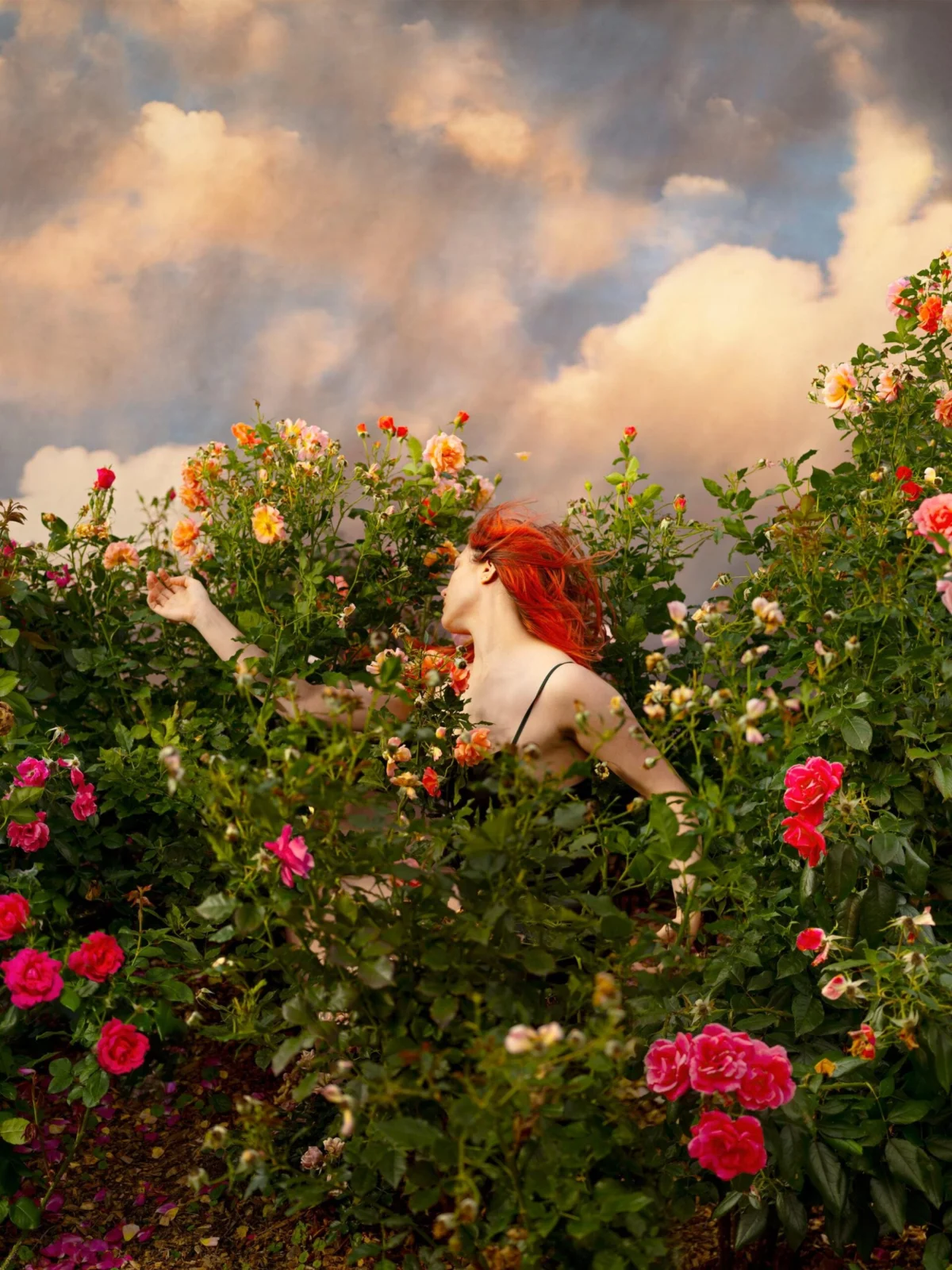
Nestled within the rugged, mist-shrouded foothills of Cambewarra Mountain in New South Wales, Australia, photographer and artist Tamara Dean creates works that serve as a bridge between the human psyche and the organic landscape. Her imagery is not merely representative of nature; it is a profound philosophical inquiry into the fallacy of human detachment. By stripping away the ego of the traditional portrait, Dean invites her audience to witness a radical re-integration of the body into the ecosystem.

The Core Philosophy: Dismantling the Barrier Between Subject and Habitat
At the heart of Tamara Dean’s artistic mission lies a singular, driving conviction: humans are not observers standing on the periphery of the natural world, but rather biological participants intrinsically woven into its fabric. This perspective, which informs every frame of her photography, challenges the Western anthropocentric tradition that often treats nature as a backdrop or a resource.

In Dean’s compositions, the human figure is never the protagonist in the classical sense. Instead, her subjects—often friends or family—are embedded, camouflaged, and transformed. Through her lens, limbs become branches, hair mimics the vibrant hues of blooming lotus, and skin tones harmonize with the dappled light of the forest floor. "I am interested in those moments when the body appears to merge with the landscape," Dean notes. "It suggests that we are not spectators, but components of the very environment we inhabit."

Chronology of an Artistic Evolution
Tamara Dean’s career has been defined by a consistent, quiet progression from traditional documentary-style photography toward a more performative, installation-based practice.

- Early Foundations: While her early work was rooted in the observational traditions of photography, she began to experiment with the concept of the "human-in-landscape" as a means to express internal emotional states.
- The "In Bloom" Era (2017–2018): This period marked a distinct shift toward surreal, high-saturation imagery. Works such as Sacred Lotus (Nelumbo nucifera) in Spring (2017) and In Bloom (2018) solidified her reputation for utilizing vibrant color palettes—specifically hot pinks and deep greens—to draw an uncanny parallel between human physiology and botanical morphology.
- The Period of Introspection (2020–2022): As the world faced global shifts in lifestyle and confinement, Dean’s work took on a more somber, tactile quality. Images like Self care (2020) and Taking Aim (2021) introduced elements of domesticity and tension, using props like clippers and tutus to reflect the strange, sometimes aggressive, or defensive ways humans interact with their immediate environment.
- The Expansion into Painting (2024–Present): Recently, Dean has transitioned into a multidisciplinary phase. With her children now in young adulthood, she has found the temporal space to revisit painting—a practice she previously relegated to the "quiet background" of her creative life. This evolution represents a change in perspective, allowing her to deconstruct the photographic image through the manual, additive process of painting.
Supporting Data: The Anatomy of a Gesture
For Dean, the physical posture of her subjects is the primary mechanism of her storytelling. She does not merely pose her subjects; she facilitates a dialogue between their bodies and the flora they occupy.

"I often encourage them to respond intuitively to their surroundings," she explains. By focusing on the "visible idiosyncrasies" of the human form—the curve of a spine, the tension in a hand reaching toward a leaf, or the way a head bows to mimic a drooping flower—she captures a dynamic exchange. This technique of "somatic mimicry" creates a visual rhyme scheme:

- Symmetry: Subjects are often positioned to mirror the fractal patterns found in ferns or the radial symmetry of water lilies.
- Texture: The juxtaposition of skin against rough bark or slippery aquatic vegetation serves to emphasize the shared biological material of humans and plants.
- Camouflage: Works like Introversion demonstrate a primal, instinctive urge to hide. By draping figures in frilly blue tutus that resemble petals, she invokes the concept of defensive coloration, questioning why we, as a species, have lost our ability to "blend in" with our surroundings.
Official Responses and Critical Reception
Tamara Dean’s work has garnered significant attention within the Australian contemporary art scene. Her current exhibition, Leave only footprints, which opened at the Manly Art Gallery and Museum and runs through August 2, has been praised for its ability to provoke "eco-anxiety" while simultaneously offering a sense of "ecological belonging."

Critics point to her ability to maintain a sense of mystery in an age of over-documentation. Her photographs are not digitally manipulated in a way that erases the reality of the shoot; rather, the "magic" is created through authentic, physical performance. By working with real elements—underwater, in dense thickets, and among seasonal blooms—she forces her subjects and her audience to endure the realities of nature: the cold of the water, the sharpness of the thorns, and the humidity of the air.

Her upcoming solo exhibition at the prestigious Michael Reid gallery in Sydney is highly anticipated, as it will be the first major showcase to feature her transition into painting alongside her established photographic series. This transition is seen by curators as a natural progression for an artist who has spent decades exploring the depth of a single plane; painting allows her to add a layer of tactile, subjective history to the objective reality of the photograph.

The Implications of "Merging"
What are the implications of an art form that insists upon the dissolution of the human ego? In an era marked by the Anthropocene—a geological epoch defined by human impact—Dean’s work acts as a visual protest against the separation of human interest from the health of the planet.

- The Environmental Argument: By framing the human body as a plant, she forces the viewer to consider the human as a living organism that requires the same conditions for survival as the flora depicted. If the lotus cannot bloom, neither can the human who depends on that ecosystem.
- The Psychological Shift: Her images suggest that "nature" is not a destination we visit on vacation, but a state of being we carry within us. By encouraging her models to "become" the landscape, she is essentially performing a ritual of reconnection.
- The Evolution of Medium: The inclusion of painting in her repertoire suggests a desire for greater permanence. Photography captures a fleeting, singular moment of interaction; painting, by contrast, records the memory of that interaction, layered over time.
Conclusion: The Ongoing Exploration
As Tamara Dean continues to evolve, her work remains a testament to the power of artistic curiosity. Whether she is submerging herself in the waters of a sunken forest or capturing the delicate, petal-shrouded quietude of a woodland scene, she consistently asks the viewer to rethink their place in the world.

Her upcoming exhibition at Michael Reid will undoubtedly provide a deeper look into this multidisciplinary journey. For those who wish to track her ongoing explorations, her Instagram feed serves as a digital sketchbook, documenting the behind-the-scenes process of her shoots and the emergence of her new painted works.

In the final analysis, Tamara Dean’s art is an invitation. It is an invitation to crouch in the dirt, to wrap one’s face in the cloak of petals, and to breathe deeply. It is a reminder that even as we build our cities and our digital worlds, we remain, at our core, biological creatures of the earth, waiting to bloom alongside the rest of the natural world.


 Siti Muinah
 Asep Darmawan