Neng Nana
By Patricia Hernandez
Published Jun 23, 2026, 2:33 PM EDT
The highly anticipated launch of Valve’s Steam Machine has been met with a mixture of excitement and apprehension, as the PC gaming giant officially unveiled its pricing structure and opened reservations for its innovative hardware. While promising a seamless bridge between traditional PC gaming and a console-like living room experience, the initial cost has emerged as a significant hurdle, with all models proving considerably more expensive than current-generation gaming consoles. In a candid acknowledgment, Valve has indicated that it understands some fans will inevitably be "priced out" of acquiring the new system, attributing the elevated costs to an unprecedented industry-wide component shortage exacerbated by the recent "AI boom" and the "RAMpocalypse" of 2025-2026.
This frank admission comes as Valve initiates a comprehensive marketing blitz for the Steam Machine, with developers engaging in numerous interviews to address public queries. However, a persistent "elephant in the room" has dominated these discussions: the undeniable expense of the hardware. Despite extensive efforts by Valve to source components at reasonable costs, the company claims that in many instances, availability simply wasn’t there, regardless of price. This challenging market environment has forced a significant deviation from Valve’s earlier aspirations for an "affordable" system, a vision articulated by developers as recently as 2025.
Main Facts
The Steam Machine, Valve’s ambitious foray into bridging the gap between high-end PC gaming and the accessibility of a console, has officially entered the market with its price revelation and the commencement of pre-orders. Far from the budget-friendly device some had hoped for, the Steam Machine arrives with a premium price tag, positioning it significantly above the current crop of PlayStation and Xbox consoles. This elevated cost is a direct consequence of a global component crisis that has crippled supply chains across the tech industry, most notably impacting critical PC gaming hardware.
Valve, a company renowned for its innovative approach and direct communication with its community, has not shied away from addressing the pricing issue head-on. Company representatives, including engineer Yazan Aldehayyat, have publicly acknowledged that the Steam Machine is "definitely more expensive than we hoped." They concede that this pricing strategy will render the system inaccessible to a segment of their loyal fanbase. However, Valve maintains that, when benchmarked against the spiraling costs of individual PC gaming components in the current market, the Steam Machine still represents a "good value" proposition. This stance underscores a crucial distinction in Valve’s philosophy: they view the Steam Machine not as a direct console competitor that can be subsidized, but as an extension of the open PC gaming ecosystem, adhering to principles that preclude selling hardware at a loss. The current economic climate, particularly the severe shortages caused by the "AI boom" driving up demand for high-performance components, has evidently forced Valve to compromise on its initial affordability goals, resulting in a product that reflects the harsh realities of a volatile global supply chain.
A Timeline of Rising Expectations and Costs
The journey of the Steam Machine from concept to market has been fraught with challenges, particularly concerning its ultimate price point. What began with optimistic projections for affordability gradually transformed into a difficult compromise, shaped by unforeseen global economic and technological shifts.
Early Buzz and Initial Affordability Hopes
The concept of the Steam Machine ignited considerable excitement within the PC gaming community and beyond. Valve, with its reputation for innovation cultivated through Steam and hardware like the Steam Deck, hinted at a system that would bring the vast library and open nature of PC gaming into the living room with console-like simplicity. Early discussions and developer statements, particularly from 2025, frequently emphasized Valve’s desire for the Steam Machine to be "affordable." The ambition was to democratize PC gaming, making it accessible to a wider audience without the complexities or high initial investment typically associated with building a gaming rig. There was an expectation that Valve would leverage its industry position to deliver a competitively priced product, perhaps mirroring the perceived value of the Steam Deck upon its initial release. This early messaging fostered a strong sense of anticipation that the Steam Machine would offer a compelling alternative to traditional consoles, both in terms of performance and price. Many envisioned a device that could effectively lower the barrier to entry for a premium PC gaming experience, making it a viable option for those who might otherwise opt for a console due to cost constraints.
The Component Crisis of 2025-2026: AI Boom and the RAMpocalypse
However, these early aspirations collided head-on with a rapidly deteriorating global supply chain, culminating in what industry analysts have dubbed the "AI boom" and the "RAMpocalypse" of 2025-2026. The surge in demand for artificial intelligence applications, from large language models to advanced data analytics, created an unprecedented hunger for high-performance computing components. Graphics Processing Units (GPUs), traditionally the heart of high-end gaming PCs, became critical accelerators for AI workloads. Similarly, high-bandwidth memory (HBM) and standard DDR5 RAM, essential for both gaming and AI, saw demand skyrocket while production struggled to keep pace.
This confluence of factors led to a severe and sustained shortage of critical semiconductors, driving up prices across the board. Manufacturers of GPUs, CPUs, and RAM struggled to meet orders, leading to extended lead times and significant cost increases for system integrators like Valve. The impact was not confined to Valve; nearly every console manufacturer and PC hardware vendor experienced similar pressures, resulting in price hikes across existing products and anticipated increases for new releases. The "RAMpocalypse" specifically refers to the dramatic inflation and scarcity of memory modules, a foundational component for any modern computing device. This crisis made it virtually impossible for Valve to procure the necessary components at prices that would allow them to hit their initial affordability targets, fundamentally altering the economic landscape for the Steam Machine.
Shifting Price Targets and the Unattainable Dream
The escalating component costs forced Valve to continuously re-evaluate its internal price targets for the Steam Machine. What began as a hopeful endeavor to align the device’s cost with that of the highly successful Steam Deck—which, even after a recent price hike, stands at $789.99 for its cheapest option—became increasingly unattainable. Reports from outlets like IGN confirm that Valve originally aimed for a price point comparable to the Steam Deck, reflecting a desire to offer similar value and accessibility. However, as the "RAMpocalypse" intensified and the AI industry’s demand for high-end silicon showed no signs of abating, Valve’s internal projections shifted dramatically.
Developers likely faced the grim reality that maintaining the original price target would either necessitate a significant compromise on performance—which would undermine the very purpose of a high-fidelity PC gaming system—or result in substantial financial losses for the company, a strategy Valve explicitly eschews. The eventual price, revealed to be over 30% higher than Valve’s initial goal, is a stark testament to the severity of the supply chain disruptions. This upward revision signifies a critical turning point in the Steam Machine’s development, moving it from a potentially mass-market device to a more niche, premium offering. The dream of a widely affordable, living-room PC gaming solution was effectively reshaped by the harsh economic realities of the mid-2020s tech market.
The Price Tag and Market Context
With pre-orders now open, the Steam Machine’s pricing has become the central talking point, sparking intense debate among prospective buyers and industry observers. Its position in the market is unique, existing in a gray area between traditional consoles and custom-built PCs, making its value proposition complex and highly dependent on individual consumer priorities.
Breaking Down the Models and Market Comparison
While specific model prices were not detailed in the original brief, the implication is clear: there are multiple Steam Machine configurations, and all reside at the higher end of the pricing spectrum. These models are designed to cater to different performance needs, but even the entry-level options are reportedly more expensive than existing current-generation consoles like the PlayStation 5 and Xbox Series X. For example, if a base PS5 still hovers around $500, and the Steam Machine starts significantly higher, it immediately places it in a different league financially. Furthermore, with speculation already swirling about the next iterations of console hardware, such as a hypothetical PlayStation 6 or "Project Helix" from Xbox, the Steam Machine’s current price sets a precedent for how it will compete in a potentially even more expensive future console landscape.
The original article also hints at the possibility of users assembling a "comparable PC for slightly cheaper than Steam Machine." This statement is crucial. It suggests that while the Steam Machine commands a premium, its pricing isn’t entirely out of sync with the cost of acquiring new PC components and building a system from scratch, especially given the inflated prices of GPUs and RAM. However, the key differentiator Valve offers is convenience. For many, the time, effort, and technical know-how required to research, purchase, and assemble individual PC parts, then install and configure an operating system, represent a significant barrier. The Steam Machine aims to bypass this by offering a pre-built, optimized, and ready-to-play system in a compact form factor suitable for the living room.
The "Good Value" Argument, with Caveats
Valve engineer Yazan Aldehayyat’s statement to Rock Paper Shotgun, "It’s definitely more expensive than we hoped," perfectly encapsulates the company’s predicament. Yet, Aldehayyat swiftly followed this with the assertion that Valve considers the Steam Machine to be a "good value compared to market prices for PC gaming parts." This argument is central to Valve’s marketing strategy. In a world where a single high-end GPU can cost upwards of a thousand dollars, and memory prices have soared, a complete, integrated system from a reputable brand might indeed appear competitively priced when viewed through the lens of component costs.
However, this "value" argument comes with significant caveats. For the average consumer accustomed to console pricing, comparing the Steam Machine to a custom-built PC is not the primary benchmark. Their comparison point remains the PlayStation or Xbox, which historically offer a lower entry price. Aldehayyat’s further admission that "some people are going to be priced out" directly addresses this disparity. The "good value" argument primarily resonates with existing PC enthusiasts who understand the current market volatility for components, or those who value the convenience of a pre-built, optimized system over the DIY route. For console-only gamers or those on a tighter budget, the perceived value proposition may be harder to grasp, especially without the traditional console subsidy model.
No Price Drop in Sight
Perhaps one of the most sobering revelations from the interviews is Valve’s apparent hesitation to suggest that the Steam Machine’s price might ever drop significantly. In the highly competitive console market, price reductions are a common strategy used to stimulate sales and extend a product’s lifecycle. Valve’s reluctance to commit to future price cuts signals a deep-seated concern about component costs and profit margins. It suggests that the current pricing is not merely an initial premium that will dissipate as manufacturing scales or component prices normalize. Instead, it implies that the Steam Machine’s cost is closely tied to the underlying expense of its hardware, with little room for aggressive pricing adjustments.
This lack of a projected price drop is significant for early adopters. It means that those who invest in the Steam Machine at launch are unlikely to see their purchase significantly devalued by a sudden price cut shortly thereafter, a common fear in the tech world. However, it also means that the barrier to entry remains consistently high, potentially limiting the system’s long-term market penetration. For consumers hoping to wait for a more affordable iteration, Valve’s current stance offers little encouragement, reinforcing the idea that the Steam Machine is a premium product designed for a specific segment of the gaming population rather than a mass-market device.

Valve’s Unwavering Philosophy: Openness Over Subsidies
At the heart of Valve’s pricing strategy, and indeed its entire approach to the Steam Machine, lies a deeply ingrained philosophical commitment to open systems. This principle, which the company describes as almost "religious," directly informs their refusal to subsidize hardware costs, setting them apart from virtually every major player in the console market.
The Anti-Subsidy Stance
Valve’s explicit refusal to absorb some of the Steam Machine’s costs, stating that it "doesn’t align with our beliefs," is a bold and uncommon stance in the gaming industry. In a statement provided to The Verge, Valve elaborated on this foundational principle:
"If there’s anything we’re religious about at Valve, it’s our belief that open systems are better in the long run, for ourselves and customers. The openness of the PC ecosystem in particular has enabled it to be the primary driver of hardware and software innovation, because anyone with an idea for a way to do something better was able to take a shot at it. When companies sell their hardware under cost for competitive advantage, or buy exclusive content for it, they’re doing that to build a more closed system, one where you don’t get to choose what software you want to use."
This declaration is not merely a justification for high prices but a profound statement about Valve’s corporate identity and its vision for the future of gaming. They argue that subsidizing hardware inherently leads to closed ecosystems. When a company sells a console at a loss, it needs to recoup that money through other means—typically by taking a cut of every game sold on its platform, charging for online services, or securing exclusive titles. These practices, from Valve’s perspective, lock consumers into a particular ecosystem and limit their choices, stifling competition and innovation.
The "Open System" Ethos and PC Gaming as a Paradigm
Valve’s "open system" ethos is deeply rooted in the history and success of PC gaming itself. They view the PC as the ultimate example of an open platform, where hardware manufacturers, software developers, and consumers all benefit from a lack of proprietary restrictions. This openness has fostered rapid innovation, allowing new technologies, peripherals, and software solutions to emerge without needing permission from a single gatekeeper.
In an FAQ, Valve further reiterated this philosophy, explicitly drawing a distinction between the Steam Machine and traditional consoles:
"The traditional console model is to sell hardware at a loss and make up the revenue with subscription services or by selling games that are locked-in to the hardware. We think this can make sense for a single business in the short term but that open ecosystems are better for customers over the long term. PC gaming’s history proves this: The openness of the PC gaming space has enabled it to be the primary driver of hardware and software innovation for decades."
By refusing to subsidize the Steam Machine, Valve aims to maintain the integrity of this open model. They are signaling that the value of their hardware lies in its inherent capabilities and its connection to the expansive and unrestricted Steam ecosystem, rather than in an artificially deflated price that would necessitate restrictive practices elsewhere. This approach emphasizes consumer freedom: the freedom to choose where to buy games, what software to run, and potentially even what hardware components to upgrade in the future, without being beholden to a single vendor’s closed garden.
Steam Machine as an "Extension of PC Gaming, Not a Console"
This philosophical stance culminates in Valve’s definitive declaration that the Steam Machine is "an extension of PC gaming, not as a console." This framing is critical for understanding its market positioning and why its pricing strategy differs from that of PlayStation or Xbox.
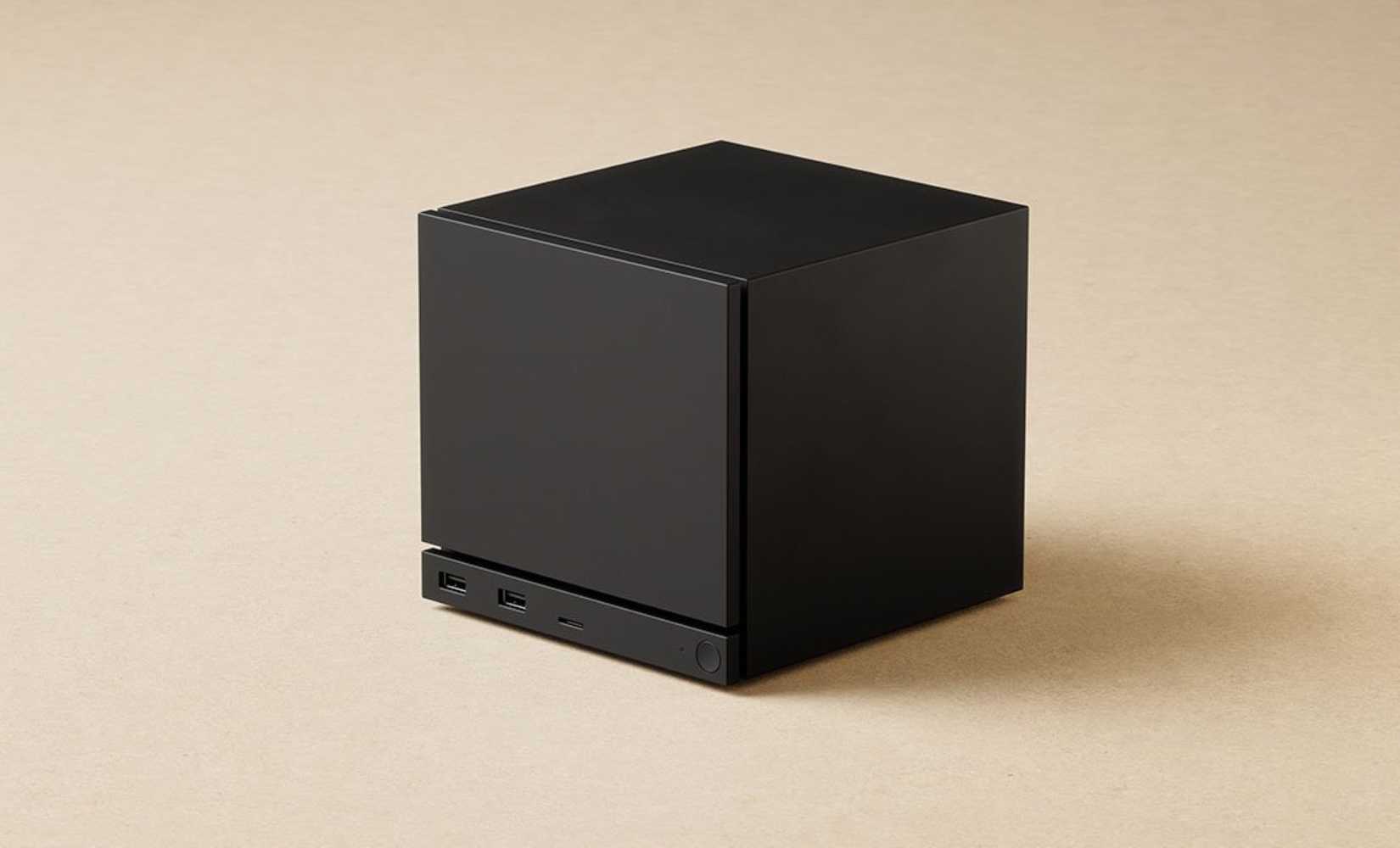
"The strength of PC gaming is the ability to play the games you want on the hardware you want. Steam Machine is a solution to these problems (and we think it’s a great one), but it’s not the only solution, and we don’t want it to be."
By positioning the Steam Machine as an extension, Valve acknowledges that it’s just one pathway to experience PC gaming, albeit a highly optimized and convenient one. It’s designed for those who want the power and versatility of a PC in a living room-friendly form factor, without the hassle of building one themselves. This identity explains why Valve isn’t chasing console-level pricing at the expense of its open-system principles. They are targeting a segment of the market that values the PC ecosystem’s freedom and innovation, even if it comes with a higher upfront cost. It’s a statement that their primary goal isn’t to compete directly on price with traditional consoles but to offer a premium, open alternative within the broader PC gaming landscape.
Implications for Consumers and the Industry
The Steam Machine’s launch amidst a challenging economic backdrop and with a firm adherence to Valve’s open-system philosophy carries significant implications, reshaping expectations for both consumers and the wider gaming industry.
Target Audience Re-evaluation
Given its premium price point, the Steam Machine is no longer a mass-market console killer. Instead, its target audience has inherently shifted. It is now primarily aimed at discerning PC enthusiasts who appreciate the convenience of a pre-built, optimized system for their living room, without the desire to build one themselves. It appeals to existing PC gamers who want a console-like experience without switching ecosystems or repurchasing their game libraries. Furthermore, it could attract users who value the long-term benefits of an open platform – the freedom from subscription fees for online play, the ability to install a wide variety of software, and the potential for future hardware upgrades without proprietary restrictions. For these segments, the Steam Machine offers a compelling package, trading raw affordability for convenience, performance, and philosophical alignment. However, for casual gamers or those seeking an entry-level gaming device, the Steam Machine’s price remains a significant barrier.
The DIY Alternative and Trade-offs
The original article noted that users could "put together a comparable PC for slightly cheaper than Steam Machine." This remains a valid alternative, especially for tech-savvy individuals. Building a PC offers the ultimate flexibility in component selection, potential cost savings if one is diligent about finding deals, and the satisfaction of a custom-built machine. However, the trade-offs are substantial. The DIY route demands significant time for research and assembly, technical expertise to troubleshoot potential issues, and the burden of managing multiple warranties from different component manufacturers. The Steam Machine, in contrast, offers a plug-and-play experience, a unified warranty, and an optimized software environment (SteamOS) designed for seamless gaming. For many, the premium paid for the Steam Machine buys peace of mind, ease of use, and a sleek form factor that integrates effortlessly into a living room setup.
Impact on the Console Market
The Steam Machine’s high price, coupled with Valve’s anti-subsidy stance, positions it distinctly from PlayStation and Xbox. It’s not designed to undercut them on price, but to offer a different value proposition. If the next generations of PlayStation (PS6) or Xbox ("Project Helix") also face inflationary pressures from component costs, the Steam Machine might indeed feel like it offers strong long-term value, especially considering its open ecosystem and lack of mandatory subscription services. However, if Sony and Microsoft manage to maintain more aggressive pricing, perhaps through continued subsidies or more efficient manufacturing, the Steam Machine will remain a niche product appealing primarily to PC aficionados. Its presence, nonetheless, serves as a reminder to console manufacturers of the enduring appeal and innovation inherent in the open PC gaming model.
The Long-Term Value Proposition
Despite the initial sticker shock, the Steam Machine’s long-term value proposition for its target audience could be substantial. Its foundation on an open PC architecture implies greater longevity and adaptability. Users may benefit from broader software compatibility, potentially easier upgradeability of certain components down the line (if Valve designs for it), and the continued evolution of the SteamOS platform driven by community and developer input. The absence of recurring subscription fees for online multiplayer, a common revenue stream for traditional consoles, also adds to its long-term cost-effectiveness. For those committed to the PC gaming ecosystem, the Steam Machine offers a streamlined entry point that respects their investment in the Steam library and their desire for an unrestricted gaming experience.
The Shadow of the "RAMpocalypse"
Ultimately, the Steam Machine’s launch story is inextricably linked to the extraordinary market conditions of the mid-2020s. The "RAMpocalypse" and the broader component shortages driven by the "AI boom" cast a long shadow over what could have been a more universally celebrated debut. Valve’s hardware is not expensive out of a deliberate strategy to exclude, but because, as the article concludes, "everything is expensive." This situation highlights the fragility of global supply chains and the profound impact that external economic and technological forces can have on product development and pricing, even for established giants like Valve. The Steam Machine stands as a testament to both Valve’s commitment to its principles and the formidable challenges of bringing innovative hardware to market in an era of unprecedented supply and demand volatility. It’s a product shaped by its times, and its success will largely depend on whether consumers value its unique blend of convenience, performance, and open-system philosophy enough to overcome its premium price tag.


 Lina Irawan
 Sagoh
Sagoh