Reynand Wu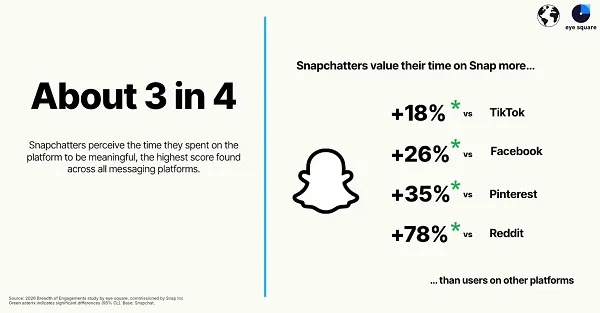
In an era where social media platforms are constantly vying for the attention of an increasingly distracted global audience, Snapchat has unveiled a significant new study that attempts to quantify the intangible: the "meaningfulness" of user engagement. Commissioned by Snap and conducted by the behavioral research firm Eye Square as part of its "2026 Breadth of Engagement" study, the report explores how the unique psychological environment of Snapchat influences not just social interaction, but consumer receptivity to brand messaging.
The study, which synthesizes data from 13 global markets, positions Snapchat as a standout performer in a crowded social landscape. By highlighting the platform’s connection-first ethos, Snap is making a strategic play to convince advertisers that its app offers a distinct, high-value alternative to the traditional "feed-based" advertising models utilized by competitors like Meta and TikTok.
The Core Findings: Defining "Meaningful" Interaction
At the heart of the research is a bold claim: approximately three out of four Snapchat users describe their time on the app as "meaningful." According to the report, this metric represents the highest score across major social platforms, setting a benchmark for what Snap describes as an "intentional" digital experience.
Quantifying the Qualitative
The concept of "meaningful" interaction is inherently subjective. Critics might point out that the survey’s methodology and the precise framing of these questions remain under wraps, which naturally invites a degree of skepticism regarding the report’s objectivity. However, when viewed through the lens of user behavior, the data provides a compelling narrative. Unlike platforms built around discovery feeds—where users often passively scroll through algorithmic content—Snapchat’s primary utility is rooted in private, direct communication.
The study indicates that this focus on intimate connection fosters a higher level of psychological "presence." Because users are on the app to talk to close friends and family, their mental state is more receptive, engaged, and anchored in the real world. This shifts the platform from a site of digital escapism to one of digital utility.
A Chronology of Research and Strategic Positioning
The release of this report is not an isolated incident but rather the latest chapter in Snap’s long-term strategy to distance itself from the "attention economy" metrics that define much of Silicon Valley.
- 2023-2024 (The Foundation): As privacy regulations tightened and ad-targeting became more complex due to iOS privacy changes, Snap began investing heavily in internal and third-party research to prove the efficacy of its "privacy-by-design" advertising model.
- Early 2025 (The Commission): Snap commissioned Eye Square to conduct the "2026 Breadth of Engagement" study. The goal was to move beyond simple click-through rates (CTR) and vanity metrics, aiming instead to understand the "mental approach" of the user.
- Mid-2025 (Data Synthesis): Researchers analyzed cross-platform behaviors across 13 countries, examining how users switch between different social apps and how their emotional state changes based on the interface.
- Late 2025 (The Launch): The final report is released, serving as a cornerstone for Snap’s B2B marketing initiatives. The company is now using these findings to provide a roadmap for advertisers who are struggling to find meaningful engagement on larger, more saturated platforms.
Supporting Data: Beyond the Click
While the "meaningful" metric is the headline, the study provides granular data regarding how this environment translates into tangible business results.
Unaided Recall and Favorability
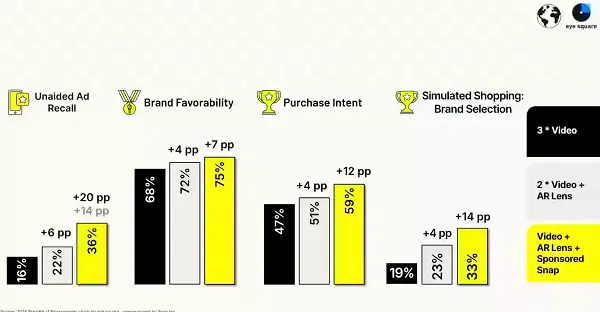
The study found that when advertisements are placed within this "connection-driven environment," they consistently outperform those placed in static or feed-based settings. Specifically, the data points to higher unaided recall and improved brand favorability. The hypothesis is that because users are in a "conversational" mindset, they are less likely to employ the "ad-blindness" that plagues traditional platforms.
The "Halo Effect" of Trust
Perhaps most interesting is the discovery of a "halo effect." When a brand appears in the context of a conversation between friends, the brand inherits some of that existing trust. The report suggests that this is a unique advantage that cannot be replicated by platforms that rely solely on interest-based algorithm feeds.
Cross-Platform Synergies
Crucially, the report does not suggest that Snapchat should replace other channels. In a nuanced section of the findings, the researchers explored how Snapchat ads can actually amplify Facebook video campaigns. The data indicates that a multi-platform strategy—where a brand engages a user on Facebook for discovery and then reaches them on Snapchat for deeper, more "meaningful" connection—leads to a significant lift in total campaign performance.
Official Stance: The "Connection-First" Philosophy
Snapchat’s leadership has been vocal about the implications of this research. In a statement accompanying the report, a company spokesperson emphasized the importance of user intent.
"When people open Snapchat, they want to connect with someone they care about," the company stated. "That intentionality is what makes the time feel meaningful and what makes it valuable for brands. We aren’t just selling impressions; we are offering an environment where advertising can live alongside human connection."
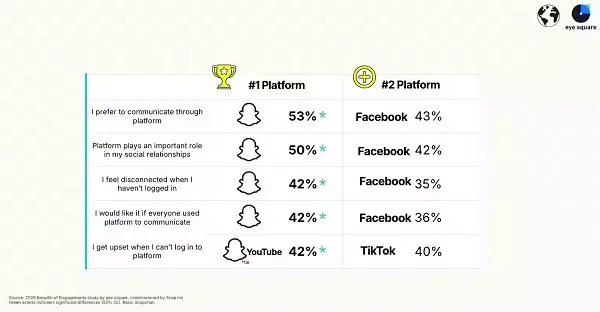
Snap further elaborated on the strategy of "incremental value," encouraging marketers to view Snapchat not as a standalone solution, but as the connective tissue in a wider marketing ecosystem. By integrating Snapchat into their broader digital mix, brands can reach consumers at the point of genuine social interaction, rather than just at the point of algorithmic consumption.
Implications for Marketers and Advertisers
The release of this report has profound implications for how media buyers should evaluate their social spend in 2026 and beyond.
1. Shift from "Reach" to "Receptivity"
For years, the industry standard has been "reach"—getting the ad in front of as many eyes as possible. Snap’s report argues that "receptivity"—the state of mind of the viewer—is a more important metric. Marketers may need to re-evaluate their KPIs to prioritize engagement quality over sheer volume.
2. The Return of Contextual Relevance
The report underscores the importance of the environment in which an ad appears. For brands, this means that the "where" is becoming just as important as the "who." An ad for a lifestyle product may perform significantly better when it appears in a space where a user is feeling connected to friends, rather than when they are doom-scrolling through a feed of viral content.
3. A Call for Integrated Strategies
The finding that Snapchat enhances Facebook video campaigns is a vital takeaway for performance marketers. It validates the "omnichannel" approach, suggesting that the future of social advertising lies in understanding the distinct role each platform plays in the consumer journey.
Critical Analysis and Final Considerations
While the report is undeniably a marketing tool for Snap, the underlying data touches on a genuine shift in user behavior. As consumers become increasingly fatigued by algorithmic feeds and the proliferation of low-quality, AI-generated content, the "walled gardens" of private messaging and close-friend connections (where Snapchat excels) are becoming highly coveted real estate.
However, a note of caution is warranted. The report is based on partial data, and as a self-commissioned study, it naturally emphasizes the strengths of the commissioning platform. Marketers should treat these findings as a lens through which to view their own data, rather than as a universal truth.
In conclusion, Snapchat’s latest report provides a sophisticated argument for why "meaningful" engagement matters. By framing its platform as a space for genuine human connection, Snap is carving out a niche that is increasingly difficult to ignore. Whether this will lead to a wholesale migration of ad budgets remains to be seen, but the data serves as a clear invitation for brands to stop shouting into the void of the feed and start engaging in the conversation. As the digital landscape continues to evolve, the brands that succeed will be those that prioritize the quality of the connection over the quantity of the click.


 Jia Lissa
 Pevita Pearce