Lina Hope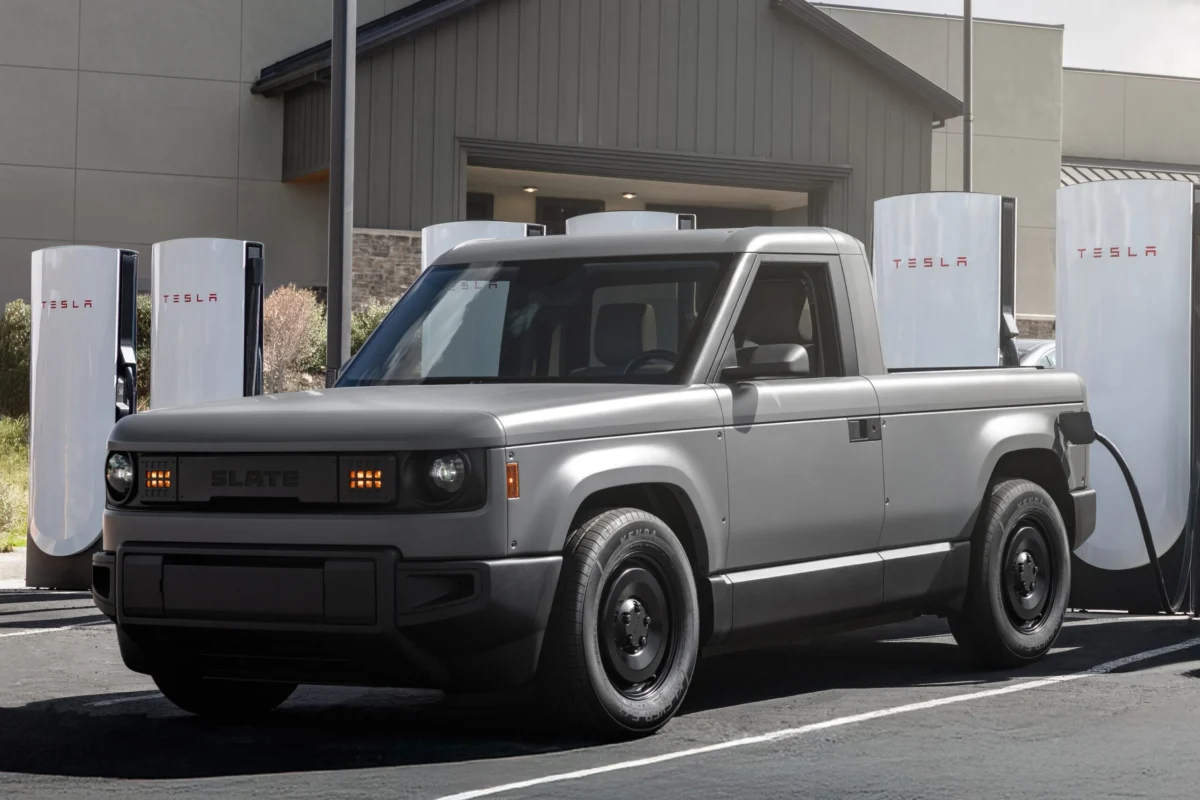
In an automotive landscape dominated by increasingly complex, software-laden, and expensive vehicles, EV startup Slate Auto is betting that the path to mass adoption lies in radical simplicity. Backed by a high-profile roster of investors, including Jeff Bezos’s family office, the company has officially pulled the curtain back on its flagship vehicle: a minimalist, modular electric truck starting at just $24,950.
This aggressive price point—nearly half the average transaction price of a new car in the United States—marks a significant milestone for a company that emerged from stealth just over a year ago. By stripping away luxury features and traditional manufacturing overhead, Slate is positioning itself to capture the "forgotten" end of the new vehicle market, offering a pragmatic solution for consumers who have been largely priced out of the electric transition.
The Financials: A Disruptive Price Point
The base model price of $24,950 is, by modern standards, a radical proposition. However, potential buyers should note that this figure represents the "bare metal" cost. As is standard in the automotive industry, the price excludes taxes, title, registration, government fees, destination charges, and documentation fees. Furthermore, the base model reflects a utilitarian design philosophy: it lacks an infotainment system, features hand-crank windows, and ships exclusively in a gray composite material.
By eschewing traditional automotive paint shops—which often require capital investments in the hundreds of millions—Slate is relying on a customizable wrap system. This allows customers to personalize their vehicles without the massive overhead costs that drive up MSRPs at legacy automakers.
Despite the low entry price, the company has delivered a significant technological upgrade. Slate announced on Wednesday that it has boosted the estimated range of the base model from an initial 150 miles to approximately 205 miles. While this doesn’t compete with the long-range luxury SUVs of the market, it is a functional threshold that changes the vehicle from a "city-only" proposition to a viable daily driver for many Americans.
A Chronology of Disruption
The journey to this price reveal has been as unconventional as the product itself.
- Early 2025: TechCrunch reports on a secretive startup backed by Jeff Bezos and industry veterans, revealing early ambitions to hit the mid-$20,000 price bracket.
- Mid-2025: Slate officially emerges from stealth, detailing its vision of a "transforming" EV that functions as a two-seater pickup but can be converted into a five-seater SUV.
- Late 2025 to Early 2026: The company focuses on the development of "Slate University," a series of educational resources designed to empower owners to perform their own vehicle modifications.
- June 2026: Reports emerge of a strategic warrant agreement between Slate Auto and online retail giant Carvana, signaling a shift in how the vehicle might be distributed.
- Current Day: Slate opens official pre-orders, cementing its status as the most affordable electric truck in the U.S. market.
This timeline reflects a company that has moved with remarkable speed, transitioning from concept to commercial viability in less than two years.
Modular Engineering: The "Slate University" Philosophy
One of the most distinguishing features of the Slate truck is its modularity. The vehicle is designed to evolve alongside the owner’s needs. Starting as a basic pickup, it can be physically converted into a five-seater SUV.
Rather than requiring a proprietary service center for every modification, Slate is democratizing maintenance and customization. Through its "Slate University" video series, the company provides step-by-step guides for tasks ranging from full cabin conversions to minor aesthetic upgrades like headlight covers. This "do-it-yourself" ethos is a direct challenge to the "walled garden" approach favored by companies like Tesla, where software locks and proprietary hardware often prevent owner intervention.
Supporting Data and Competitive Analysis
Slate’s arrival comes at a time when the broader EV market is in a state of flux. With the removal of the $7,500 federal EV tax credit and a softening of emissions standards under the current political climate, many legacy automakers—including Ford—have been forced to delay or cancel their more affordable EV projects. Ford’s long-teased $30,000 electric truck, for instance, remains on the horizon for 2027.
When compared to existing entry-level EVs, Slate’s value proposition is clear:
- Slate Truck: ~$24,950 (Pickup/SUV modularity, 205-mile range)
- Chevrolet Bolt: ~$29,000
- Nissan Leaf: ~$32,000
While the Bolt and Leaf offer more refined interiors and established service networks, they lack the utility of a truck bed and the modular flexibility that Slate offers. By targeting a niche that essentially has no other electric options, Slate is effectively creating its own category.
Implications of the Carvana Partnership
The most intriguing development in Slate’s distribution strategy is its deepening relationship with Carvana. The online used-car giant has recently pivoted toward selling new vehicles, and its potential role as a primary retail channel for Slate could solve the "dealership problem."
By opting out of the traditional franchised dealership model, Slate avoids the markups and adversarial sales tactics that have plagued the industry for decades. A direct-to-consumer model, bolstered by the logistics network of a company like Carvana, could allow Slate to maintain its slim margins while scaling production. The fact that Mark Walter—a major shareholder in Carvana and a lead investor in Slate—is a primary architect of this relationship suggests a highly calculated play to dominate the low-cost EV segment.
The Political and Economic Headwinds
Slate’s mission is not without significant risk. The company is operating in a post-subsidy environment. With the second Trump administration having rescinded the federal tax incentives that fueled the early growth of the EV sector, the startup must prove that its vehicles can be profitable on their own merits without government life support.
Furthermore, the "bare-bones" approach is a gamble on consumer psychology. In a market that has become accustomed to leather seats, panoramic roofs, and advanced driver-assistance systems, Slate is asking the American consumer to value utility and affordability above all else. If the market is indeed saturated with "luxury tech" EVs, Slate’s bet is that there is a massive, untapped demand for a vehicle that simply functions as a tool.
Conclusion: The Modern Model T?
Slate Auto is explicitly chasing the legacy of Henry Ford’s Model T and the Volkswagen Beetle: vehicles that were defined not by their luxury, but by their ubiquity and reliability. With $1.4 billion in funding from heavy hitters like General Catalyst, Slauson & Co., and the Bezos family office, the company has the runway to withstand the initial turbulence of the automotive manufacturing world.
Whether the Slate truck becomes a staple of the American driveway or a cautionary tale of over-simplified engineering remains to be seen. However, at $24,950, it is the first vehicle in years that truly challenges the assumption that the "Electric Future" is exclusively for the affluent. By stripping the car back to its essential components, Slate Auto has managed to do something few others have: make the electric vehicle feel attainable again.


 Reynand Wu
 Laily UPN