Iffa Jayyana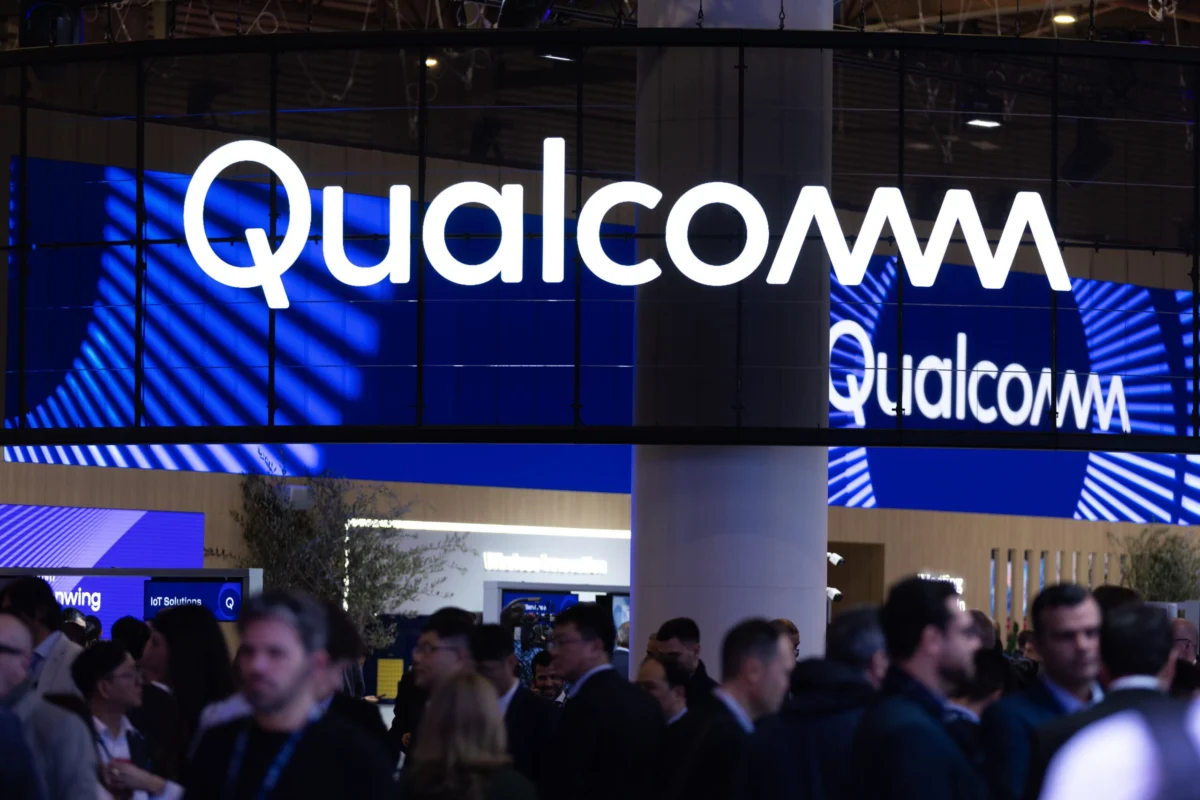
In a move that underscores the escalating arms race for artificial intelligence dominance, semiconductor giant Qualcomm has announced the acquisition of Silicon Valley-based startup Modular for nearly $4 billion. The deal, revealed Wednesday, marks one of the most significant consolidations in the software-defined hardware sector, positioning Qualcomm to challenge the entrenched software ecosystems currently dominated by industry titans like Nvidia.
The acquisition is more than a simple expansion of hardware assets; it represents a fundamental shift in how Qualcomm intends to approach the AI landscape. By integrating Modular’s proprietary software platform and coding language, Qualcomm is betting that the future of computing will not be defined by chips alone, but by the agility of the software that governs them.
The Deal Structure: A Premium for Innovation
The financial contours of the agreement reflect the intense competition for high-end AI engineering talent. Qualcomm has announced plans to issue approximately 19.2 million shares of common stock to finalize the transaction. Based on the company’s closing stock price at the time of the announcement, the deal is valued at just under $4 billion.
Significantly, the package includes a $300 million retention pool specifically earmarked for Modular’s employees. This investment is aimed at securing the roughly 150-person team, including co-founders Chris Lattner and Tim Davis, whose collective expertise is considered a primary driver of the startup’s value.
The acquisition comes just nine months after Modular secured $250 million in venture funding, which valued the company at $1.6 billion. The jump from a $1.6 billion valuation to a nearly $4 billion acquisition price in less than a year highlights both the rapid maturation of Modular’s technology and the desperation of established chipmakers to claim ownership of AI-adjacent software stacks. The deal is expected to close in the second half of this year, pending customary regulatory approvals.
A Chronology of a Software Disruptor
To understand the weight of this acquisition, one must look at the meteoric rise of Modular. Founded in 2022 by Chris Lattner and Tim Davis, the company was born out of a shared frustration with the fragmentation of AI infrastructure. Both founders brought deep industry pedigree: they were key players in the development of Google’s Tensor Processing Unit (TPU) chips, the engines that power many of the world’s largest AI models.
Lattner’s background is particularly legendary in Silicon Valley. Before his time at Google, he was the primary architect of LLVM, the open-source compiler infrastructure that serves as the backbone for modern programming languages. He also spearheaded the creation of Apple’s Swift programming language and served a stint as the head of Tesla’s Autopilot software program—a role later held by AI luminary Andrej Karpathy.
When Lattner and Davis launched Modular, their mission was ambitious: to build a "unifying software layer" that allows developers to write AI software once and deploy it across a variety of hardware architectures. In an era where AI developers are often forced to choose between proprietary, locked-in ecosystems—most notably Nvidia’s CUDA platform—Modular offered an alternative that promised hardware-agnostic performance.
By 2023, Modular had secured partnerships with major hyperscalers, including Amazon, and even maintained complex relationships with hardware giants like Apple and AMD. Throughout this period, Lattner maintained that the problem they were solving was "structural," requiring an independent approach that couldn’t be fully realized within the constraints of existing Big Tech conglomerates. Today, the irony of that statement is clear: the "structure" they finally opted for was Qualcomm’s.
The Technological Implications: Breaking the "CUDA Lock-in"
The core of Modular’s value lies in its ability to simplify the developer experience. Historically, if a company wanted to train or deploy a sophisticated AI model, they were largely tethered to the software libraries provided by the chip manufacturer. This has given Nvidia, in particular, a massive "moat" around its hardware business.
Modular’s platform acts as an abstraction layer. It allows developers to squeeze maximum performance out of both CPUs and GPUs without having to rewrite code for every specific chip. By bringing this technology in-house, Qualcomm is attempting to lower the barrier to entry for developers who want to utilize Qualcomm hardware for AI workloads.
"We believe the future belongs to developer-friendly, horizontal platforms that can run across diverse compute environments and give customers real choice in how and where they deploy AI," said Qualcomm President and CEO Cristiano Amon in an official statement. This sentiment is the cornerstone of the company’s new strategic vision: to become the preferred partner for a post-Nvidia-centric AI world.
Qualcomm’s Broader Strategy: Beyond the Smartphone
For years, Qualcomm has been synonymous with mobile connectivity. As the primary provider of modem and application processor technology for smartphones, the company has enjoyed a dominant position in the handheld market. However, the slowing growth of the global smartphone market has forced Qualcomm to diversify aggressively.
Under CEO Cristiano Amon, the company has pivoted toward a "diversified edge" strategy. Amon has been vocal about the company’s work on over 40 different chip designs for AI-enabled gadgets, ranging from smart jewelry and wearable pins to advanced earbuds and smartwatches.
This pivot, however, extends far beyond consumer gadgets. Qualcomm is making a concerted effort to penetrate the data center market—a sector that requires high-performance server CPUs and custom application-specific integrated circuits (ASICs).
Evidence of this strategy is found in the company’s recent activity:
- RISC-V Expansion: Late last year, Qualcomm acquired Ventana Micro Systems, a startup specializing in server CPUs based on the open-standard RISC-V architecture. This move was a clear signal that Qualcomm intends to compete directly with Intel and AMD in the high-performance computing space.
- Custom ASIC Design: Qualcomm has been courting major tech players for custom chip design services. Notably, reports suggest that China’s ByteDance has become an early customer, utilizing Qualcomm’s design expertise to build chips tailored for specific AI workloads.
By acquiring Modular, Qualcomm is essentially providing the "software glue" that makes these new, diverse hardware offerings viable for enterprise developers.
The Competitive Landscape and Future Challenges
The acquisition does not come without significant risks. By absorbing Modular, Qualcomm inherits a complex set of existing relationships. Modular previously collaborated with competitors of Qualcomm, including AMD and various cloud service providers. Navigating these relationships while simultaneously trying to prioritize Qualcomm’s own hardware will require a delicate balancing act.
Furthermore, the industry is watching closely to see how the broader AI ecosystem reacts. For years, the industry has been clamoring for an alternative to the proprietary software stacks that dictate AI development. While Modular’s technology provides a technical solution, the challenge will be cultural and commercial: can Qualcomm convince a developer base deeply accustomed to CUDA to migrate to a new, Qualcomm-owned platform?
Lattner’s argument that the AI software problem was "structural" suggests he believes this shift is inevitable. By moving the Modular team into the Qualcomm fold, he is betting that the scale and resources of a multi-billion-dollar corporation are the only way to effectively challenge the current status quo.
Conclusion: A Turning Point for AI Infrastructure
The acquisition of Modular is more than a $4 billion headline; it is a signal that the AI infrastructure wars have moved from the hardware level to the software abstraction level. Qualcomm is clearly signaling that it no longer wishes to be merely a chip supplier; it wants to be an AI platform provider.
As the industry moves toward a future where AI is integrated into everything from our watches to our data centers, the winners will be those who can provide a seamless, high-performance experience that spans the entire hardware spectrum. With the addition of Modular’s team and technology, Qualcomm has effectively placed a massive, high-stakes bet that it has the secret weapon required to define that future.
Whether this move will disrupt the dominance of current market leaders remains to be seen, but one thing is certain: the landscape of AI computing is undergoing a structural change, and Qualcomm is now firmly in the driver’s seat.


 Reynand Wu
 Laily UPN