


For five seasons, HBO’s Hacks has served as a masterclass in character-driven comedy, exploring the volatile, symbiotic, and deeply tender relationship between legendary stand-up icon Deborah Vance (Jean Smart) and her ambitious, millennial writing partner Ava Daniels (Hannah Einbinder). When the series finale recently aired, it didn’t just wrap up loose ends; it delivered a narrative "punchline" so precise that it felt as inevitable as it was surprising.
In a television landscape often criticized for fumbling the endings of beloved shows—frequently succumbing to the pressures of fan service or thematic overreach—Hacks opted for a resolution that was fundamentally true to its DNA. By prioritizing the creative heartbeat of the show over tragic melodrama, creators Paul W. Downs, Lucia Aniello, and Jen Statsky managed to stick a landing that will be studied by television writers for years to come.
The Architecture of an Ending: A Five-Year Plan
The brilliance of the Hacks finale lies in its long-term consistency. Unlike many series that pivot their endgame mid-run, the creative team behind Hacks held a clear vision from the moment they pitched the show in 2019.
In a post-finale discussion, showrunners Lucia Aniello and Jen Statsky revealed that the trajectory of Deborah and Ava’s relationship was etched into the show’s blueprint from the beginning. While the specific plot beats underwent "stress testing" throughout the production of five seasons, the thematic destination remained constant. This meticulous planning allowed the writers to plant subtle Easter eggs and emotional callbacks that paid off with maximum impact in the final moments.
"The major arc of these two characters and where they were starting and where they would end up was always what we had pitched," Statsky noted. This foresight allowed the show to avoid the "lost in the woods" feeling that plagues many long-running series, ensuring that every season felt like a necessary step toward the final, poignant scene in Paris.

Chronology of a Crisis: From Central Park to the Gare de Lyon
To understand why the finale resonates so deeply, one must look at the progression of the final episodes. The penultimate episode saw Deborah Vance achieve a career-defining milestone: a massive, triumphant stand-up performance in Central Park. It was the "Madison Square Garden" moment she had craved for decades, a vindication of her talent and her endurance in a brutal industry.
However, the high of this success was immediately tempered by a dark, looming reality. Throughout the final season, viewers learned that Deborah had been battling a health crisis—a mass that had been removed, leaving her facing a precarious future. In a move that challenged her character’s legendary control over her own narrative, Deborah traveled to Paris with plans to visit Dignitas, the Swiss assisted-death clinic.
The trip to Paris served as a crucible. As the duo roamed the city, the atmosphere was thick with the undercurrent of grief. Every mundane action, from the refusal to purchase a collectible salt-and-pepper shaker to the way they navigated the streets, was filtered through the lens of a looming finality. The audience was left in a state of high tension: Would the show actually go through with the tragedy of Deborah choosing to end her own life?
The climax at the Gare de Lyon station—the gateway to her planned destination in Zurich—provided the emotional pivot point. Just as the train was about to depart, the creative impulse, the insatiable need to perfect a joke, intervened. Deborah’s decision to stay, to pivot from her planned death to the pursuit of "another hour" of creative work, served as the ultimate testament to what drives her.
Supporting Data: Why the "Sick" Narrative Mattered
Critics and fans alike have questioned the necessity of the health scare, wondering if it was merely a manipulative plot device. However, the showrunners have been explicit about their intentions. The sickness was never intended to be a vehicle for tragedy; it was a narrative device designed to force a reckoning with what truly gives life meaning for Deborah Vance.
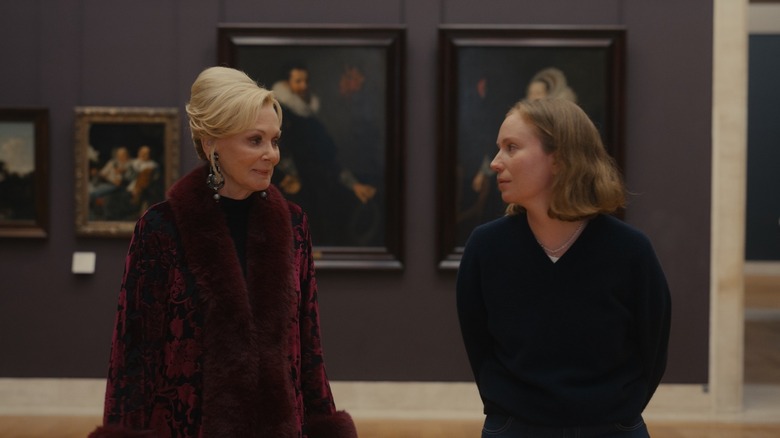
"The purpose of having her be sick was for the ultimate redemption, the idea of the comedy and writing together saving her life," Aniello explained in an interview with Variety.
This perspective is supported by the show’s internal logic. Deborah has spent her entire life curating her image, controlling her career, and shielding herself from vulnerability. By introducing the prospect of death, the show forced her to confront whether her legacy was defined by her past achievements or her ongoing creative partnership. The fact that she chooses to continue working with Ava confirms that her "life partner" is not a romantic interest, but a creative one. The "punchline" isn’t a joke about death; it is the realization that the work is the only thing that makes the struggle worth it.
Official Responses and Creative Intent
The response from the creators highlights a deliberate defiance of standard TV tropes. In an era where "prestige" dramas often feel obligated to end in high-stakes tragedy to be taken seriously, Hacks chose life.
The inclusion of the "Bit by Bit" featurette alongside the finale provided fans with a rare glimpse into the creators’ philosophy. By confirming that they never intended for Deborah to die, the producers underscored a crucial point: the show is, at its heart, an optimistic exploration of mentorship and female ambition. The health scare acted as a catalyst for a realization that had been building since the pilot episode. When Deborah tells Ava, "I might not have 30 years, but I think I have another hour," it is perhaps the most romantic sentiment the show has ever delivered—a profound declaration of commitment to their craft.
Implications for Future Comedy-Dramas
The success of the Hacks finale carries significant implications for the future of the dramedy genre. It proves that audiences do not require a show to "burn it all down" to provide a satisfying conclusion.
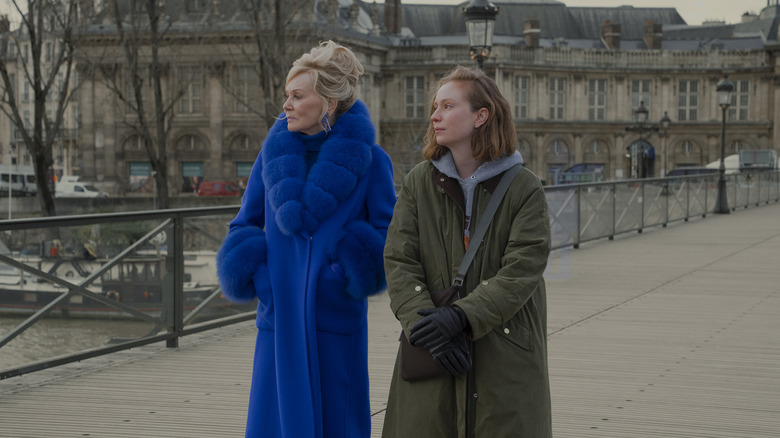
- Character Agency: The ending reinforces that characters should make choices that are consistent with their established personalities, even when those choices defy audience expectations for "dramatic" resolutions.
- The Power of Partnership: By centering the finale on the creative process, Hacks elevated the importance of professional and platonic partnerships, shifting the focus away from the traditional romantic tropes that define most TV finales.
- The "Perfect Punchline": The show’s title, Hacks, takes on a new meaning in the final frames. It acknowledges the grinding, repetitive, often unglamorous nature of comedy, while simultaneously celebrating the beauty of those who dedicate their lives to it.
The final sequence—a visual bridge connecting the romanticized streets of Paris to the neon-soaked reality of the Las Vegas Strip—is a stroke of visual genius. Set to the dual vocals of Barbra Streisand and Judy Garland singing "Get Happy/Happy Days Are Here Again," the scene cements the idea that Deborah and Ava are now permanently linked in the history of the industry.
As the screen fades to black, the audience is left not with a sense of closure, but with a sense of continuity. The joke continues, the work remains, and for Deborah Vance, the "perfect punchline" is simply having one more day to write it. Hacks will be remembered as a show that understood that while life is finite, the act of creating something new—even for just one more hour—is the greatest triumph of all.










No comments yet. Be the first to join the conversation!