Iffa Jayyana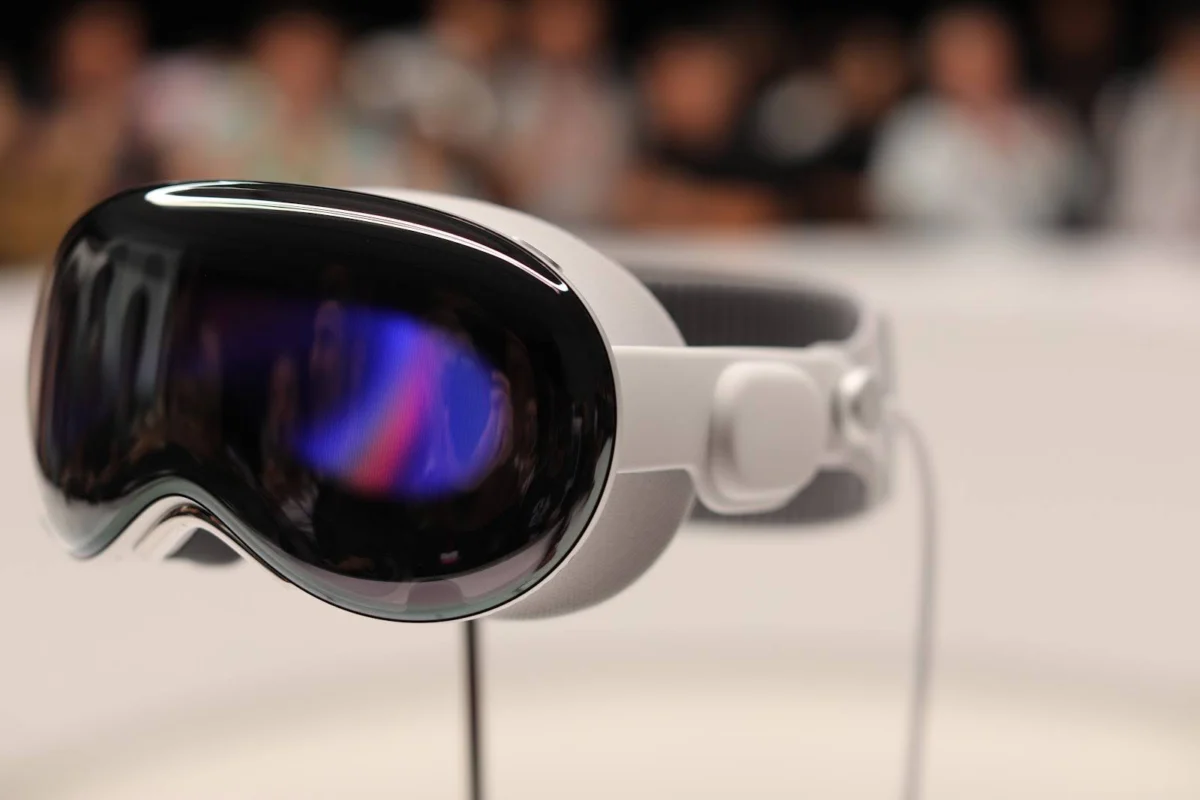
By TechCrunch Staff
Updated June 27, 2026, 9:45 AM PDT
In a significant realignment of the Silicon Valley talent landscape, Paul Meade, the Apple vice president who served as the primary architect behind the Vision Pro headset, has announced his departure from the Cupertino-based tech giant. Meade, a veteran hardware executive, is reportedly transitioning to OpenAI, where he is expected to spearhead the company’s burgeoning hardware initiatives.
The move, first reported by Bloomberg, marks a pivotal moment for both organizations. For Apple, it signals a period of internal volatility as the company navigates a transition in leadership and pivots its product strategy. For OpenAI, it represents an aggressive escalation in its efforts to move beyond software models and into the physical world of consumer hardware.
The Strategic Shift: From Vision Pro to Smart Glasses
Paul Meade’s tenure at Apple was defined by his leadership of the Vision Pro, the company’s ambitious, albeit commercially polarizing, spatial computing headset. Launched with significant fanfare, the Vision Pro was designed to be the definitive piece of hardware for the "spatial computing" era. However, the device struggled to gain traction with the broader consumer market, hampered by its high price point, weight, and a lack of compelling "killer apps" that could justify its cost to the average user.
Recognizing these market realities, Apple recently pivoted its hardware roadmap. Internal reports suggest the company has moved to deprioritize further overhauls of the Vision Pro in favor of developing AI-powered smart glasses. These glasses are intended to serve as a more accessible, everyday wearable, designed to bridge the gap between traditional eyewear and sophisticated augmented reality (AR).
Meade’s departure is particularly noteworthy because he was not merely the face of the Vision Pro; he was the lead on these forthcoming smart glasses. With the company aiming for a product launch next year, the loss of the primary executive overseeing the project creates a vacuum at a critical stage of development. Apple is under intense pressure to deliver a product that can effectively compete with Meta’s Ray-Ban smart glasses, which have captured a significant share of the wearables market by emphasizing style and utility over bulky, tethered displays.
A Chronology of Leadership Transitions
The departure of Paul Meade does not exist in a vacuum. It is the latest in a series of cascading effects following the announcement of John Ternus as the successor to Apple CEO Tim Cook.
The Ternus Era Begins
As John Ternus prepares to take the reins at Apple, he has begun to implement a comprehensive restructuring of the hardware engineering division. For many senior vice presidents who have spent years climbing the corporate ladder, the new organizational hierarchy has felt restrictive. Reports indicate that several long-term executives have perceived these structural changes as a demotion, leading to a climate of uncertainty within the executive suite.
The Timeline of the Pivot
- Early 2024: Apple intensifies development on the Vision Pro, positioning it as the future of computing.
- Mid-2025: Facing sluggish sales and internal critiques, Apple begins to shift internal resources away from high-end VR headsets toward lightweight AI glasses.
- October 2025: Reports confirm that Apple has shelved major Vision Pro updates to focus exclusively on the "AI Glasses" project.
- April 2026: News breaks that Apple is testing four distinct designs for its upcoming smart glasses, signaling a departure from the "one-size-fits-all" hardware strategy.
- June 2026: Paul Meade resigns from his post at Apple, opting to join OpenAI as the company moves into the hardware space.
The OpenAI Ambition: A "Calm" Future
OpenAI, best known for its Large Language Models (LLMs) like GPT-4 and its generative video capabilities, has long been rumored to be exploring the hardware space. The recruitment of an executive of Meade’s caliber suggests that the company is moving past the "experimental" phase of its hardware journey.
Central to this mission is the partnership between OpenAI CEO Sam Altman and Jony Ive, the legendary former Apple chief design officer. The duo has been working on an AI-centric device that promises to redefine the user experience. Altman has described this mystery project as being "more peaceful and calm" than the smartphone, implying a shift away from the notification-heavy, distraction-prone interface of the modern iPhone.

However, the road to hardware success is notoriously difficult. Late last year, reports surfaced that the OpenAI/Ive collaboration was struggling with fundamental design challenges. Balancing the massive compute requirements of AI models with the thermal and battery constraints of a wearable device remains a significant engineering hurdle. Meade’s expertise in managing complex hardware-software integration—the very core of the Vision Pro experience—will be instrumental in overcoming these obstacles.
Industry Implications and Market Analysis
The loss of Paul Meade creates a twofold challenge for Apple. First, it leaves a strategic void in the wearables department at a time when the company cannot afford delays. Second, it highlights the growing trend of top-tier talent migrating from legacy hardware giants to AI-native firms.
The Competition for Wearable Supremacy
The wearables market is currently undergoing a radical transformation. With Meta’s success in integrating AI into everyday eyewear, the "Vision Pro" model of high-priced, immersive VR is increasingly seen as a niche product. Apple’s success in this space now hinges on its ability to execute on its smart glasses project, which must be thin, fashionable, and inherently "smart" through deep AI integration.
The Talent War
OpenAI’s aggressive poaching of hardware talent indicates that the "AI war" is no longer confined to the cloud. As AI models become more integrated into our daily lives, companies like OpenAI, Google, and Meta are realizing that the physical device is the final interface. By hiring away the people who built the most advanced spatial computing headset in history, OpenAI is signaling that it intends to define the form factor for the next generation of AI interaction.
Official Responses and Next Steps
As of this morning, neither Apple nor OpenAI has issued a formal press release regarding the transition. TechCrunch reached out to both organizations for comment.
An Apple spokesperson declined to comment on personnel matters, though internal sources suggest that the hardware engineering team is already moving to redistribute Meade’s responsibilities among existing senior staff to ensure the smart glasses project remains on schedule for next year.
OpenAI has similarly maintained a "no comment" stance, consistent with its strategy of keeping its hardware development under tight wraps until a product is ready for public unveiling.
For industry observers, the move is a clear signal that the next frontier of the technology industry will be played out in the physical, wearable space. The question remains: can OpenAI, with its software-first culture, succeed where Apple, a hardware-first company, has struggled? And can Apple maintain its dominance in hardware as its veteran leaders look toward the AI-first future of its competitors?
The departure of Paul Meade is more than just a personnel change; it is a symptom of a broader industry shift. As the lines between software, AI, and physical hardware blur, the leaders who can navigate the complexities of all three will define the next decade of consumer technology. With John Ternus stepping into the CEO role and OpenAI ramping up its physical footprint, the coming year promises to be one of the most transformative in the history of Silicon Valley.


 Ali Ikhwan
 Sagoh
Sagoh