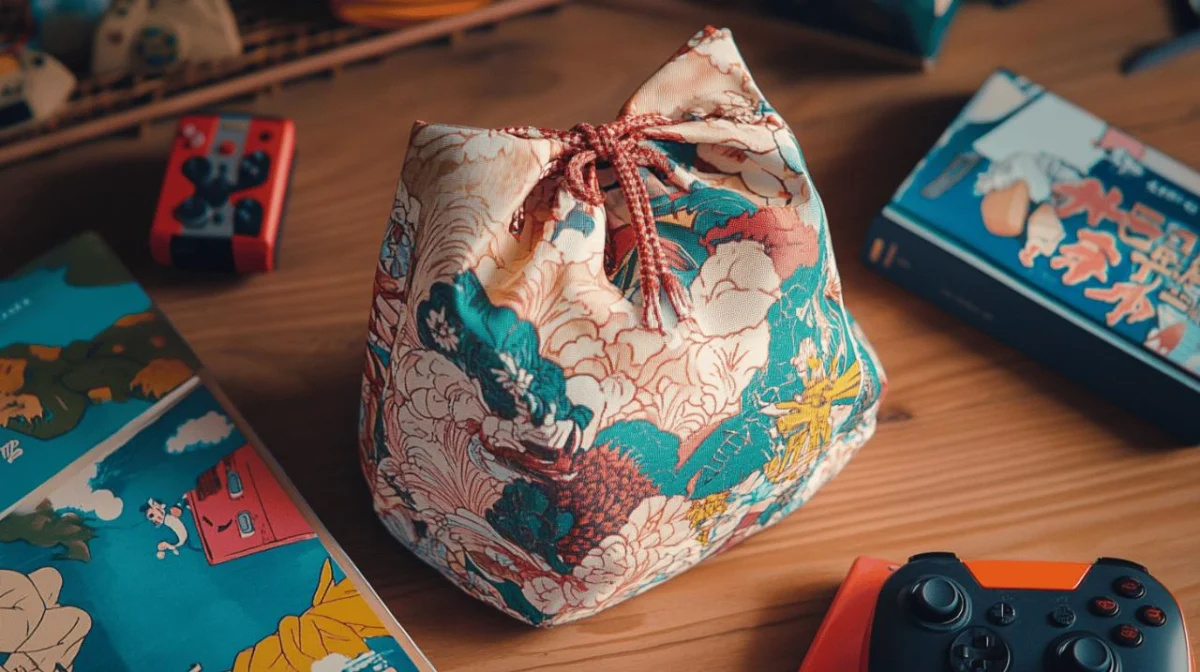
The Japanese tea ceremony, or Chanoyu, is far more than a simple act of preparing a beverage; it is a profound philosophical practice that elevates the mundane to the sublime. At the heart of this ritual lies a delicate balance of aesthetics, discipline, and mindfulness. While much has been written about the matcha whisk (chasen) or the ceramic bowls (chawan), there is a silent, indispensable guardian of these treasures: the ceremony bag. Often overlooked by casual observers, these carriers are marvels of functional art, embodying the core tenets of the Way of Tea: Wa (harmony), Kei (respect), Sei (purity), and Jaku (tranquility).
Main Facts: The Essence of the Ceremony Bag
The ceremonial bag serves as the bridge between the practitioner and the sacred space of the tea room. Far from being a mere utility, it is a curated vessel designed to protect fragile, artisan-crafted tools.
These bags are typically constructed from high-quality textiles—ranging from traditional nishijin-ori silks to robust, hand-dyed cottons. Each bag is engineered to accommodate specific dimensions, ensuring that the chawan (tea bowl), chasen (bamboo whisk), and chashaku (bamboo tea scoop) remain secure during transit. The craftsmanship involved in these bags mirrors the quality of the tea itself, reflecting the regional pride of production hubs like Uji, the legendary birthplace of premium Japanese matcha.
A Chronological Journey: From Kamakura to Modernity
The evolution of the tea bag is inextricably linked to the history of Zen Buddhism in Japan.
- The Kamakura Period (1192–1333): The origins of the tea bag trace back to the arrival of Zen monks who brought tea seeds and preparation methods from China. To transport their limited but precious belongings between mountain monasteries and city temples, they developed simple, durable cloth wrappers and pouches.
- The Muromachi Period (1336–1573): As tea culture permeated the samurai class and the aristocracy, the containers evolved. Aesthetics became as important as utility. The "Wabi-cha" style, championed by masters like Sen no Rikyu, began to favor rustic, humble, yet refined materials.
- The Edo Period (1603–1868): This era saw the standardization of the tea ceremony. Bags became more specialized, with internal compartmentalization designed to protect specific items, ensuring that the lacquerware and ceramics remained pristine for generations.
- The Contemporary Era: Today, while modern materials are sometimes utilized for convenience, there is a global resurgence in the demand for authentic, hand-crafted bags that honor the legacy of Uji and Kyoto artisans.
Supporting Data: Anatomy of the Ideal Carrier
A professional-grade ceremony bag is not selected at random; it is chosen based on rigorous standards of craftsmanship and spatial efficiency.
Structural Integrity and Finishes
An authentic bag must pass a strict "anatomy test." The seams must be reinforced to prevent fraying, as the weight of ceramic bowls can put significant stress on the fabric. The internal lining is often a soft, moisture-wicking material—frequently silk or fine linen—to protect the fragile glaze of the tea bowls. Modern connoisseurs look for:
- High-tensile stitching: Ensuring longevity through years of constant use.
- Reinforced handles: Designed for balance to ensure the contents do not shift during travel.
- Precision Closures: Often using traditional toggle-and-loop systems or discreet, high-quality zippers that do not scratch the contents.
Spatial Dimensions
Standard professional bags typically measure between 25 and 30 centimeters in height and approximately 20 centimeters in width. This specific geometry is designed to fit the standard chawan footprint, leaving just enough room for the fukusa (silk cloth used for ritual cleaning) and the chashaku.
The Ritual of Organization: Internal Compartmentalization
The interior of a high-quality tea bag is a masterclass in spatial management. Every item has a designated place, preventing the "clutter" that would disrupt the Jaku (tranquility) required for the ceremony.
- The Protective Nest: Specialized pockets are sewn to hold the chasen upright, preventing the delicate bamboo tines from bending or breaking.
- Textile Security: The chakin (hemp or linen cloth) and fukusa are stored in separate, flat compartments to keep them wrinkle-free.
- Freshness Zones: For those transporting matcha powder from Uji, dedicated insulated compartments ensure that the tea is kept away from direct heat and light, maintaining the vibrant emerald color and grassy notes essential to the brew.
Expert Perspectives: The Philosophy of Maintenance
"To care for your bag is to care for the tea itself," says Kenji Sato, a master artisan from the Uji region. According to practitioners, the maintenance of the bag is a continuation of the ceremony.
Cleaning Protocols
Professional cleaners and masters recommend a "dry-first" approach. Using a soft-bristled brush, one should gently remove dust from the exterior after every use. For deeper cleaning, professionals advise against standard machine washing. Instead, spot-cleaning with a white, lint-free cloth and a neutral, natural-based detergent is the preferred method. The goal is to preserve the integrity of the natural fibers, which are often organic and untreated.
Storage and Preservation
When not in use, the bag should be kept in a climate-controlled environment. Experts recommend stuffing the interior with acid-free tissue paper to maintain its structural form. Storing it in a cool, dark place prevents the fading of natural dyes, which are often derived from indigo or persimmon tannin.
The Broader Implications: Sustainability and Heritage
The modern tea bag industry is currently at a crossroads. As demand for "fast tea" grows, there is a push to maintain the high standards of traditional, fair-trade craftsmanship.
Economic Impact on Artisanal Communities
By choosing authentic, handmade bags, consumers support the regional economies of Japan, particularly in Uji. These artisans are the keepers of intangible cultural heritage. The use of natural, sustainable materials—such as organic cotton and plant-based dyes—aligns the tea ceremony with modern environmental goals, proving that a tradition born in the 12th century is remarkably relevant in the 21st.
Cultural Preservation
The tea ceremony bag is a vessel for more than just tools; it is a vessel for Japanese identity. Every time a practitioner carefully packs their chawan into a hand-stitched bag, they are participating in a lineage of respect. The bag acts as a tactile reminder of the four pillars—Wa, Kei, Sei, Jaku—ensuring that even in our fast-paced world, there remains a space for the quiet, deliberate beauty of the Way of Tea.
Conclusion: A Lifetime Investment
Selecting a ceremony bag is a personal journey. Whether one opts for a simple, minimalist design for informal chakai gatherings or a highly detailed, embroidered piece for formal rites, the item becomes a lifelong companion. As it ages, the bag develops a patina, recording the history of every tea gathering it has supported. In this sense, the bag does not merely hold the tools of the ceremony; it holds the memories of the peace and harmony experienced within the sanctuary of the tea room.
For the modern enthusiast, the investment in a high-quality, artisan-made bag is not merely a purchase—it is a commitment to the preservation of a tradition that has sustained the human spirit for nearly a millennium.