Dwi Wanna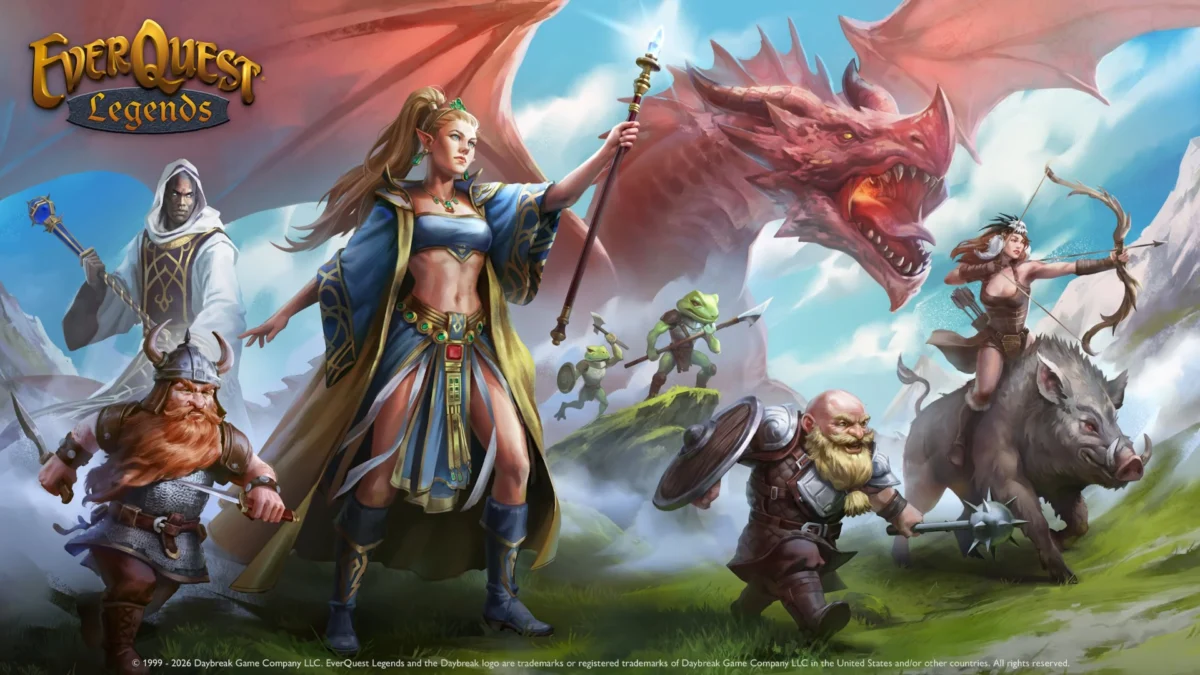
The landscape of MMORPGs is undergoing a seismic shift as Daybreak Game Company officially pulls back the curtain on its most ambitious project in years: EverQuest Legends. A bold reimagining of the seminal 1999 classic that defined a generation of online gaming, Legends promises to bridge the gap between the nostalgic roots of Norrath and the expectations of the modern, solo-centric player. With a confirmed release date of July 28, 2026, for Windows PC, the countdown to this return has officially begun.
The Core Offering: A Modern Take on a Timeless World
EverQuest Legends is not merely a "classic server" or a graphical remaster; it is a mechanical evolution of the original EverQuest formula. Priced at a $19.99 entry fee, which includes the first month of service, the game will transition to a $9.99 monthly subscription model thereafter.
The philosophy driving Legends is one of inclusivity and agency. While the original EverQuest was notoriously unforgiving and heavily reliant on group cooperation—often requiring hours of preparation just to find a party—Legends is designed from the ground up to accommodate solo players and casual adventurers.
This design shift is perhaps best exemplified by the game’s new "Multi-Classing" system. Players can now select up to three active classes per character, allowing for unprecedented build diversity. A player might combine the stealth of a Rogue, the divine protection of a Paladin, and the raw arcane power of a Wizard into a single, formidable hero. This flexibility ensures that regardless of whether one chooses to traverse the dangerous wilds of Antonica alone or join a group of up to four, the game remains balanced and accessible.
Chronology: From 1999 to the Present Day
To understand the significance of EverQuest Legends, one must look at the timeline of the franchise:
- 1999: The original EverQuest launches, changing the gaming world forever and establishing the template for 3D MMORPGs.
- 2004: EverQuest II is released, attempting a more modern, quest-driven approach to the Norrathian experience.
- 2010s: Various "progression servers" are launched by Daybreak, allowing players to experience the game as it existed at specific historical expansion points.
- June 2026: Daybreak announces EverQuest Legends, a standalone reimagining that prioritizes a "solo-friendly" experience while retaining the original aesthetic.
- July 1, 2026: The official preorder beta period begins, granting early access to those who secure their copy ahead of the retail launch.
- July 28, 2026: Official commercial launch of EverQuest Legends.
This trajectory represents a maturation of the franchise. Where EverQuest was once defined by its high barrier to entry, Legends serves as a synthesis of the franchise’s rich history and the industry’s shift toward player-friendly, time-respecting design.
Supporting Data and Technical Specifications
At its core, EverQuest Legends aims to preserve the "soul" of the 1999 experience. The developers have confirmed that the game will launch with the continent of Antonica in its pre-Kunark state. This deliberate choice serves as a love letter to the early days of the game, utilizing the original art style, zone geometry, and iconic musical scores.
Key Technical Features:
- Engine Integrity: The game retains the classic spell effects, loot tables, and UI aesthetics, ensuring that the "EverQuest feel" is preserved.
- Advanced Solo Scaling: Content is programmed to scale based on group size (1 to 4 players) and raid size (up to 8 players). This is a monumental change from the original game, where "soloing" was often restricted to specific classes (like Necromancers or Enchanters) and required extreme effort.
- Class Flexibility: By allowing three active classes, the game eliminates the "holy trinity" bottleneck that plagued early MMOs, where certain classes were left without groups due to a lack of healers or tanks.
- Accessibility: All original playable races, including the Iksar, Frogloks, and Kerran, will be available at launch, ensuring that players aren’t gated from their favorite archetypes.
Official Responses and Developer Intent
In recent developer diaries, the team at Daybreak emphasized that EverQuest Legends is not intended to replace the existing EverQuest or EverQuest II live servers. Instead, it is an alternative path for players who found the original game’s difficulty spikes insurmountable or its time requirements unrealistic for modern life.

"Our goal with Legends was to capture the magic of the original world-building without the friction," says a spokesperson for the development team. "We’ve seen a decade of players asking for a way to enjoy the deep lore and expansive world of Norrath at their own pace. With the new gear upgrade systems and multi-classing, we are providing the tools for players to become legendary figures in their own right, regardless of their social availability."
The inclusion of the preorder bonus—specifically the title "The Legend"—is an attempt to foster a sense of community pride among those who sign up early. It serves as a badge of honor, identifying the early adopters who are willing to help test the servers during the critical July 1–21 beta window.
The Broader Implications for the MMO Genre
The announcement of EverQuest Legends has sent ripples through the industry. In an era dominated by live-service games and "Games as a Service" models that often lean heavily on microtransactions and "Fear of Missing Out" (FOMO) tactics, Daybreak’s approach is notably traditional.
By opting for a fixed price and a subscription model, Daybreak is signaling a desire for a stable, committed player base rather than a volatile population driven by seasonal passes. The move to make a notoriously "hardcore" game into a "solo-friendly" experience also highlights a broader trend: the aging of the original MMO player base. The generation that grew up on EverQuest now has jobs, families, and less time to commit to eight-hour "raid nights." Legends is, in many ways, the "adult" version of the game—respectful of the player’s time while retaining the challenge and wonder of the original experience.
Furthermore, the decision to retain the original aesthetic—rather than opting for a full high-fidelity visual overhaul—is a strategic move. It taps into the growing "retro-revival" movement, where players prioritize art direction and atmosphere over raw graphical power. By keeping the classic graphics, Daybreak avoids the "uncanny valley" effect that often haunts remasters of older 3D titles, keeping the game firmly grounded in its 1999 roots.
Conclusion: A New Era for Norrath
As July 28 approaches, the anticipation is palpable. Whether you are a veteran of the original 1999 launch who remembers the perilous treks across the Karanas, or a newcomer curious to see where the modern MMORPG began, EverQuest Legends offers a compelling proposition.
By balancing the nostalgic allure of the past with the quality-of-life improvements required for the present, Daybreak Game Company is attempting to do what few have managed: update a classic without stripping away its identity. If the beta period proves successful, EverQuest Legends could well set the gold standard for how legacy titles should be handled in an industry that is increasingly looking backward for its next big step forward.
For those ready to return to the world of Norrath, the gates are opening soon. It is time to choose your classes, secure your name, and prepare to leave your mark on a legend reborn.


 Asro
Asro
 Muslim