As we celebrate Disability Pride Month, the literary world is undergoing a long-overdue transformation. For decades, the narrative surrounding disability in children’s literature was often relegated to tropes—stories where disability was either a tragedy to be overcome or a "lesson" in inspiration for non-disabled peers. Today, that paradigm is shifting. As more disabled authors and illustrators take the helm, the industry is witnessing a surge of authentic, nuanced, and joyful portrayals of disabled life.
For children growing up in diverse families, this representation is not merely "inclusive"—it is a mirror of their reality. Whether it is a three-year-old observing that their aunt navigates the world in a wheelchair or a student learning that there are many ways to process language, these stories validate the diverse ways human beings move, think, and exist.
The Evolution of the Disability Narrative in Youth Literature
The history of disability in children’s books has moved through distinct phases. In the mid-20th century, characters with disabilities were rarely protagonists; when they did appear, they were often secondary characters defined by their medical condition. The late 20th and early 21st centuries saw the rise of the "overcoming" narrative, which, while well-intentioned, often centered on the discomfort of non-disabled readers rather than the lived experience of the disabled protagonist.

Today, we are in the era of "Disability Pride." This movement emphasizes that disability is a natural part of human diversity. It is not something to be cured or hidden, but a culture to be celebrated. This shift is reflected in contemporary picture books that treat disability as a matter-of-fact aspect of a character’s identity, alongside their hobbies, personality, and relationships.
Curating the Canon: Essential Picture Books
Selecting the right books to represent the full spectrum of the disability experience is a challenge, given the recent influx of quality literature. However, certain titles have emerged as pillars of this movement.
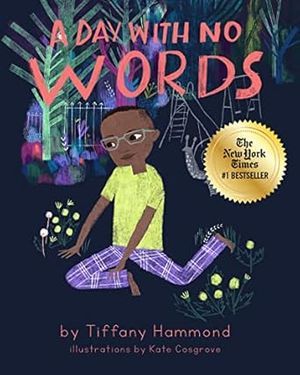
A Day with No Words by Tiffany Hammond
Tiffany Hammond, a prominent advocate for the autistic community, collaborated with illustrator Kate Cosgrove to produce a seminal work. The story centers on Aidan, a non-speaking autistic boy who communicates through a tablet. By challenging the misconception that non-speaking equates to a lack of understanding, the book serves as a vital resource for both neurodivergent children and their peers, fostering an environment of mutual respect and patience.
I Talk Like a River by Jordan Scott
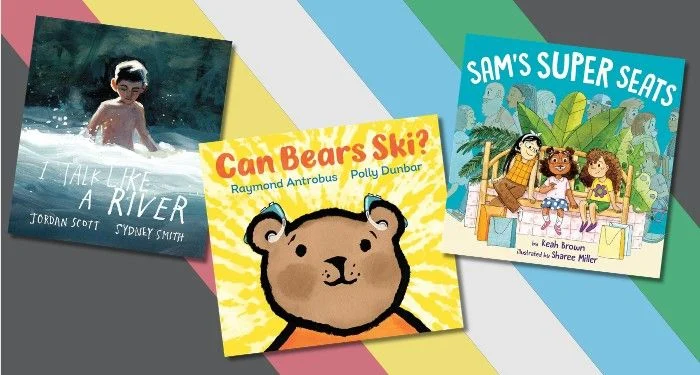
Stuttering is often stigmatized in early childhood settings. Jordan Scott’s I Talk Like a River masterfully captures the isolation and eventual self-acceptance of a child who stutters. Through the evocative, fluid illustrations of Sydney Smith, the book provides a sensory experience that helps readers empathize with the physical sensation of speech blocks, effectively turning a "difficulty" into a poetic expression of self.
Mama Car by Lucy Catchpole
Wheelchair users are frequently sidelined in children’s media, or their mobility aids are depicted as objects of pity. Lucy Catchpole, a wheelchair user herself, reframes this in Mama Car. By centering the joy of a mother-child bond where the wheelchair is a "Mama Car" for adventures, the book normalizes assistive technology, portraying it as a tool for connection and autonomy rather than a limitation.
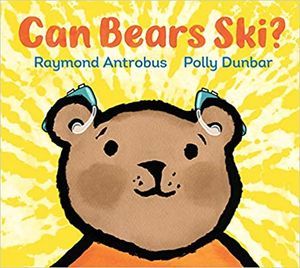
Can Bears Ski? by Raymond Antrobus
Poet Raymond Antrobus offers a poignant exploration of being Hard of Hearing (HoH). The narrative play on the phrase "Can you hear me?" versus "Can bears ski?" acts as a clever literary device to introduce children to the concept of hearing loss. It is a masterclass in accessibility, inviting hearing children to understand that there are multiple ways to perceive the world.

Sam’s Super Seats by Keah Brown
Keah Brown, the creator of the #DisabledAndCute movement, brings us Sam’s Super Seats. This book is crucial for its focus on self-advocacy. Sam, who has cerebral palsy, navigates her environment by identifying and securing comfortable seating. It teaches young readers the importance of asserting their needs and the necessity of accessible public spaces.
A Sky-Blue Bench by Bahram Rahman
International perspectives are vital to the disability conversation. In A Sky-Blue Bench, author Bahram Rahman explores the life of an Afghani girl returning to school with a prosthetic leg. Her journey to advocate for benches in her classroom highlights a universal truth: accessibility is not just an individual challenge; it is a community responsibility.
A Walk in the Words by Hudson Talbott
Learning disabilities are often invisible, making the struggle of a child in the classroom particularly isolating. Hudson Talbott’s memoir-style picture book demystifies his own journey with reading. By illustrating the emotional toll of trying to keep up with the "speed" of others, Talbott gives children permission to learn at their own pace—a message that is as liberating for neurotypical children as it is for those with learning disabilities.

The Role of Awards and Industry Standards
For parents and educators looking to curate a library that reflects the complexity of the human condition, the Schneider Family Book Awards serve as the gold standard. Administered by the American Library Association (ALA), these awards honor authors and illustrators who demonstrate artistic excellence in their expression of the disability experience.
The existence of such an award underscores a significant shift in the publishing industry. It signals that "disability books" are no longer a niche market or a charitable endeavor; they are recognized as essential literature that enriches the cultural landscape for all children.
Supporting Data: Why Representation Matters
Research in developmental psychology suggests that children begin to form biases—both positive and negative—as early as the preschool years. According to studies on bibliotherapy, children who are exposed to diverse characters in literature exhibit higher levels of empathy and a greater capacity for social-emotional learning.
When disabled children see themselves represented in literature, it reduces feelings of isolation and increases self-esteem. Conversely, for non-disabled children, these books act as a bridge to understanding. They move the conversation away from "others" and toward "us," helping to dismantle the systemic ableism that often begins in the schoolyard.
Official Perspectives: The Importance of Authentic Voices
The current trend toward "own voices" (stories written by people who share the identity of their protagonists) is the most significant development in modern children’s publishing. Critics and disability advocates alike argue that only those who live the experience can accurately portray the nuances of disability without resorting to tropes.
The publishing industry has responded by actively seeking out disabled creators. While there is still a long way to go—particularly regarding the intersectionality of disability, race, and socioeconomic status—the dialogue between publishers, advocates, and families is more productive than it has ever been.

Implications for Future Generations
The implications of integrating these books into classrooms and homes are profound. We are raising a generation that will be more adept at navigating difference, more likely to advocate for accessibility in their built environments, and more capable of recognizing that disability is not an error in the human experience, but a variation of it.
As we look toward the future, the goal should be an industry where these stories are not relegated to a special section labeled "Disability Awareness," but are integrated into every shelf of the library. When a child picks up a book about a child with a prosthetic leg or a non-speaking classmate, it should be as natural as picking up a book about a child going to the park or learning to ride a bike.
Disability Pride Month is a celebration of the present, but it is also an investment in the future. By sharing these stories with the children in our lives, we are building a more inclusive world, one page at a time. The books mentioned above are not just stories; they are the foundation for a more empathetic, diverse, and accessible society.