The comic book industry is defined by moments that defy expectations, but few events in the history of the medium carry the weight, spectacle, and sheer historical significance of the JLA/Avengers crossover. Now, a new generation of readers and long-time fans have the opportunity to experience this historic clash once more through the release of the JLA/Avengers #2 Facsimile Edition.
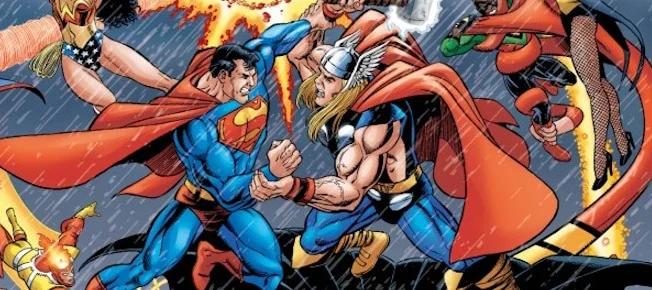
This release is more than just a reprint; it is a celebration of a monumental achievement in comic book history, capturing the pinnacle of storytelling and artistry that occurred when the two most iconic superhero teams in history—Marvel’s Avengers and DC’s Justice League—collided.
Main Facts: A Convergence of Icons
At the heart of this narrative is a high-stakes, multiversal conflict that threatens the very fabric of reality. The Justice League and the Avengers are pitted against one another, forced into a desperate scramble for 12 mystical, reality-altering weapons. These artifacts are not merely tools of war; they are the anchors of existence, and their possession will dictate the fate of two distinct universes.
The narrative, penned by industry legend Kurt Busiek, is a masterclass in balancing character dynamics. Busiek manages to weave a complex web of motivations, ensuring that the conflict feels earned rather than forced. Complementing this is the unparalleled artwork of the late, great George Pérez. Pérez, known for his ability to handle crowded panels and intricate layouts with breathtaking clarity, brings an unprecedented sense of scale to the series. With vibrant coloring by Tom Smith and meticulous lettering by Comicraft, the JLA/Avengers #2 Facsimile Edition serves as a pristine time capsule of a collaboration that many once believed was impossible.
Chronology: The Road to the Multiversal Game
To understand the weight of this second issue, one must look at the long, winding road that led to the series’ publication in the early 2000s. For decades, fans clamored for a meeting between the Justice League and the Avengers. Legal barriers, corporate rivalries, and logistical nightmares kept the two houses of ideas apart for years.
The project finally gained momentum under the stewardship of Kurt Busiek and George Pérez, who spent years developing a plot that would respect the legacy of both teams. The story kicks off with the arrival of the Grandmaster and Krona, two cosmic entities who decide to settle their differences by turning the heroes into pawns in a high-stakes game.
In the second issue, the tension reaches a fever pitch. While the bulk of the teams are embroiled in a kinetic, high-octane battle to secure the 12 weapons, the narrative takes a more investigative turn. The legendary tacticians of the two universes—Batman and Captain America—begin to look past the surface of the conflict. Recognizing that the battle is being orchestrated by unseen forces, the two icons form an uneasy but necessary alliance. Their investigation shifts the genre from a standard "hero vs. hero" slugfest into a deep-dive mystery, questioning whether there is yet another, more sinister game being played behind the scenes.
Supporting Data: The Craft Behind the Spectacle
The brilliance of JLA/Avengers lies in the technical mastery behind every page. George Pérez’s work on this series is frequently cited as his magnum opus. His ability to render dozens of characters in a single panel—each with distinct body language and iconic costuming—remains unmatched in the modern era.
- Storytelling Architecture: Kurt Busiek utilizes a "macro-to-micro" narrative approach, zooming out to show the cosmic stakes while zooming in on the interpersonal friction between characters like Superman and Thor, or Batman and Captain America.
- The Power of Color: Tom Smith’s color palette is essential to the book’s success. He utilizes bright, bold primaries for the traditional heroes while applying a distinct, ethereal sheen to the cosmic settings of the Grandmaster, visually separating the "game board" from the "real world."
- Production Quality: The Facsimile Edition honors the original 2003 release, maintaining the original advertisements, letter columns, and editorial notes that were part of the initial reading experience. This provides a sense of authenticity that digital-only or trade-paperback collections often lack.
Official Responses and Industry Legacy
When JLA/Avengers was first released, it was met with near-universal acclaim. Critics and fans alike praised the way the creators handled the burden of history, managing to write stories that felt like "true" canon for both publishers.
For the modern reader, this Facsimile Edition is a reminder of a time when the "Big Two" were willing to set aside corporate competition to give the fans what they wanted. While current corporate structures make such crossovers increasingly rare, the legacy of this project continues to influence modern comic book events. It proved that crossover events do not have to be hollow marketing ploys; they can be character-driven, emotionally resonant, and visually stunning pieces of art.
George Pérez, who passed away in 2022, left behind a body of work that is defined by this series. His estate and the publishers have viewed the republication of his work as a vital step in preserving the history of the medium. The availability of this edition through retailers like Zeus Comics serves as an ongoing tribute to the collaborative spirit that Pérez and Busiek fostered during the creation of this masterpiece.
Implications: Why This Story Still Matters
The JLA/Avengers crossover remains the gold standard for how to handle a multi-franchise event. Its implications on the comic industry were profound:
- Breaking the "Wall": The series shattered the idea that Marvel and DC were perpetually siloed. It forced readers to consider the similarities in archetypes—the soldier (Cap) vs. the detective (Batman); the god (Thor) vs. the alien (Superman).
- Narrative Complexity: It proved that high-concept, multiversal plots could be executed without sacrificing character depth. The "game" being played by the Grandmaster is a metaphor for the nature of crossover comics themselves, making the story meta-textual and incredibly self-aware.
- Preservation of Art: By releasing this as a Facsimile Edition, the publishers are acknowledging the value of physical comics as historical documents. It allows younger readers to understand why George Pérez is held in such high esteem, offering a masterclass in composition and page layout.
As fans navigate the current landscape of comic books, which is often dominated by cinematic universes and interconnected streaming media, JLA/Avengers stands as a reminder of the power of the printed page. It is a testament to the fact that, when the right creative team is given the freedom to play in the sandbox of their dreams, the result can be something that transcends the medium.
Whether you are a seasoned collector looking to complete your library or a new reader curious about the hype surrounding this legendary clash, the JLA/Avengers #2 Facsimile Edition is an essential addition to your collection. It is a vibrant, thrilling, and masterfully crafted piece of history that invites you to witness the greatest heroes of two worlds standing side-by-side—and occasionally, toe-to-toe.
To secure your piece of comic history, you can visit local comic shops by using the Comic Shop Locator Service or by calling 1-888-comicbook. Digital copies and physical orders are also available through reputable retailers such as Zeus Comics. As you dive into the pages of this iconic issue, prepare to see the Justice League and the Avengers not just as brands, but as the enduring legends that they are.