The act of "worldbuilding"—a cornerstone of speculative fiction, fantasy, and science fiction—has long been framed as an exercise in absolute authority. Writers are encouraged to act as architects, constructing environments, cultures, and geographies from scratch, populating them with characters who function as pawns in an elaborate game of narrative chess. However, a growing movement of scholars and writers, particularly those from backgrounds marginalized by colonialism and systemic power structures, is challenging this paradigm. They argue that the dominant model of worldbuilding is not merely a creative choice; it is a manifestation of colonial logic that prioritizes mastery, extraction, and the objectification of land and people.
In its place, these voices propose a radical shift toward "worlding"—a process of relating to imagined landscapes not as passive resources to be mined, but as living, breathing kin with agency and history.
The Colonial Architecture of "Worldbuilding"
At the heart of the critique is the assumption that a writer, as the creator of a fictional universe, possesses total, god-like control. This "imperial urge," as essayist Vanessa Angélica Villareal notes, transforms the writing process into a form of land grab. When an author views a world as a construct they have "built," they inherently view the elements within it as property.

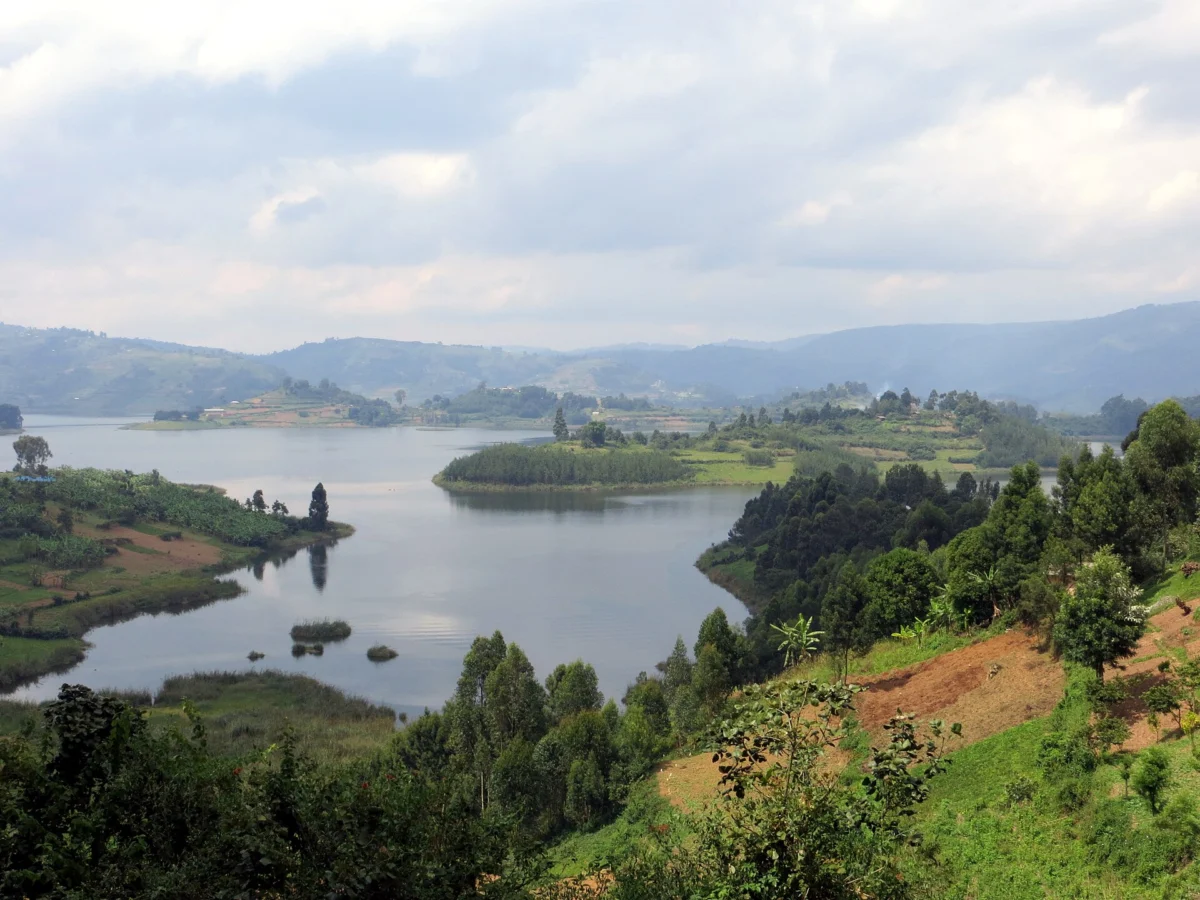
This mindset mirrors the historical mechanisms of colonialism. Just as colonial powers flattened complex, Indigenous geographies into "property" to be surveyed, owned, and extracted from, the traditional worldbuilder flattens cultural history, language, and geography into aesthetic fodder. This process often strips these elements of their original context, ignoring the "embedded historical pain" that lingers in real-world sites, such as the use of Lake Bunyonyi in Uganda as a backdrop for the fictional Wakanda in Black Panther.
The Ethic of Extraction
The language of the craft itself—"mining" lore, "harvesting" culture, and "building" worlds—is fundamentally extractive. It posits that the writer is an outsider entering a space to take what is useful. This approach creates a sterile, often violent relationship between the author and the work. If the world is an object, the author is its master; if the author is the master, any damage inflicted upon that world in the name of the plot is justified as a creative necessity.
A Case Study in Toxicity: Prospect (2018)
The film Prospect serves as a grim reflection of these extractive habits. Set on a moon where workers engage in the dangerous, bloody process of harvesting gems from alien creatures, the film visualizes the "rot" of colonialism. The prospectors in the film do not treat the environment or the living beings they harvest with respect; they approach the Green Moon as a site for immediate, desperate gain.

The film illustrates that this extractive logic is not limited to the environment—it inevitably bleeds into the way characters treat one another. As the story progresses, the audience witnesses a slow, terrifying desensitization to violence. When a child, Cee, is tasked with performing a traumatic, visceral surgery on a companion to ensure their survival, her lack of hesitation reveals the true cost of living within a system defined by extraction. The violence against the "mined" creatures paves the way for a cold, clinical approach to human suffering.
Chronology of the Shift: From Mastery to Kinship
The discourse surrounding "worlding" has gained significant momentum in recent years, moving from academic circles into the broader SFF community.
- 2017: Lincoln Michel publishes "Against Worldbuilding," sparking a conversation about the limitations of authorial control and the role of the reader as an active participant.
- 2021: Scholars Jenna N. Hanchey and Godfried Asante explore how colonized subjects can repurpose colonial infrastructure without internalizing the master’s epistemology, as seen in Tade Thompson’s Wormwood Trilogy.
- 2022–2025: Indigenous scholars, including Joshua Whitehead (Making Love with the Land) and Leanne Betasamosake Simpson (Theory of Water), publish foundational texts that reframe the relationship between humans and their environments as one of mutual accountability and "sintering."
- 2026: The publication of Ainehi Edoro’s Forest Imaginaries and Justin L. Mann’s Breaking the World marks a formalization of the "worlding" movement, emphasizing that stories are not objects to be built, but dialogues to be entered.
Supporting Perspectives: The Mechanics of "Worlding"
To move beyond the colonial model, the proponents of worlding look to African and Indigenous epistemologies that treat space and narrative as animate beings.

Forests as Protagonists
Ainehi Edoro argues that in much African fiction, the forest is not a "resource" for the protagonist to master, but a co-architect of the narrative. It is a realm of uncertainty and potential that demands respect. When a writer engages with a forest as a fellow being—an interlocutor—the story gains a depth that a constructed "set-piece" can never achieve.
Liquid Organizing and Sintering
The concept of "liquid organizing," championed by researchers Joëlle M. Cruz and Chigozirim Utah Sodeke, encourages writers to embrace the fluidity of context. Rather than forcing a world into a rigid structure, writers are encouraged to pay deep attention to the "textures of relations" as they emerge.
Similarly, Leanne Betasamosake Simpson’s concept of "sintering"—the process by which snowflakes join to form a firm surface without losing their individual structure—offers a powerful metaphor for ethical writing. It is a joining, not a subsuming. When a writer "sinters" their narrative, they weave their ideas into the existing world with the intent of connection, ensuring that the act of storytelling does not destroy the "neighbors" of the text.

Implications for the Future of SFF
The shift toward worlding has profound implications for the future of speculative fiction. If we stop viewing ourselves as "gods" of our own universes, we open the door to a more collaborative, respectful form of creativity.
The Death of the "Universal" Narrative
One of the most significant implications is the rejection of the "universal" perspective—a hallmark of Western colonial writing that claims to speak for all of humanity. By acknowledging that every world we write is a continuation of histories, ancestries, and contexts that exist beyond our conscious grasp, we lose the arrogance of the "universal" and gain the intimacy of the "particular."
Responsibility and Reciprocity
The transition to worlding demands accountability. Writers must ask themselves: To whom am I beholden? If the story is an animate being, the author has a responsibility to listen. This leads to:

- Deep Research: Moving beyond "mining" cultures to entering into genuine, reciprocal conversations with the communities and histories depicted.
- Anti-Extractive Practices: Recognizing when a story element relies on the dehumanization of a real-world group and choosing to build—or rather, world—differently.
- Worldbreaking: As Justin L. Mann suggests, sometimes the most honest act is to "break" the normative, colonial worlds that have been imposed upon us, creating space for new, liberated ways of existing.
Conclusion: Authorship as Meeting
Ultimately, the transition from worldbuilding to worlding is a transition from an ego-driven process to a relationship-driven one. It is the realization that the author is not the sole creator, but a participant in a process of discovery.
When we adopt the mindset of worlding, we cease to be "masters of craft." Instead, we become witnesses to the "unfurling" of stories. We find that when we stop trying to control the world, we are finally able to hear what it has to say. We are, as Joseph M. Pierce reminds us, "never alone." By treating our stories as kin, we do not lose our creative power; rather, we gain a deeper, more sustainable, and profoundly more ethical way of bringing worlds into existence. We move from a history of domination to a future of co-creation.