


In a case that has ignited fierce debate over the protection of minors within Japan’s educational system, a 52-year-old former middle school teacher in Kanagawa Prefecture has been arrested on charges of sexually coercive and invasive behavior toward a student. The arrest of Mamoru Yamaguchi, who served as an educator and club advisor at an Odawara public middle school, follows a disturbing 18-month silence between his initial dismissal from the school and the eventual involvement of law enforcement.
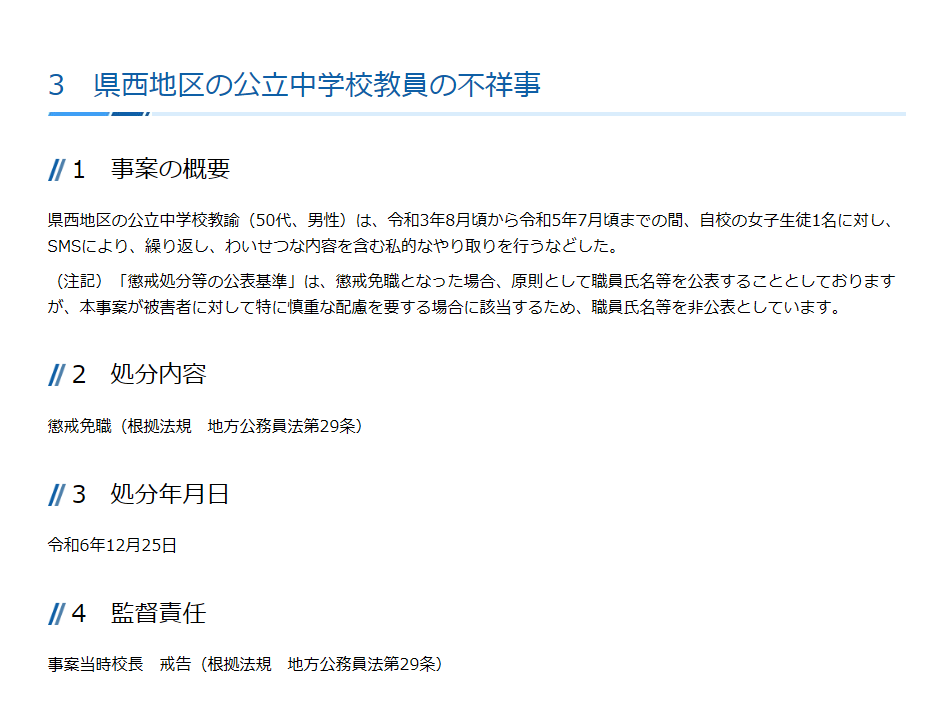
The case centers on 192 separate emails sent by Yamaguchi to a female student between January 2022 and July 2023. These communications contained invasive demands, ranging from requests for the student to report her menstrual cycles to explicit instructions for the student to masturbate. The revelation of these details has not only spotlighted the predatory nature of the accused but has also drawn intense scrutiny toward the Kanagawa Board of Education and the school administration, both of which appear to have prioritized institutional reputation over the safety and justice of the victim.
The Chronology of Misconduct and Administrative Inertia
The timeline of the Yamaguchi case reveals a profound disconnect between internal disciplinary actions and the legal requirements for reporting crimes against minors.
January 2022 – July 2023: The Period of Abuse
During this 18-month window, Yamaguchi utilized his position of authority as a teacher and club advisor to exert control over a female student. By integrating these demands into the context of her school life—specifically within the sports club he oversaw—he created a coercive environment where the student likely felt unable to refuse his intrusive requests.
December 2024: Internal Dismissal
In December 2024, the Kanagawa Board of Education finally took action, terminating Yamaguchi’s employment. While the board cited "crimes against children in his care" as the basis for the dismissal, the language used in their official notices was notably euphemistic. The board avoided naming Yamaguchi in initial public releases and obscured the gravity of his actions behind sanitized administrative jargon.
2025 – 2026: The Gap and Eventual Arrest
Despite the school board’s knowledge of the abuse, the incident did not result in a criminal referral to the police for over a year and a half. It was only after the victim’s mother bypassed the school’s internal channels and filed a formal criminal complaint with the police that an investigation commenced. This delay raises a fundamental question: Why did a public institution, which had sufficient evidence to justify a permanent dismissal, wait for a parent to initiate the legal process?
The Discrepancy in Reporting: Whose Interests Are Protected?
The public discourse following the arrest has been complicated by conflicting reports from major Japanese media outlets. Initial reporting by LiveDoor News highlighted the teacher’s demands regarding the student’s menstrual health. However, other outlets, including the Mainichi Shimbun, reported the more severe allegations of coerced masturbation.

This variance in reporting has triggered a heated online debate. Critics argue that the decision by some outlets to downplay the masturbation claims constitutes a form of victim-blaming or, at the very least, an attempt to soften the public image of the perpetrator. By focusing on the "lesser" of the invasive behaviors, the media risks shielding the public from the full, predatory reality of the teacher’s actions. This media tension reflects a broader cultural struggle in Japan: the difficulty of discussing sexual violence without centering the perpetrator’s reputation or "protecting" the institution from scandal.
Institutional Betrayal and the "Exercise Plan" Defense
According to records from the Kanagawa Board of Education, when confronted with the evidence, Yamaguchi denied any "obscene intent." His defense was that the request for menstrual tracking was intended to "draw up an exercise plan suited to her physical condition."
This justification—that the abuse was merely a misguided attempt at professional care—is a common refrain in Japanese misconduct cases. It allows perpetrators to reframe their predatory behavior as a failure of professional judgment rather than a criminal act. The board’s acceptance of such a flimsy excuse during the initial inquiry, rather than immediately handing the evidence to the police, illustrates a dangerous trend of "internalizing" criminal investigations. By handling the case internally, the school effectively denied the victim the opportunity to seek justice through the criminal courts for nearly two years.
Data: The Scale of Sexual Violence in Japanese Schools
The Yamaguchi case is far from an isolated incident. Data provided by the Ministry of Education, Culture, Sports, Science and Technology (MEXT) reveals a persistent crisis within the public school system.
In 2024, 281 public-school staff members were disciplined for sex crimes or sexual violence. While this represents a slight decrease from the record-breaking 320 cases reported in 2023, the underlying statistics remain staggering:
- Gender Disparity: Roughly 98% of all offenders in these cases are male.
- Victim Demographics: Over 60% of the victims of these crimes are children attending the schools where the offenders teach.
The recurrence of these cases suggests that the current disciplinary framework—which relies heavily on internal school board reviews—is insufficient to deter predatory behavior. The lack of a unified, national database for educators until very recently has allowed individuals dismissed for "misconduct" to simply move to different jurisdictions or private institutions, effectively resetting their careers while remaining a threat to students.
Implications: The Long Road to Reform
The systemic failure to address sexual assault in Japan extends far beyond the classroom. For years, women and children have reported a culture of indifference, if not outright hostility, from law enforcement.
The Problem of "Second Victimization"
Victims who attempt to report sexual assault in Japan frequently encounter what is termed "second victimization." This occurs when police, prosecutors, or even school administrators treat the reporting of the crime as an inconvenience or a source of social shame. In numerous instances, women have reported being discouraged from filing complaints, while students have been penalized for missing classes or extracurricular activities to meet with investigators.
The Legislative Response
The Japanese government has acknowledged the need for reform, most notably through the recent overhaul of the country’s sexual assault laws. These reforms included raising the age of consent and broadening the definition of coercive sexual assault to better align with international standards. Additionally, the introduction of a national sexual offender tracking system, modeled after the British Disclosure and Barring Service (DBS), is set to begin operations on December 25, 2026.
The Limitations of the DBS
While the implementation of the DBS is a landmark development for child protection in Japan, it contains a significant loophole. The system is designed to track criminal convictions and, in some cases, serious disciplinary actions. However, it will not necessarily capture the "grey area" cases where a teacher is fired for "inappropriate behavior" without an official police record. If schools continue to hide behind internal disciplinary measures rather than referring cases to the police, these individuals will remain invisible to the DBS, and thus remain a danger to children in other districts.
Conclusion: A Call for Accountability
The arrest of Mamoru Yamaguchi is a pyrrhic victory. While he now faces the legal consequences of his actions, the 18-month delay between his dismissal and his arrest represents a failure of duty by the Kanagawa Board of Education.
True accountability requires more than just firing a teacher; it requires an immediate and mandatory referral to law enforcement the moment evidence of sexual misconduct surfaces. Until Japanese institutions—be they schools, government boards, or police departments—stop prioritizing the avoidance of scandal over the safety of children, predators will continue to find shelter within the bureaucracy. The victim in the Odawara case, and the thousands of others like her, deserve a system that views their protection as its primary mandate, not a secondary concern to be managed behind closed doors.
As Japan moves toward the implementation of its new offender tracking system in 2026, the success of these reforms will depend entirely on the willingness of officials to be transparent, to report crimes immediately, and to treat every allegation of sexual violence with the gravity it demands. The era of "sweeping things under the rug" must end if the promise of a safe educational environment is to be anything more than an empty pledge.











