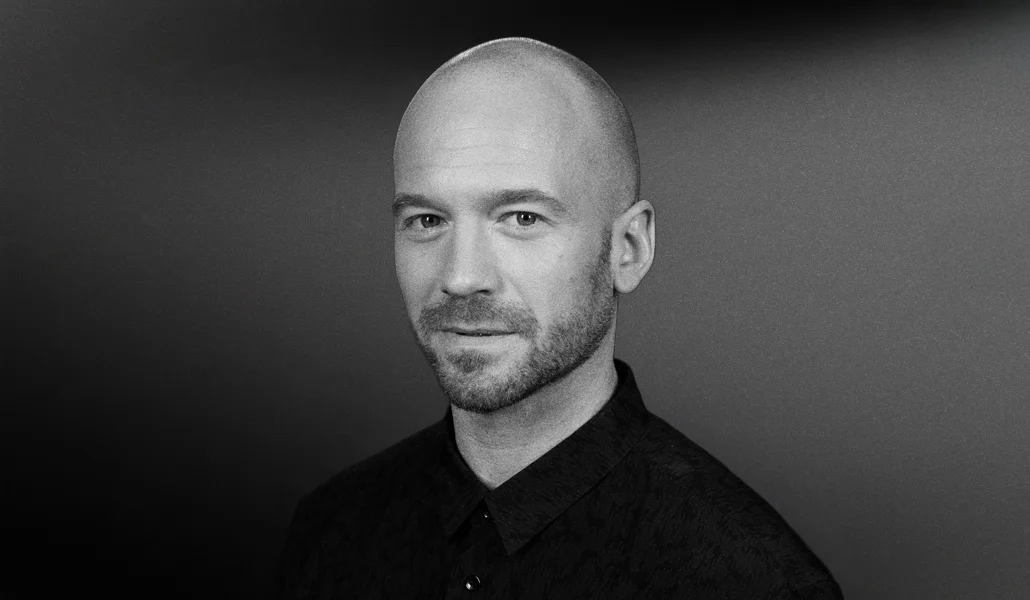
Sean Evans, the unflappable host of the cultural phenomenon Hot Ones, has long occupied a unique intersection in the modern media landscape. Recently named one of Time’s 100 Most Influential Creators of 2025, Evans stands as a testament to the evolution of the digital journalist. He was an early pioneer of Connected TV (CTV) integration and a key architect of the "interview-as-spectacle" format. By transforming a YouTube show into a globally recognized franchise, he did more than just interview celebrities; he rewrote the manual for how content creators can command both cultural relevance and significant brand investment.
In an era where media businesses scramble to find a "new normal," Evans offers a different perspective: for the modern creator, there is no normal—only permanent flux. As he observes the rise and fall of platforms, the blurring lines of streaming, and the looming questions surrounding artificial intelligence, Evans sat down to discuss the past, present, and unpredictable future of the creator economy.
A Chronology of Constant Paradigm Shifts
To understand the current state of digital media, one must look at the rapid-fire succession of technological milestones that defined the last decade. For previous generations, media shifts were seismic but infrequent—the transition from radio to live television, then to color, and finally to cable, each taking decades to fully cement.
Evans, however, has experienced a lifetime’s worth of such shifts in just over a decade. Since the launch of Hot Ones in 2015, he has navigated the podcast boom, the meteoric rise of short-form video on TikTok, the consolidation of the CTV experience, and the current reign of long-form livestreaming.
"I don’t think of myself as that old, but I’m getting older, and I’m kind of like a dinosaur by YouTube standards," Evans reflects. "I’ve seen eight of those paradigm-shifting moments just over the course of my career. There’s a new app that comes out, a new platform that catches fire. When I shoot with someone like Kai Cenat, the energy is like Justin Bieber moving through a crowd. Guys like iShowSpeed have become globally famous in ways that didn’t exist even four or five years ago."
For Evans, the "Wild West" nature of the internet is not a bug; it is a feature. He acknowledges that his own career trajectory—a role that didn’t exist when he graduated from college—is a blueprint for a generation of creators who are building empires on shifting sands. He admits that eventually, he may lose his touch, as the speed of innovation outpaces the ability of any one individual to remain at the cutting edge.
The Collapse of Platform Distinction
Perhaps the most significant change Evans has witnessed is the death of the "platform silo" from the viewer’s perspective. In the early days of YouTube, content was categorized as "internet video," distinct from the "prestige" of television. That boundary has effectively evaporated.
"I don’t distinguish between YouTube, Netflix, or HBO Max," Evans notes. "They are just apps that I watch on my TV. There is so much content on YouTube that is essentially high-level programming. If you didn’t know which app you opened, you often wouldn’t know if you were watching a Netflix original or a YouTube show."
The data supports his sentiment. The cultural penetration of top-tier creator content now rivals that of traditional cable networks. With A-list celebrities—who once exclusively frequented late-night talk show couches—now appearing on YouTube series, the playing field has been leveled. These shows are no longer "side projects" for talent; they are primary vehicles for promotion and cultural connection, demanding the same level of production quality and editorial rigor as legacy media.
The Evolution of the Interview Format
When Hot Ones first premiered, the concept of a "celebrity interview show" on the internet was a novelty. It was an event to see a high-profile actor or musician bypass traditional PR machinery to sit in a booth and eat spicy wings. Today, the landscape is crowded. From the rapid-fire inquiries of Wired’s Autocomplete Interview to the conversational depth of Call Her Daddy or New Heights, the "interview" has become the primary currency of digital entertainment.
This explosion in volume has naturally led to an increase in competition. "When we started, there weren’t that many interview shows, and frankly, many of them weren’t very good," Evans says. "Now, the bar has been raised. The standard across the board is higher, and the sheer volume is much larger."
This competition has forced a re-evaluation of what constitutes a successful interview. For Evans, Hot Ones was never just about the gimmick of the wings; it was a structural solution to a stagnant industry. He sought to disrupt the "PR-driven flight pattern" of celebrity interviews, where talent arrived with a list of pre-approved, canned responses. By introducing the physical challenge of heat, he forced guests to drop their guard, creating moments of genuine humanity.
Implications: The "Strip Mall" Media Future
Looking toward the future, Evans offers a provocative theory on the state of big-budget media. He notes that the giant, "hulking" media companies—those built on scale and massive overhead—are increasingly struggling to maintain profitability. In contrast, "garage-style" creator entities are producing content with a fraction of the cost and often double the audience.
"Economically, it may not make sense, but what if aesthetically everything becomes more lo-fi?" Evans muses. "You have these YouTubers doing shows that reach millions at a fraction of the cost of a late-night show. The kid who once dreamed of hosting The Tonight Show is now the top podcast on Spotify."
However, Evans is careful to note that this move toward low-fidelity, "real" content might create its own reaction. He suggests that if the landscape becomes too dominated by windowless rooms and casual, unpolished conversations, audiences may eventually crave the "big, bright, lights-camera-action" spectacle of Old Hollywood. It is a cyclical view of media: a potential pendulum swing from the gritty and real back to the curated and grand.
Addressing the AI "Disruptor"
While the industry remains obsessed with the potential for artificial intelligence to upend the entertainment sector, Evans remains largely skeptical of the alarmism surrounding the technology. While he acknowledges the ethical and legal challenges posed by deepfakes, particularly in the realm of the "scam economy," he is less convinced that AI is the death knell for human-led creative formats.
"It’s hard for me to forecast AI’s impact on media," Evans admits. "I don’t know if it’s this great disruptor to Hollywood or to creators. I think so far, that upheaval has been, if there is any effort to do it, kind of a failure."
For Evans, the human element—the visceral, unscripted reaction of a guest eating a wing, the specific rapport between host and subject—is something that AI cannot replicate. As long as audiences crave connection and authenticity, the "human touch" remains the most valuable asset in the creator’s arsenal.
Conclusion: The Path Forward
As the creator economy matures, the lessons from Sean Evans are clear: resilience in the face of constant flux is the only sustainable strategy. The distinction between "creator" and "broadcaster" is effectively dead, and the competition for attention is fiercer than ever. Yet, the core mission remains unchanged. Whether it is through a high-concept gimmick or a simple, back-to-basics conversation, the goal of media is to bridge the gap between the screen and the viewer.
For the next generation of creators, the goal should not be to chase the next ephemeral trend, but to build a format that solves a problem—a purpose-driven approach to content that transcends the platform it lives on. As Evans looks toward the next 15 years, he remains a humble observer of his own success, ready to watch the next wave of creators redefine the medium all over again.