Nana Muazin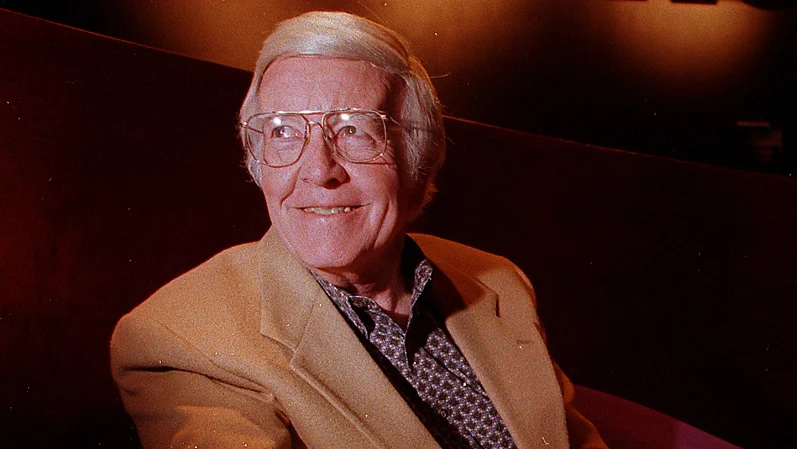
Don Iwerks, the legendary Disney engineer, inventor, and Oscar-winning pioneer who spent decades pushing the boundaries of what was technically possible on the silver screen and within the world’s most iconic theme parks, has died at the age of 96. His passing, which occurred peacefully on Thursday at the Ojai Community Memorial Care Center, marks the end of an era for the Walt Disney Company—a legacy he and his family helped forge for over a century.
Known to his colleagues as a man of profound humility and relentless intellectual curiosity, Iwerks was a titan of industry whose work remained largely behind the scenes, yet his influence is etched into the childhood memories of millions. Whether it was through the lens of a revolutionary camera system or the immersive motion of a theme park attraction, Don Iwerks turned the impossible into the tangible.
A Legacy of Innovation: The Main Facts
Don Iwerks was not merely an employee of The Walt Disney Company; he was a foundational architect of its technical evolution. During a career that spanned nearly four decades at Disney, Iwerks revolutionized cinematic technology. He was the mastermind behind the refined sodium traveling matte process, a critical advancement that made the seamless blending of live-action and animation possible in classics like Mary Poppins (1964).
His career was defined by a rare duality: he possessed the pragmatic, problem-solving mind of an engineer and the imaginative spirit of a storyteller. As his family noted in a moving obituary, Iwerks approached every challenge with an "unfailingly optimistic" outlook, believing firmly that every obstacle was simply a puzzle waiting for a solution. Even in his final days, his mind remained sharp, dedicated to sketching new inventions, following the Los Angeles Dodgers, and revisiting the films that defined his life’s work.
Chronology: From the Studio Machine Shop to Industry Stardom
Early Life and The Disney Connection
Born on July 24, 1929, in Dallas, Texas, Don Iwerks was essentially born into the heart of the animation revolution. His father, Ub Iwerks, was a legendary figure in his own right—a close business partner to Walt Disney and the primary animator who helped design and co-create Mickey Mouse and Oswald the Lucky Rabbit. Growing up in the shadow of this creative powerhouse, Don absorbed the ethos of innovation that would define his own path.
The Disney Years (1950–1986)
Don’s professional journey began in 1950 at the Walt Disney Studios’ Process Lab. His trajectory was briefly interrupted by a tour of duty in Germany, where he served as a photographer for the U.S. Army Signal Corps during the Korean War. Upon his return to the studio in 1952, he began a long-standing collaboration with his father in the Studio Machine Shop.
This period was perhaps the most transformative in the studio’s history. Together, they developed:
- The Circle-Vision 360 camera system: An immersive, multi-camera setup that allowed for panoramic storytelling.
- Advanced Optical Printers: Custom hardware that allowed for increasingly complex visual effects.
- Theme Park Tech: Beyond film, Iwerks was instrumental in creating the projection and mechanical systems that powered attractions at Disneyland and Walt Disney World.
The Iwerks Entertainment Era
In 1986, after 24 years of dedicated service to Disney, Iwerks sought a new frontier. Alongside fellow Disney executive Stan Kinsey, he founded Iwerks Entertainment. The company became a global powerhouse, pioneering giant-screen theaters, high-end motion simulators, and immersive 3D experiences. By bringing the "Disney quality" of immersive technology to the wider world, Iwerks Entertainment fundamentally changed how audiences interacted with cinema, moving it from a passive viewing experience to an active, sensory event.
Supporting Data and Technical Contributions
The sheer volume of Iwerks’ technical contributions is difficult to quantify, but his impact was formalized in 1998 when he received the prestigious Gordon E. Sawyer Award at the Academy Awards. This Oscar for Technical Achievement recognized his lifelong commitment to advancing the mechanics of filmmaking.

His technical prowess was not limited to cameras; it extended into the very architecture of the "guest experience." By refining the sodium traveling matte process—a technique involving a yellow-light-based background that allowed for near-perfect extraction of actors from their environment—Iwerks enabled the visual spectacle of the 1960s, a decade where Disney dominated the live-action landscape.
Furthermore, the Iwerks family name is permanently immortalized at the Magic Kingdom in Walt Disney World. In a rare honor, both Don and his father, Ub, were granted a dedicated window on Main Street, U.S.A.—a tribute reserved for the most significant contributors to the Disney legend.
Official Responses and Tributes
The industry has reacted with an outpouring of grief and admiration. Disney CEO Josh D’Amaro released a statement that encapsulated the industry’s collective sentiment:
"Don embodied that rare combination of heart, ingenuity and passion that has always defined Disney. Through his innovative contributions to some of our most iconic films and attractions, he helped create experiences that have delighted generations of fans around the world. All of us at The Walt Disney Company will miss him deeply, and we send our most heartfelt condolences to his family, whose enduring connection to Disney has helped shape its legacy for over a century."
The family’s own tribute highlighted the personal man behind the legend: "To the world, Don was an engineer, inventor, and Disney Legend. To those fortunate enough to know him, he was a devoted husband and father, a trusted mentor, a steadfast friend, and an eternal optimist."
Implications: The Enduring Impact of a Life Well-Lived
The passing of Don Iwerks is more than the loss of a pioneer; it is the loss of a bridge to the Golden Age of Hollywood and the founding era of modern theme parks. His life and career offer several key lessons for the future of entertainment technology:
- The Convergence of Art and Engineering: Iwerks proved that the most "magical" moments in cinema are often the result of rigorous, uncompromising engineering. His work suggests that the future of storytelling relies on the ability of creators to master the tools of their time.
- The Value of Mentorship: Iwerks was known as a "trusted mentor." His influence extended through the ranks of Disney engineers who followed him, ensuring that his technical philosophy—focusing on quality, reliability, and emotional resonance—would survive long after he left the studio.
- The "Anything is Possible" Philosophy: As noted in his obituary, his love for Mary Poppins was not coincidental. He carried the film’s central theme—that imagination can conquer technical hurdles—into his professional practice. This optimism is perhaps his greatest legacy, having inspired a culture at Disney that continues to prioritize "impossible" projects.
Don Iwerks is survived by his wife, Betty; his sons Larry and John (and his wife, Chris); and his daughter, the acclaimed documentarian Leslie Iwerks, whose own work continues to chronicle the history of the industry her father helped build. He was preceded in death by his daughter, Tamara, whom the family noted he "loved deeply and carried in his heart always."
As the industry looks toward a future of AI-driven cinema and virtual reality, the foundation laid by Iwerks serves as a reminder that the heart of the experience must always remain human. In lieu of flowers, the family has requested that donations be made to the Community Memorial Continuing Care Center of Ojai and The Walt Disney Family Museum, ensuring that his commitment to care and history continues in his name.
Don Iwerks lived 96 years, but his impact will continue to be felt as long as the lights go down in a theater and the magic of a Disney attraction begins to move. He was, in every sense of the word, an architect of wonder.

 Siti Muinah
 Lina Hope