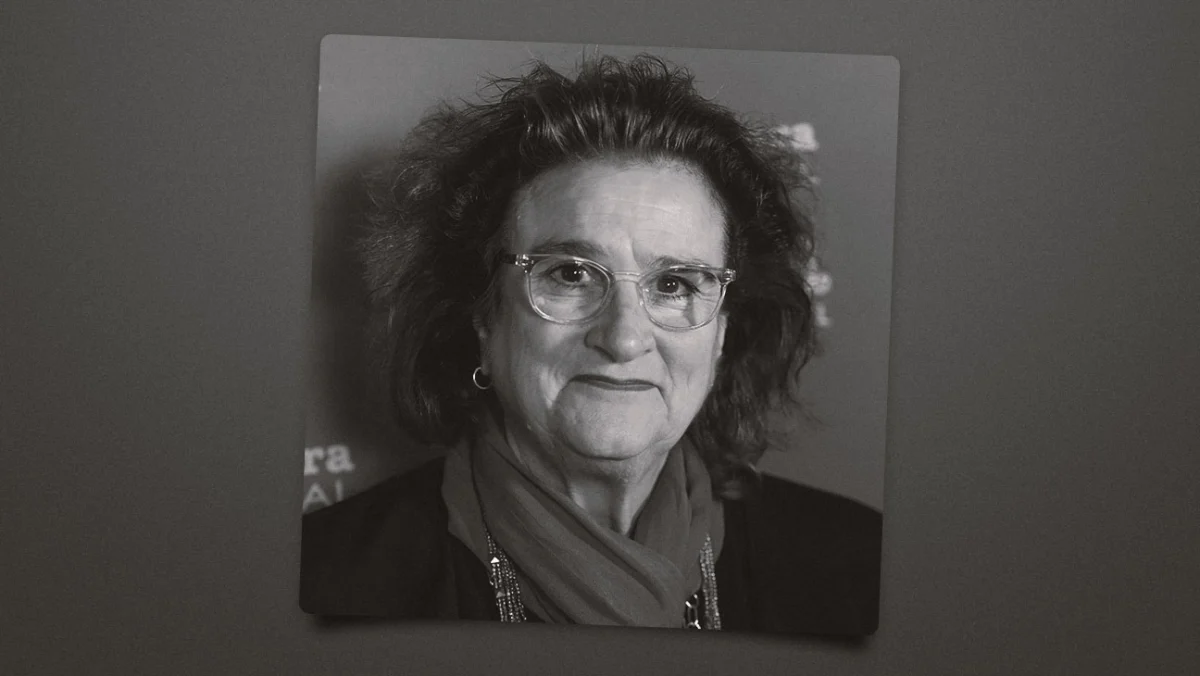
Barbara Ling, the visionary production designer whose career was defined by an uncompromising commitment to authenticity and a rare ability to transform the mundane into the magical, has died. She was 73.
Her death, which occurred on Thursday in Santa Barbara following a courageous battle with cancer, was confirmed by a spokesperson for WME. Ling leaves behind a profound legacy in cinema, having spent over four decades shaping the visual language of some of the most iconic films of the late 20th and early 21st centuries.
While she was celebrated for her technical prowess—most notably her Oscar-winning work on Quentin Tarantino’s Once Upon a Time in Hollywood—Ling was perhaps best remembered by her peers as an artist who fought to preserve the soul of the environments she constructed. Whether building the sprawling, stylized darkness of Gotham City or the sun-drenched, neon-lit nostalgia of 1969 Los Angeles, Ling’s work was always anchored in the tactile reality of the physical world.
A Career Built on Craft and Vision
Born in August 1952, Barbara Claire Ling’s journey into the heart of Hollywood began far from the film set. Her formative years were spent honing her craft in the theater, where she designed sets and lighting for more than 200 opera, musical, and stage productions. This background in live performance, where the "truth" of the set is constantly scrutinized by a live audience, instilled in her a discipline that would serve her throughout her cinematic career.
Her transition to film was sparked by a creative partnership with musician and filmmaker David Byrne. In 1986, Byrne tapped Ling to design his directorial debut, True Stories. The film’s quirky, hyper-real aesthetic served as a perfect launchpad for a designer who thrived on creating environments that felt like characters in their own right.
Following her debut, Ling quickly established herself as a versatile force in the industry. Her early work in the late 1980s—including Heaven (1987) and the gritty, neon-soaked Less Than Zero (1987)—demonstrated an uncanny ability to capture the specific energy of an era. She was equally comfortable in the realm of contemporary realism as she was with the stylized, gothic demands of high-budget studio blockbusters.
Defining the 90s: From Gotham to Hollywood Boulevard
The 1990s marked a period of immense creative output for Ling. In 1991, she served as the production designer for two critically acclaimed, vastly different films: Oliver Stone’s The Doors and Jon Avnet’s Fried Green Tomatoes. Her role on Fried Green Tomatoes went beyond visual design, as she also served as an associate producer, highlighting her deep involvement in the structural and logistical development of the projects she touched.
However, it was her collaboration with director Joel Schumacher that brought her to the forefront of blockbuster filmmaking. As the designer for Batman Forever (1995) and Batman & Robin (1997), Ling was tasked with the Herculean effort of crafting a "Gotham City" that felt both comic-book inspired and physically imposing. Her work on these films solidified her reputation as a designer capable of managing massive, complex production environments without sacrificing the artistic detail that made her sets feel "lived-in."
Throughout the 2000s and 2010s, Ling’s partnership with director Scott Hicks resulted in a string of projects that showcased her range, including Hearts in Atlantis (2001), No Reservations (2007), The Lucky One (2012), and Fallen (2016). Even in the later years of her career, she remained a sought-after collaborator, working on Marc Forster’s poignant A Man Called Otto (2022) and the highly anticipated Michael Jackson biopic Michael (2026), directed by Antoine Fuqua.
The Masterpiece: Once Upon a Time in Hollywood
The pinnacle of Ling’s career came in 2019 with Quentin Tarantino’s Once Upon a Time in Hollywood. Alongside set decorator Nancy Haigh—a longtime collaborator with whom she had worked as far back as 1988—Ling was tasked with an impossible mission: turn back the clock on Los Angeles.
Tarantino’s vision was uncompromising. As Ling recounted in a 2019 interview, the director had a singular demand from the very beginning: "I want this to be real. I want to see. I want to smell and I feel that Hollywood. I don’t want to do green screen over here or have the digital interpretation."
For Ling, this meant moving away from the industry-standard reliance on digital post-production. Instead, she and her team embarked on an ambitious engineering project to restore the physical facades of Hollywood Boulevard. They rebuilt iconic, defunct marquees and signage, working with structural engineers to ensure these fragile, historic shells could support the weight of the reconstruction.
"I had to go out and figure out where I could attach real things to," Ling explained. "It was quite an engineering feat to do, particularly on Hollywood Boulevard, to say, ‘I want the Pussycat Theater back.’ It was laborious but well worth it."
When the cameras finally rolled, the results were transformative. The combination of period-accurate cars, meticulously sourced costumes by Arianne Phillips, and Ling’s immersive environment allowed the cast and crew to exist within a living, breathing 1969. The film earned Ling and Haigh the Academy Award for Best Production Design, a recognition that validated her lifelong philosophy that there is no substitute for physical reality.
Implications for Preservation and the Future of Film
Beyond her artistic achievements, Ling was a vocal advocate for the preservation of Los Angeles’ architectural history. In the wake of her Oscar win, she expressed a bittersweet sentiment regarding the rapid development of the city.
"L.A. is not a preservation city, never has been," she noted during a press session backstage at the Oscars. "Now there’s been a nonstop movement of apartment building and glass towers. What we did [in Once Upon a Time] will be impossible to do next year. It’s unfortunate. We hope this will bring some nostalgia back and stop things from being torn down."
Her words resonate today as a rallying cry for the intersection of cinema and historic preservation. Ling believed that film could serve as a time machine, not just for audiences, but as a catalyst for urban appreciation. By recreating the past with such painstaking detail, she hoped to remind the public—and the city planners—of the beauty in the architectural character that was slowly being erased by modern development.
A Legacy of Authenticity
Barbara Ling’s passing marks the loss of a rare talent who bridged the gap between old-school craftsmanship and the evolving demands of modern cinema. Whether she was designing the intimate spaces of a kitchen in No Reservations or the sprawling, neon-lit cityscape of Gotham, she operated under a singular tenet: the environment must tell the story before a single line of dialogue is spoken.
Her colleagues remember her not just as a designer, but as an engineer of atmosphere, a patient collaborator, and a passionate defender of the physical set. In an era increasingly dominated by digital assets and virtual production, Ling’s career stands as a testament to the power of the tangible.
She is survived by her wife, Lindsay, and their two sons, Clay and Will. As the industry looks back on her four-decade career, it is clear that the "Hollywood" we see on screen will forever be influenced by the woman who made us believe, if only for two hours, that time could indeed be turned back.