

SPOILER ALERT: This article contains major plot points for "Evil Dead Burn," currently in wide theatrical release.
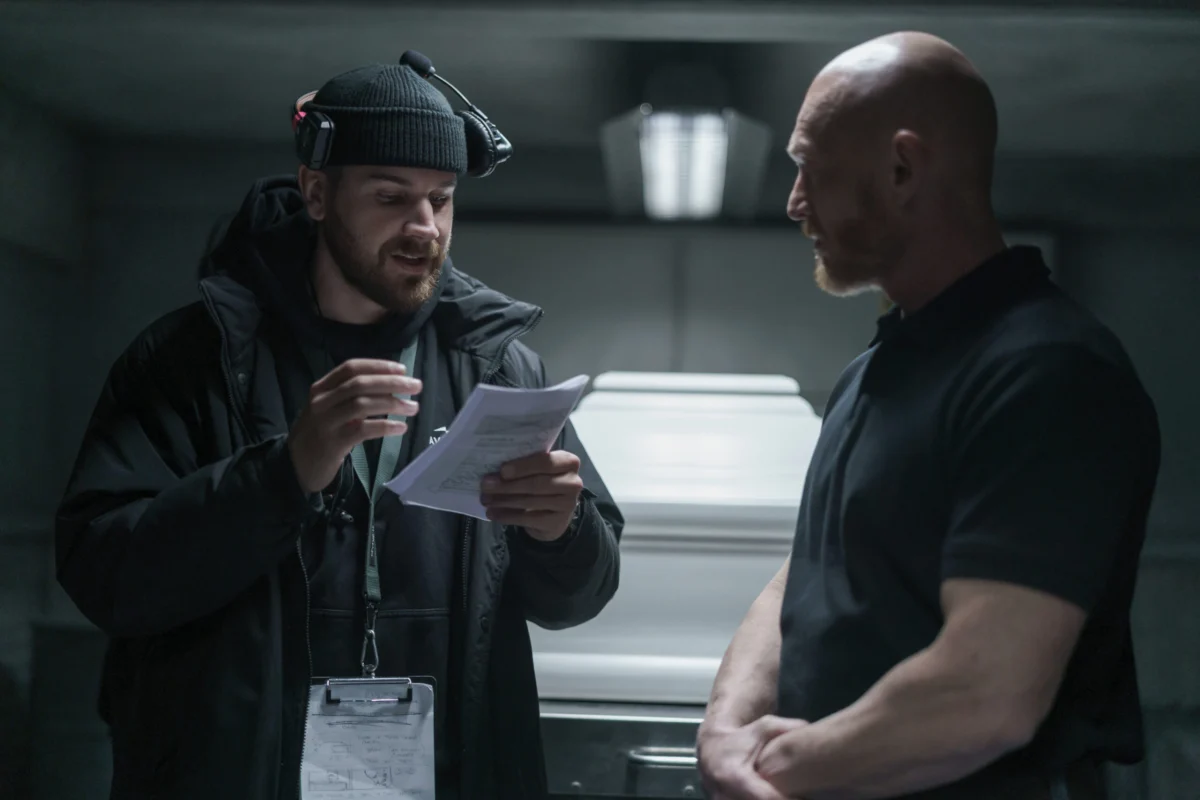
The Evil Dead franchise has never been a stranger to controversy, excess, or the subversion of cinematic taboos. From Sam Raimi’s low-budget 1981 fever dream to the polished, visceral terror of the 2013 reboot and 2023’s Evil Dead Rise, the series has consistently pushed the boundaries of what an audience can—and should—endure. With the arrival of Evil Dead Burn, the latest installment helmed by French filmmaker Sébastien Vaniček, the franchise has hit a new, arguably more nihilistic milestone: the death of the dog.
For decades, the "don’t kill the dog" trope has been an unwritten commandment in Hollywood, a safeguard against alienating the audience. In Evil Dead Burn, Vaniček shatters that rule with surgical precision.
"If you don’t do that in Evil Dead, in which movie do you do that?" Vaniček remarked in an exclusive interview with Variety. "These are the most insane, wild, and basically evil movies. There’s no limit; I can’t have limits!"
The Anatomy of the New Nightmare: Main Facts
Evil Dead Burn serves as a spiritual successor to the recent Evil Dead Rise, maintaining the loose connectivity that defines the current era of the franchise. Set against the backdrop of a family tragedy—the death of patriarch Will (George Pullar)—the film centers on his widow, Alice (Souheila Yacoub). The narrative follows the family as they gather in the shadow of grief, only to be dismantled by the Deadites, the demonic entities that possess their hosts with cruel, calculated malice.
Unlike previous entries, which often leaned into supernatural slapstick, Burn is a study in claustrophobic, grounded dread. Filmed primarily in New Zealand, the production emphasizes practical effects over digital artifice, a creative choice that Vaniček fought to maintain throughout the shoot. The result is a film that feels tangible, heavy, and deeply uncomfortable.
A Chronology of Carnage: From Fishermen to the Final Girl
The film establishes its tone immediately. The opening sequence, which features two unsuspecting fishermen, functions as a seven-minute masterclass in world-building. Vaniček intentionally bridges the gap between Evil Dead Rise and Burn, showing the audience that the threat of the Deadites has not been contained; it is loose in the wild, evolving and adapting.
Following this grim prologue, the film pivots to the family drama. The central tension—the dinner scene—is arguably the film’s narrative pivot point. As Alice, struggling with the memory of her abusive husband, faces a dinner table where the living and the dead begin to blur, the film shifts from domestic drama to psychological warfare.
The pacing is relentless, moving from the funeral to a high-octane, small-space car battle. In a standout moment of visceral horror, a character named Tia (Luciane Buchana) is impaled with a car seat headrest. It is a sequence that highlights the film’s "mean-spirited" creativity—a byproduct of Vaniček and co-writer Florent Bernard brainstorming ways to survive a hypothetical fight against predators.
The climax and the subsequent post-credits scenes suggest that the Evil Dead universe is far from static. With the reappearance of Ellie (Alyssa Sutherland) from Evil Dead Rise, the film confirms that the franchise is moving toward a shared mythology where no character—and no death—is ever truly final.
Supporting Data: The Craft Behind the Chaos
To achieve the film’s distinct aesthetic, Vaniček leaned heavily on practical stunt work. The bathroom scene, which has already drawn comparisons to the most iconic moments in horror history, required a team of 15 stuntmen operating wire-rigs in a cramped set.
"Everything that could have been done practically was done practically," Vaniček explained. "The fire was one of the big challenges. I didn’t want to have CGI fire, so we had fire on set all the time. That was really tricky because you are lighting the whole scene with real fire. It was long and intense, but the audience feels it when you do things for real."
The director’s approach to gore is surprisingly selective. Despite the reputation of the franchise, Vaniček admits he isn’t interested in "buckets of blood" for the sake of it. He cites the infamous teeth-on-the-sidewalk scene from American History X as a benchmark for true terror—a moment that evokes a physical, sickening reaction rather than a desensitized one. He notes that the use of makeup, prosthetics, and even the "monsters" themselves were handled with a focus on human anatomy and the uncanny.
Official Responses: The Freedom of the Franchise
Vaniček’s transition from the independent, spider-centric French horror Infested to a major studio franchise like Evil Dead was governed by a unique agreement. Ghost House Pictures, led by Sam Raimi and Rob Tapert, granted the director near-total creative autonomy.
"Sam Raimi and his team told me that the movie would be 100% my style," Vaniček noted. "They gave me carte blanche regarding the violence and the brutality. If I didn’t have that freedom, I would have just made another movie in France."
This trust extended to the film’s more controversial beats, including the post-credits sequences. While the studio requested the inclusion of specific characters, Vaniček was allowed to integrate them into his own narrative framework. This collaborative, trust-based approach seems to be the hallmark of the current Evil Dead strategy, ensuring that each director brings a "fresh vision" to the table.
Implications for the Future of the Franchise
Perhaps the most significant revelation from the interview is Vaniček’s stance on his own future with the series. When asked if he would return to helm another Evil Dead installment, he was firm: "I don’t think I would write and direct another Evil Dead. The only one who can do two Evil Dead movies is Sam Raimi! It’s a franchise that needs a fresh vision and fresh directors all the time."
This philosophy underscores the long-term health of the series. By rotating directors—from Fede Álvarez to Lee Cronin and now Vaniček—the franchise avoids the creative stagnation that plagues long-running horror sagas. Each director approaches the "Book of the Dead" as a tool for personal expression.
For Vaniček, the "Evil Dead" experience was a cathartic exploration of metaphor. He views the Deadites as physical manifestations of trauma, abuse, and moral failure. "If you are talking about an abusive husband, you will see that husband as a monster," he explained. "That’s the very cathartic thing about Evil Dead—all the questions that are raised, you see them on the image, and the characters are going through horrible situations."
As Evil Dead Burn continues to terrorize audiences worldwide, its success lies not in its ability to out-gore its predecessors, but in its refusal to be safe. By killing the dog, burning the set, and leaving the door wide open for the return of familiar monsters, Vaniček has ensured that the Evil Dead legacy remains as unpredictable and dangerous as ever.
Whether this "loose trilogy" will eventually collide in a grand crossover or continue to function as a series of disparate nightmares remains to be seen. However, one thing is certain: the franchise has found its rhythm, and for horror fans, that rhythm is a terrifying, unrelenting beat.










