Neng Nana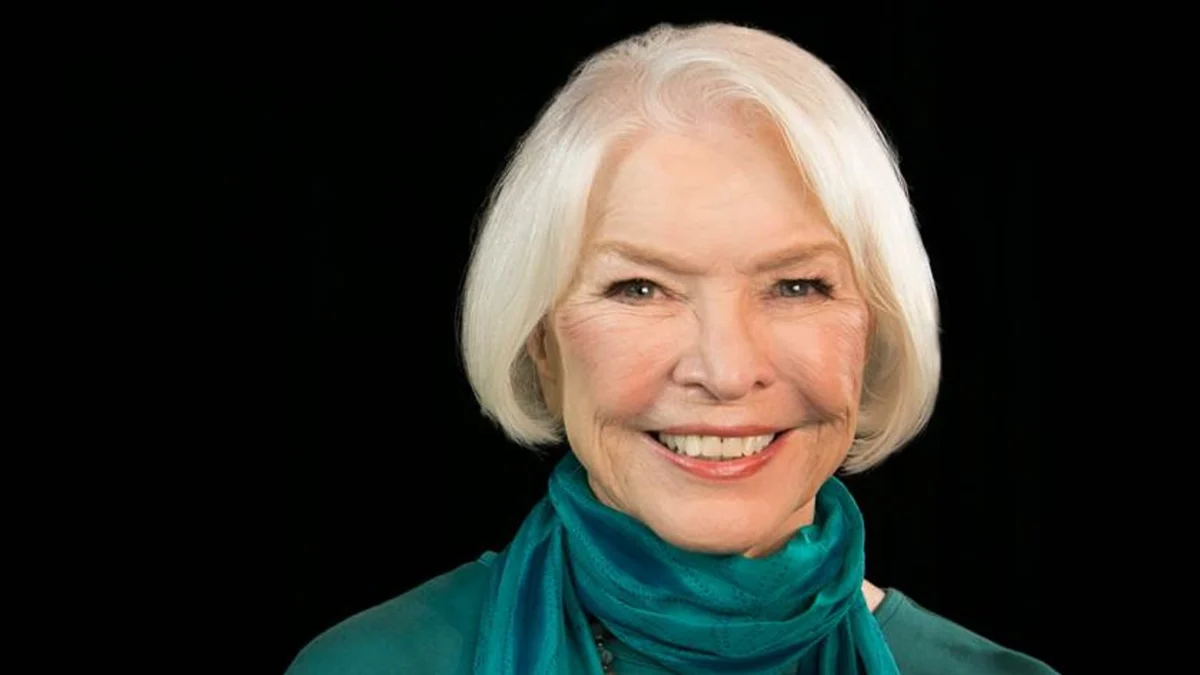
The 83rd Venice International Film Festival, scheduled to unfold on the historic shores of the Lido from September 2 to September 12, 2026, has announced its most prestigious tribute. The festival’s board has bestowed the Golden Lion for Lifetime Achievement upon the legendary actress Ellen Burstyn. A titan of the American screen for over half a century, Burstyn’s career represents a bridge between the gritty realism of the New Hollywood era and the nuanced, character-driven narratives of modern independent cinema.
Burstyn will be formally honored during the festival’s programming, with the award presentation coinciding with the premiere of Flesh Impact. The new short film, directed by the acclaimed Maggie Gyllenhaal, features a powerhouse cast including Dakota Johnson, Peter Sarsgaard, and Sepideh Moafi, further underscoring Burstyn’s continued relevance and her commitment to collaborating with the most vital voices in contemporary filmmaking.
A Legacy Defined: The Chronology of an Icon
To understand the significance of the Golden Lion, one must look back at the trajectory of Ellen Burstyn’s career, which has functioned as a mirror to the evolving role of women in Western society.
Burstyn’s professional life began in the late 1950s, but it was in the early 1970s that she truly shattered the glass ceiling of Hollywood stardom. Her breakout performance in Peter Bogdanovich’s The Last Picture Show (1971) established her as a master of dramatic vulnerability. This happened in tandem with the rise of the "New Hollywood" movement, a period where directors were given unprecedented creative control and actors were encouraged to delve into the psychological depths of their characters.
Following her turn in The Last Picture Show, she delivered one of the most haunting performances in cinema history as Chris MacNeil in William Friedkin’s The Exorcist (1973). The film was a cultural phenomenon, but it was Burstyn’s grounded, terrified, and fiercely protective mother figure that provided the emotional anchor for the supernatural horror.
In 1974, she reached the pinnacle of her craft with Martin Scorsese’s Alice Doesn’t Live Here Anymore. Her portrayal of a widowed mother attempting to navigate the complexities of identity, ambition, and motherhood in a patriarchal world earned her the Academy Award for Best Actress. This performance remains a touchstone for feminist cinema, showcasing a woman who refuses to be defined solely by her circumstances.
As the decades progressed, Burstyn did not retreat into comfortable archetypes. Instead, she pivoted toward the challenging, often harrowing landscapes of independent film. Her performance in Darren Aronofsky’s Requiem for a Dream (2000) as Sara Goldfarb—a lonely widow descending into amphetamine addiction—is widely considered one of the greatest acting feats in film history. It earned her another Academy Award nomination and solidified her status as an actress of "rare intensity and truth."
Artistic Depth and the "Authenticity Model"
Venice Film Festival artistic director Alberto Barbera, in announcing the award, spoke of Burstyn’s career in terms that transcend mere accolades. He characterized her as an artist who has spent fifty years "bringing depth and complexity to unforgettable female characters, embodying the contradictions and transformations in the contemporary woman."
Barbera’s praise specifically highlights her ability to move across genres and eras. From her collaborations with auteurs like Alain Resnais (Providence), Paul Schrader (Hardcore), and Bob Rafelson (The King of Marvin Gardens) to her later work in science-fiction epics like Christopher Nolan’s Interstellar (2014), Burstyn has maintained a consistent standard of excellence.
"Her artistry, which could illuminate pain and everyday resilience with dignity, irony, and courage, remains an absolute model of authenticity in performance and civic engagement within the craft of acting," Barbera noted. This emphasis on "civic engagement" is a nod to Burstyn’s long-standing influence behind the scenes, including her pioneering work with the Actors Studio, where she has served as co-president, helping to mentor generations of performers in the Stanislavski-derived Method.
A Career of Unprecedented Accolades
The Golden Lion is a singular addition to an already staggering shelf of trophies. Over the course of her nine-decade life, Burstyn has achieved what is colloquially known as the "Triple Crown of Acting," having won an Oscar, an Emmy, and a Tony.
Her statistical achievements remain formidable:
- Academy Awards: One win (Best Actress, Alice Doesn’t Live Here Anymore) out of six total nominations.
- Emmy Awards: Two wins, with a career spanning work in both film and television.
- Tony Awards: One win, recognizing her formidable presence on the Broadway stage.
- BAFTA and Golden Globes: Multiple wins across both organizations, reflecting international recognition of her work.
Beyond these traditional markers, her longevity is perhaps her most impressive achievement. At 93, she is not merely a figure of historical interest; she is a working professional. Her recent collaboration with director Kornél Mundruczó on the upcoming drama Place to Be serves as a testament to her creative vitality. She continues to seek out roles that challenge the status quo, proving that her artistic evolution is far from finished.
The Venice Perspective: Implications for the Industry
The decision to honor Burstyn at the 83rd Venice Film Festival serves a dual purpose. It celebrates the legacy of a woman who helped define the "New Hollywood" era, while simultaneously anchoring the festival in the importance of the actor’s craft.
In an era where the film industry is increasingly obsessed with digital spectacle, AI-driven content, and franchise-led box office returns, honoring an actress whose career was built on the foundation of the Actors Studio—focusing on psychological realism, emotional truth, and the craft of human connection—is a pointed editorial statement from the Venice board.
Furthermore, the choice of Flesh Impact, a short directed by Maggie Gyllenhaal, highlights the bridge between generations. By pairing an industry legend with a modern director known for her own sharp, feminist, and intellectually rigorous approach to cinema, the festival is signaling a commitment to continuity. It suggests that the future of cinema is best served by honoring the giants who paved the way for the current wave of auteurs.
Burstyn’s Response: A Life Full of Gratitude
For Burstyn, the news of the award was met with characteristic warmth and a touch of professional wonder. In her official statement, she expressed a deep, almost childlike excitement about returning to Venice, a city that holds a special place in her personal pantheon.
"Wow! I not only get to travel to one of my top most favorite cities in the whole world, I get to return home carrying a Golden Lion in my arms!" Burstyn stated. "I feel so honored—so happy—so filled with gratitude! Wow indeed!"
Her reaction reflects a career defined not by the acquisition of power or wealth, but by a genuine, enduring love for the medium of film. It is this passion that has allowed her to remain relevant for over half a century. Whether she is playing a mother fighting for independence in the 1970s or exploring the complexities of modern existence in 2026, Burstyn’s work remains anchored in the belief that acting is a tool for empathy.
Looking Toward the Future
As the international film community turns its eyes toward the Lido this September, the spotlight on Ellen Burstyn serves as a reminder of what the Venice International Film Festival aims to be: a global arbiter of quality and a guardian of cinematic history.
The unveiling of the full festival lineup on July 23 will provide more context for the environment in which Burstyn will receive her honor, but in many ways, the festival has already set its tone. By choosing a performer who has spent a lifetime mastering the art of the "human," Venice is signaling that despite the rapid technological changes in the industry, the soul of cinema remains firmly rooted in the performance of the actor.
Ellen Burstyn’s journey from a young woman with a dream to an icon of global cinema is a testament to the power of artistic persistence. As she stands on the stage in Venice this September, clutching the Golden Lion, she will not just be receiving an award for her past—she will be providing a blueprint for the future of the acting profession. Her story remains one of the most compelling arcs in the history of the silver screen, and it is a story that is, fortunately for all of us, still being written.

 Basiran