

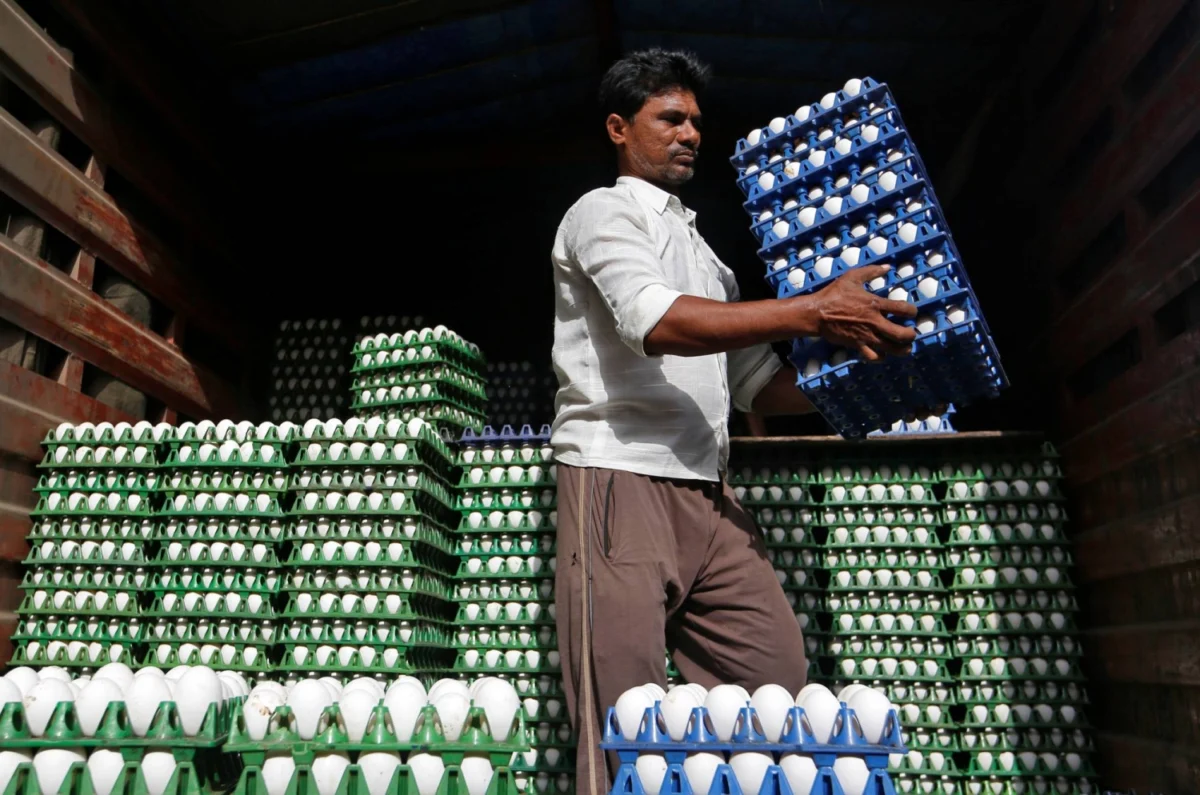
KOLKATA, India — The lunchtime bell in West Bengal’s state-run schools once signaled a routine replenishment of energy for millions of children. For many, the highlight was a boiled egg—a reliable, affordable, and nutrient-dense staple in a region where eggs have long been considered a primary source of protein for low-income families. However, as of this month, the menu has undergone a seismic shift.
Following the election of a Hindu nationalist administration, the state government has announced that a religious charity will take over the provision of mid-day meals, enforcing a strictly vegetarian menu. The decision to remove eggs from the government-sponsored lunch program has triggered a fierce political firestorm, drawing battle lines between traditional dietary habits, secular education, and the ideological agenda of the new governing coalition.
The Human Impact: A Teacher’s Perspective
For educators like Raja Dey, a teacher in a Kolkata-area school, the change is not merely culinary; it is logistical and humanitarian. "The egg was a staple that ensured attendance," Dey explains. "For many of our students, this is their only high-protein meal of the day. There is a genuine fear among the faculty that as the nutritional appeal of the lunch diminishes, attendance—which we have worked hard to boost—will begin to crater."
Dey’s concerns reflect a broader anxiety across the state. In West Bengal, a region with a diverse culinary history that traditionally embraces both fish and eggs, the sudden imposition of a vegetarian mandate is being viewed by many as an attempt to impose a specific cultural and religious homogeneity on a secular public education system.
Chronology of a Policy Shift
The removal of eggs from the mid-day meal program did not happen in a vacuum. It is the culmination of a broader shift in Indian regional politics:
- Pre-2026: The mid-day meal scheme, a flagship federal program, allowed state governments to tailor menus to local dietary preferences. In West Bengal, eggs were a subsidized and welcomed addition.
- May 2026: The Hindu nationalist party secures a majority in the West Bengal state assembly, promising a "reimagining" of state social services.
- June 2026: The government announces a partnership with a prominent, faith-based charitable organization to centralize the production and distribution of school meals.
- July 2026: Official directives are issued stating that to maintain "nutritional and ethical uniformity" across state schools, all meals provided by the new charity will be strictly vegetarian. The transition begins immediately, sparking protests from parents and student unions.
Nutritional Consequences: The Science of the Egg
Public health experts have been quick to weigh in on the potential long-term impacts of removing eggs from the diets of growing children. According to the National Institute of Nutrition, eggs are a "complete protein," containing all nine essential amino acids, as well as choline, lutein, and zeaxanthin—nutrients crucial for cognitive development in children.
"When you remove an easily digestible, high-quality protein like an egg, you must replace it with something of equal biological value," says Dr. Ananya Sen, a nutritionist based in Delhi. "In a school lunch setting, replacing an egg with lentils or legumes is not a direct nutritional equivalent. You have to consume significantly higher volumes of plant-based proteins to achieve the same amino acid profile, which is often difficult for a child to manage in a single meal."
Data suggests that for rural students in West Bengal, the mid-day meal accounts for nearly 40% of their daily caloric intake. Critics argue that by prioritizing ideological purity over nutritional science, the government is effectively conducting a social experiment on the state’s most vulnerable population.
The Ideological Divide: Faith vs. Policy
The decision has reignited a debate that has simmered in India for decades: the "saffronization" of public policy. Critics of the government argue that the move to vegetarianism is a veiled attempt to promote Hindu nationalist values, which often categorize non-vegetarian food—specifically eggs and meat—as "impure" or "tamasic."

"This is not about nutrition; it is about signaling," says political analyst Arnab Goswami. "By bringing in a religious charity to manage the food supply, the state is outsourcing a public function to an entity that holds a specific moral stance on diet. It is a fundamental breach of the secular character of state-run education."
Conversely, supporters of the government argue that the move promotes health and discipline. They point to the charity’s high standards of hygiene and the efficiency of their industrial-scale kitchens. Government spokespersons have stated that the transition is intended to streamline the supply chain and ensure that all students receive meals that are "hygienic, wholesome, and culturally respectful of the values held by the majority of the community."
Official Responses and the Defense of the Status Quo
The government’s official stance emphasizes the partnership with the charity as a necessary upgrade to a "corrupt and inefficient" previous system. An official from the State Department of Education, speaking on condition of anonymity, noted: "Our focus is on providing a consistent, high-quality meal to millions. The charity has a proven track record of mass-producing healthy, vegetarian meals. Any debate about the specific inclusion of eggs is a distraction from our goal of standardizing school infrastructure."
However, opposition parties have characterized the move as an "assault on the plate." Demonstrations have broken out in several districts, with protestors carrying boiled eggs and banners calling for the reinstatement of the traditional menu. The opposition has vowed to take the matter to the High Court, arguing that the dietary mandate infringes upon the constitutional rights of the students and their families to choose their food.
Implications for the Future
The implications of the West Bengal case extend far beyond the lunchroom. As India becomes increasingly polarized, the "plate" has become the latest front in the culture wars. If the government succeeds in sustaining this policy, it may set a precedent for other states to centralize school services under the banner of religious charities, potentially leading to a nationwide homogenization of school menus.
Furthermore, the tension highlights a growing disconnect between the state’s political mandate and the socio-economic realities of its citizens. In a region where economic inequality remains a significant challenge, the egg represented a low-cost, high-yield solution to childhood hunger. Removing it without a robust, scientifically backed alternative risks creating a nutritional deficit that may take years to reverse.
For now, teachers like Raja Dey are left to navigate the fallout. "We are supposed to be educators, not dietitians or political activists," Dey remarks. "But when you change what a child eats, you change their ability to learn. That is the reality we are waking up to every morning."
As the school year progresses, the eyes of the nation remain fixed on West Bengal. Whether the government will bow to public pressure and reinstate the egg, or whether this marks a permanent shift toward a new, ideologically driven food policy, remains to be seen. What is clear is that for the students of West Bengal, the lunchtime bell no longer just signifies a break—it signifies a deepening divide in the nation’s political and cultural landscape.











