Iffa Jayyana
In the fast-paced world of graphics technology, few innovations have generated as much controversy and curiosity as Nvidia’s Deep Learning Super Sampling (DLSS). This week, the tech community was sent into a frenzy following the discovery of DLSS 5, an unreleased iteration of Nvidia’s proprietary AI-driven upscaling and frame generation technology. Found tucked away within the files of an early-access build of NBA 2K27, the leaked DLL (Dynamic Link Library) has sparked a global effort among modders and hardware enthusiasts to force the technology onto hardware it was never intended to support.
While Nvidia has yet to provide an official roadmap for DLSS 5, the community’s rapid, "brute-force" integration of the software into legacy architectures—from the RTX 50-series down to the aging but capable RTX 30-series—offers a fascinating, if messy, glimpse into the future of neural rendering.
A Chronology of the Leak: From Blackwell to Ampere
The story began with the leak of the DLSS 5 DLL inside NBA 2K27. Almost immediately, the community identified that the file was architected to leverage the specific AI-acceleration capabilities found in Nvidia’s forthcoming Blackwell (RTX 50-series) architecture.
Within 48 hours of the initial discovery, enthusiasts on the RenoDX Discord server had successfully patched the DLL to run on RTX 40-series cards (Ada Lovelace). The process was not straightforward; it required patching incompatible CUDA instructions that the older cards could not natively interpret. By the third day, the modding community had pushed the boundaries further, enabling the technology to execute on the RTX 30-series (Ampere) architecture.
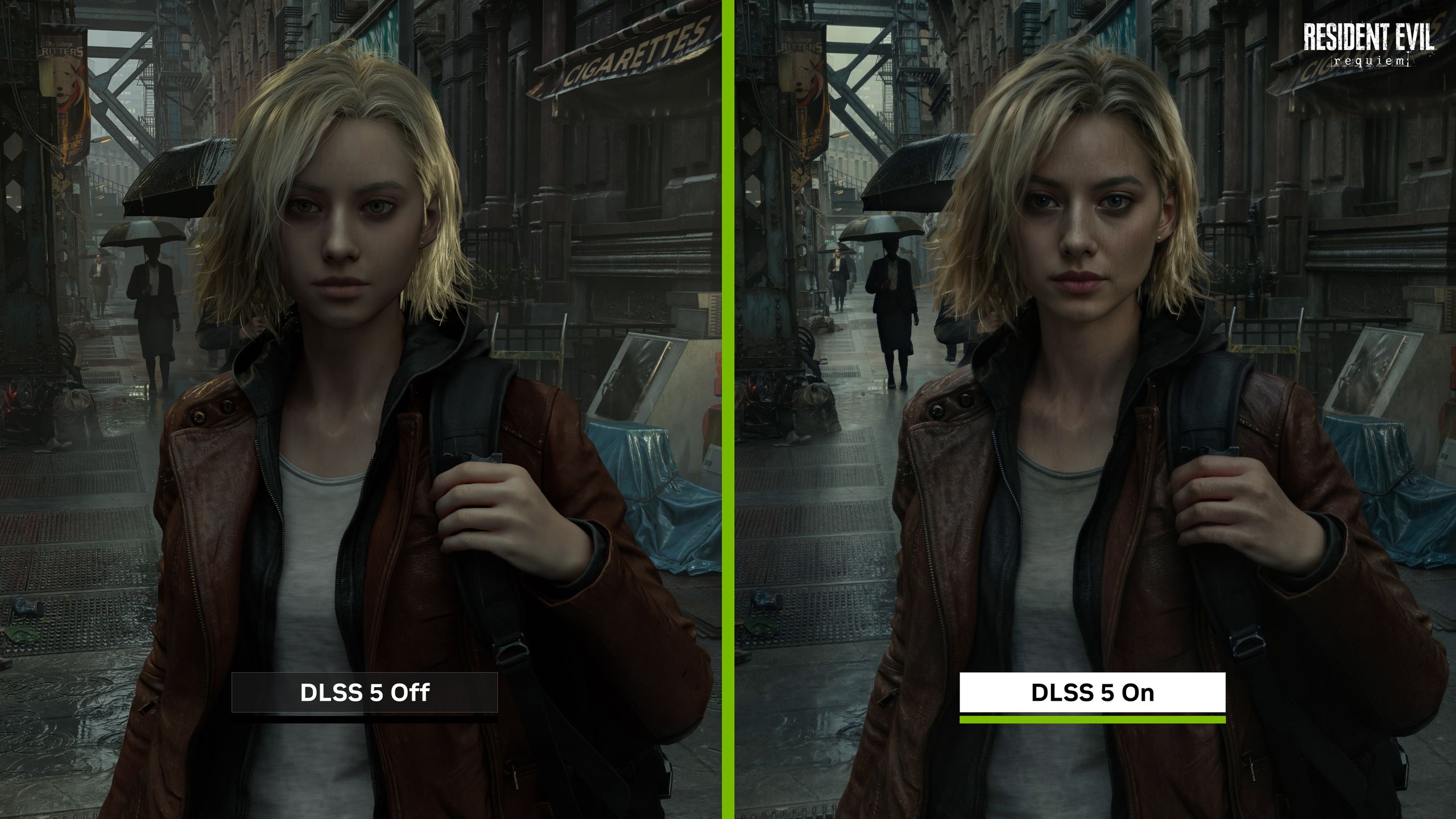
What started as a curiosity has turned into a massive, crowdsourced stress test. Users across the globe are currently treating their graphics cards as experimental platforms, attempting to run modern titles with a version of DLSS that is currently in an unoptimized, "pre-alpha" state, specifically designed for hardware that is not yet widely available.
The Technical Reality: Neural Fidelity vs. Performance
The results of this experimental patching are, to put it mildly, mixed. The fundamental allure of DLSS 5 is its promise of "neural rendering," where the AI does more than just upscale the image—it essentially reconstructs significant portions of the frame based on learned data.
The Performance Penalty
The most immediate takeaway for users attempting to run DLSS 5 on non-Blackwell hardware is a catastrophic hit to frame rates. Because the RTX 30-series and even the 40-series lack the specific FP8 (8-bit floating point) libraries that DLSS 5 relies on for high-efficiency processing, the workload is being handled by software emulation and general-purpose compute cores.
In many cases, the performance tax is severe. For example, reports indicate that in Deep Rock Galactic, an RTX 3080 that normally sustains over 130 frames per second (FPS) drops to a staggering 4 FPS with the patched DLSS 5 enabled. In Cyberpunk 2077, the results are similarly grim, with some users seeing as little as 7 FPS on an RTX 3080 Ti.
The Trade-off: Visuals at a Cost
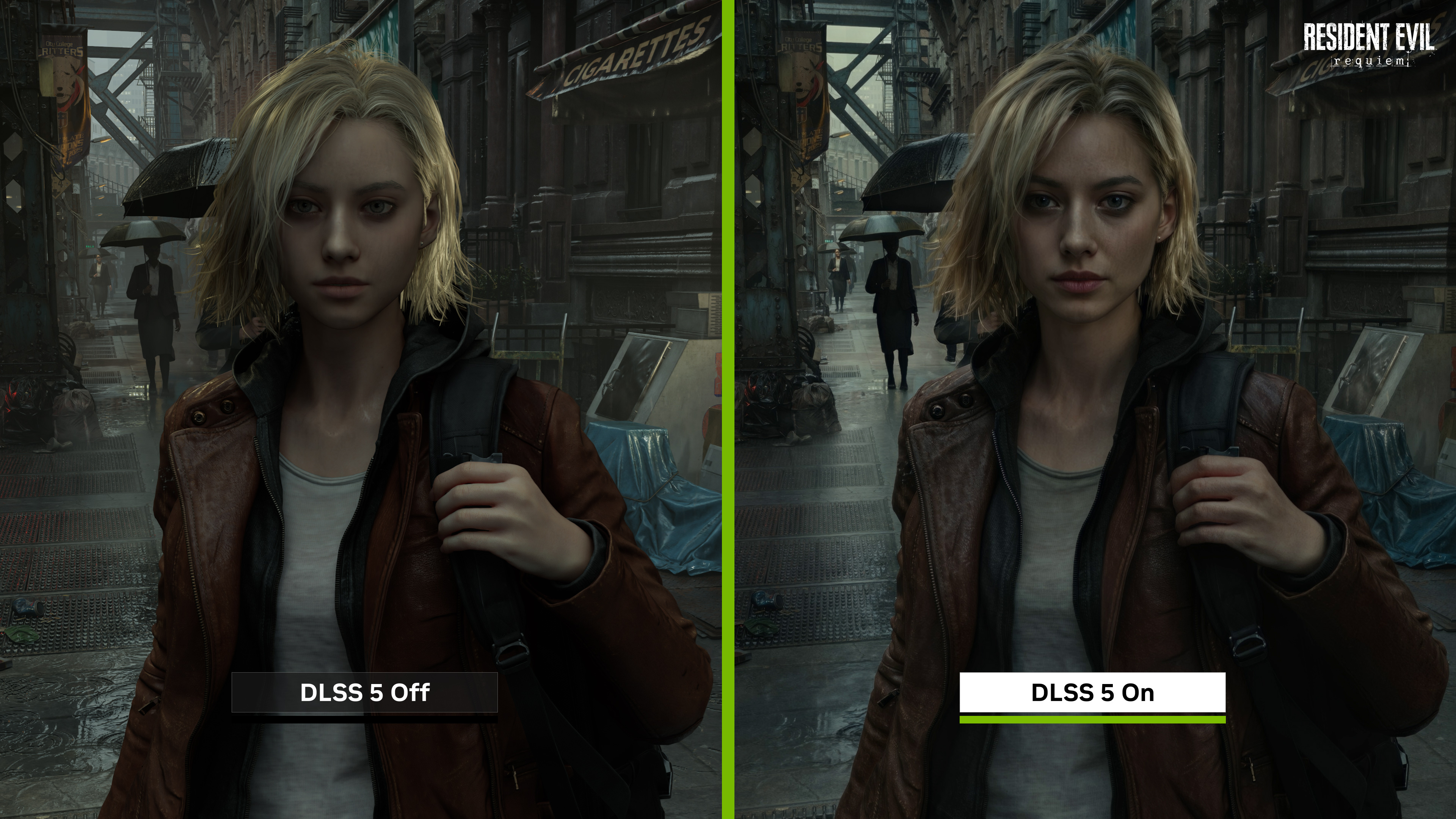
However, the performance dip is only one side of the coin. Enthusiasts report that when the technology does render a frame, the image quality is often startlingly different from native rendering. There is a palpable shift toward a "photorealistic" aesthetic, though this often comes at the expense of base visual fidelity. To reach playable frame rates, users are forced to lower in-game settings to their absolute minimums and rely heavily on the "Ultra Performance" upscaling presets.
This creates a paradox: the more the user relies on DLSS 5 for visual reconstruction, the more they must sacrifice the raw game assets. The end result is a highly processed, AI-hallucinated image that looks "better" to some, but feels "wrong" to others due to the significant latency penalties introduced by the heavy computational load.
Data from the Frontlines: A Performance Breakdown
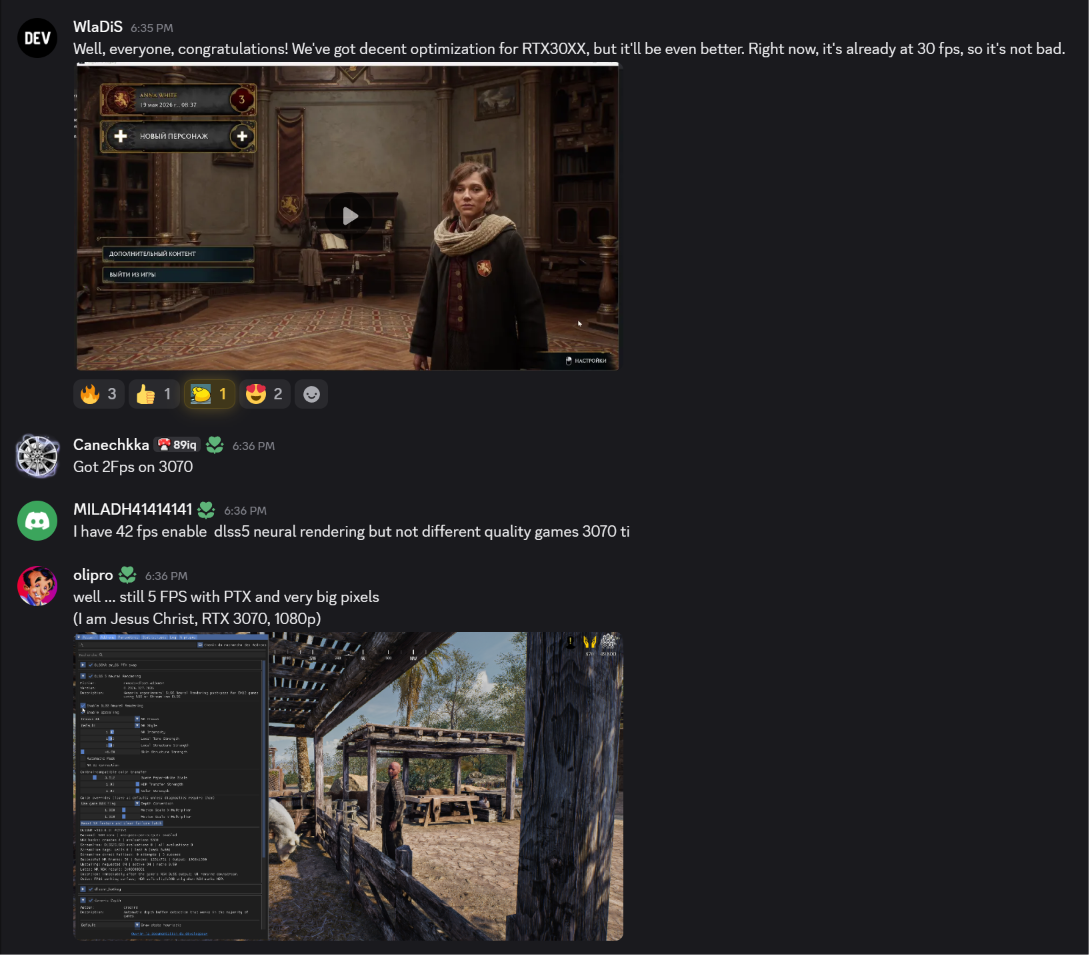
The RenoDX Discord and social media channels have become the primary repositories for performance data. The findings illustrate just how much heavy lifting the RTX 30-series is doing under duress:
- Grand Theft Auto V: Achieving 20-30 FPS on an RTX 3080 Ti at 1440p.
- Dying Light 2: Approximately 40 FPS on an RTX 3080, though users noted significant "noise" and artifacts in the final image.
- Hogwarts Legacy: A consistent 30 FPS on an RTX 3090, but a disastrous 2 FPS on an RTX 3070, highlighting the memory and compute limitations of the latter.
- Cyberpunk 2077: A high of 41 FPS was recorded, but only after dropping the base resolution to 720p and using the most aggressive upscaling preset.
These metrics highlight a critical reality: DLSS 5, in its current leaked state, is not a "magic button" for performance. It is a highly demanding, compute-heavy process that current hardware is largely unequipped to handle efficiently.
Official Silence and Industry Implications
Nvidia has maintained a strict silence regarding the leak. Historically, the company has been protective of its proprietary software, often using DLSS versions as a primary selling point for newer GPU generations. DLSS 4.5, for instance, remains a standout feature for the RTX 40-series.
It is almost certain that DLSS 5 is intended to be a flagship feature for the RTX 50-series, specifically to showcase the capabilities of the new Blackwell silicon. The reliance on FP8 libraries—which are native to the next-gen architecture—suggests that Nvidia intends for this iteration to be a hardware-locked feature. By keeping the technology proprietary, Nvidia can ensure that the user experience meets their standards for latency and visual fidelity, something that is currently impossible to achieve through the community-led patches.
The Future of AI in Gaming: A Paradigm Shift
The most profound implication of this leak is the shift in consumer sentiment. Only a few years ago, the gaming community was largely skeptical of "AI in games," often viewing it as a marketing buzzword or a crutch for poor optimization.
Today, that sentiment has flipped entirely. The very same users who might have previously rejected "AI features" are now actively searching for ways to force-feed them into their systems. There is a growing trend of enthusiasts who are ready to abandon their current RTX 30-series and 40-series cards specifically to get access to the AI performance offered by the upcoming RTX 50-series.

This behavior suggests that we have entered a new era of hardware cycles. The value proposition of a graphics card is no longer just about rasterization power or ray tracing capability; it is about "AI headroom." Consumers are increasingly basing their purchasing decisions on whether a card can support the latest AI-driven software, effectively turning GPUs into dedicated neural processing units.
Conclusion: The Double-Edged Sword of Innovation
The leaked DLSS 5 DLL serves as a cautionary tale and a beacon of hope. On one hand, it shows that "next-gen" features cannot simply be patched into old hardware without significant compromises in latency, frame pacing, and stability. The "single-digit FPS" reports are a stark reminder that software cannot always overcome the limitations of physical silicon.
On the other hand, the sheer ingenuity of the modding community—working to get this technology running on hardware that was never meant to support it—demonstrates the incredible demand for these advancements.
As we look toward the official launch of the RTX 50-series, the industry should take note. The appetite for neural rendering is insatiable, and the standard for what constitutes a "high-end" gaming experience is shifting toward AI-assisted, reconstructed realism. Whether DLSS 5 will be a revolution in gaming or merely a demonstration of hardware-gated excess remains to be seen, but one thing is clear: the era of the neural-powered GPU has arrived.

 Lina Hope
 Muslim