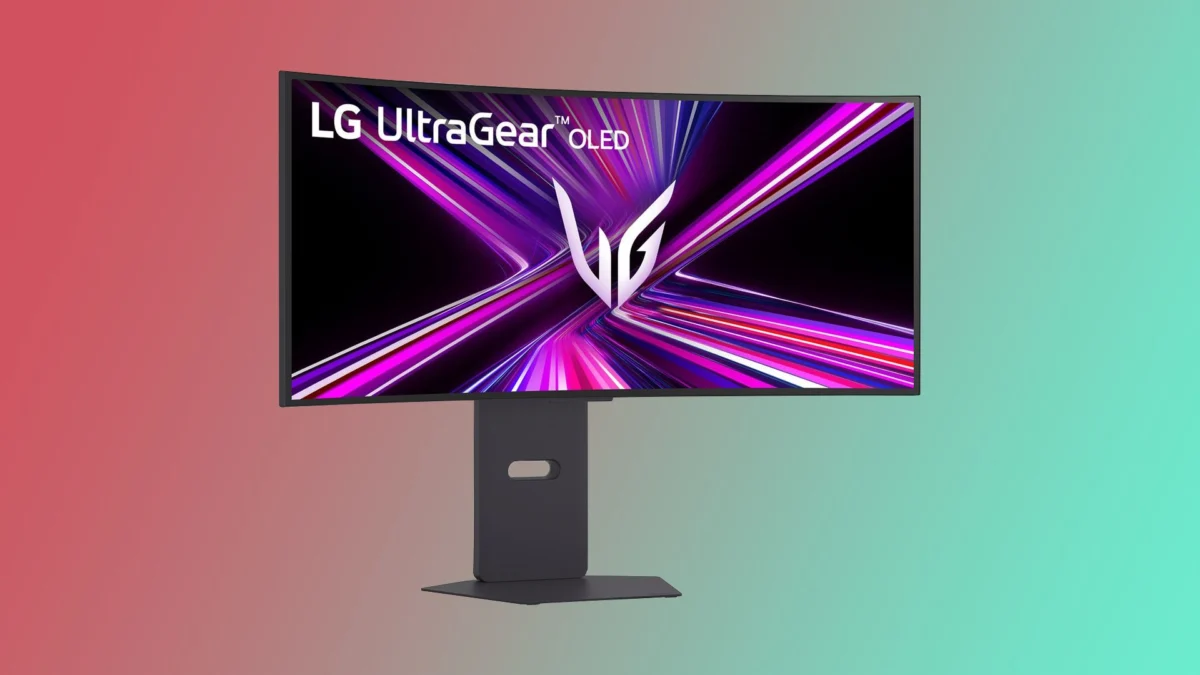
The gaming monitor landscape has undergone a seismic shift over the past twenty-four months. Once considered an enthusiast luxury reserved for those with deep pockets and high-end hardware, OLED display technology has rapidly matured, driving costs down while simultaneously pushing performance benchmarks higher. Today, that trend reaches a new milestone as Amazon slashes the price of the LG UltraGear 34GX900A-B by 50%, effectively making high-fidelity, ultrawide gaming accessible to a significantly broader segment of the PC gaming community.
The monitor, which carries an original MSRP of $1,200, is currently listed at $599.99. This aggressive pricing strategy positions the 34-inch powerhouse as one of the most compelling value propositions in the current peripheral market.
Main Facts: A Technical Overview of the 34GX900A-B
At its core, the LG UltraGear 34GX900A-B is a masterclass in immersive display engineering. Designed primarily for competitive and cinematic gaming, the unit features a 34-inch curved OLED panel with a WQHD resolution of 3440 x 1440. The 21:9 aspect ratio provides a panoramic field of view, ideal for titles ranging from sprawling open-world RPGs to high-stakes tactical shooters.
Key Specifications:
- Panel Type: OLED with an 800R curvature
- Refresh Rate: Up to 240 Hz
- Response Time: 0.03ms (GtG)
- Peak Brightness: Up to 1300 nits
- Color Gamut: 98.5% DCI-P3 coverage
- Contrast Ratio: 1.5M:1
- Adaptive Sync: AMD FreeSync Premium Pro and Nvidia G-Sync Compatible
Beyond raw speed, the monitor emphasizes visual fidelity. By utilizing OLED technology, each pixel functions as its own light source, allowing for "True Black" performance. With DisplayHDR True Black 400 certification, the display offers an expansive dynamic range, ensuring that highlights pop against near-infinite black levels.
Chronology: The Evolution of OLED Accessibility
To understand the significance of this $599.99 price point, one must look at the trajectory of display technology over the last decade.
2018–2020: The Era of Premium Pricing
During this period, OLED monitors were almost exclusively reserved for professional color-grading suites and high-end television displays. PC gamers remained tethered to IPS and VA panels, which, while capable, could not match the infinite contrast ratios of OLED. Early attempts at bringing OLED to the desktop market saw price tags exceeding $2,500, effectively alienating the average enthusiast.
2021–2023: The Competitive Surge
The entry of major manufacturers—LG, ASUS, Alienware, and Samsung—into the OLED gaming space triggered a "spec war." As production yields improved and supply chains stabilized, manufacturers began competing not just on panel quality, but on refresh rates and response times. The introduction of 240Hz OLED panels marked a turning point, signaling that OLED was no longer just for visual fidelity, but for competitive esports as well.
2024: The Mid-Range Disruption
The current fiscal year has seen a concerted effort by brands to move inventory by tapping into the "mid-range enthusiast" bracket. The discount on the LG UltraGear 34GX900A-B is the latest in a series of market moves aimed at normalizing high-performance OLED displays in the $500–$700 price range, a segment previously dominated by high-refresh-rate IPS panels.
Supporting Data: Why This Monitor Matters
The technical specifications of the 34GX900A-B are not merely marketing bullet points; they represent a convergence of features that eliminate the traditional trade-offs gamers have had to make.
Speed vs. Visuals
Historically, a monitor was either "fast" (TN or fast-IPS panels) or "pretty" (IPS/VA with high color accuracy). The 0.03ms response time of the 34GX900A-B effectively bridges this gap. By removing ghosting and motion blur, the display allows for a clarity that is essential for twitch-reflex games, while simultaneously providing the color depth required for AAA cinematic experiences.
Ergonomics and User Comfort
LG has prioritized long-term usability, an essential factor for users who spend hours at their desks. The monitor is UL-verified for:
- Flicker Reduction: Preventing eye strain during prolonged sessions.
- Glare Reduction: A critical feature for curved displays, which can often catch overhead lighting.
- Low-Blue-Light Output: Hardware-based filtering that maintains color accuracy while reducing the emission of disruptive light wavelengths.
Connectivity and Productivity
The inclusion of dual HDMI 2.1 ports ensures full bandwidth support for modern consoles (PS5 and Xbox Series X) and high-end PCs. Furthermore, the USB Type-C port with Power Delivery adds a layer of convenience for laptop users, allowing for a single-cable setup that handles data, video, and power simultaneously. The integrated screen-split software also transforms the ultrawide canvas into a productivity powerhouse, capable of hosting up to six distinct application windows.
Official Responses and Market Positioning
While LG has not issued a formal press release regarding this specific Amazon promotion, company representatives have previously emphasized a strategy of "democratizing high-end gaming experiences."
Market analysts at firms such as Display Supply Chain Consultants (DSCC) have noted that the reduction in OLED costs is primarily driven by the expansion of manufacturing capacity in South Korea and China. By scaling production of 34-inch panels, LG is able to sustain lower margins on individual units while capturing a larger share of the enthusiast market.
Industry experts suggest that this price drop is a "clearing of the deck" for newer models expected in the coming quarters. However, for the consumer, this creates a unique window of opportunity. As noted in the current Amazon listing, the hardware remains current, fully compatible with the latest GPU architectures, and offers features that will remain industry-standard for the foreseeable future.
Implications: The Future of the Desktop Display
The shift toward $600 OLED monitors carries several implications for the broader PC ecosystem.
1. The Death of the High-End IPS Panel?
As prices for OLED converge with those of premium IPS monitors, the value proposition for high-end LED-backlit displays is rapidly eroding. Unless a user requires the extreme brightness of a Mini-LED panel for a sun-drenched office environment, the visual advantages of OLED—specifically the motion clarity and contrast—are becoming too difficult to ignore.
2. GPU Hardware Requirements
With an ultrawide resolution of 3440 x 1440 and a 240Hz refresh rate, this monitor demands significant graphical horsepower. This price drop may indirectly stimulate sales of high-end graphics cards, as gamers look to upgrade their GPUs to take full advantage of the monitor’s 240Hz refresh rate in modern, graphically demanding titles.
3. Increased Accessibility for Creators
Because the 34GX900A-B offers 98.5% coverage of the DCI-P3 color gamut, it is not just a gaming tool. It is a legitimate entry point for video editors and digital artists who require color accuracy but were previously deterred by the cost of professional reference monitors. The combination of gaming performance and color precision makes this an ideal "hybrid" display for the modern creative professional.
4. A New Standard for "Premium"
The fact that a 240Hz OLED monitor is now priced at $599 sets a new psychological anchor for consumers. Future monitors entering the market at the $1,000+ price point will now be under immense pressure to justify their cost through innovation, such as higher resolution (4K) or significantly higher brightness (exceeding 2000 nits).
Conclusion: Is It Time to Switch?
The LG UltraGear 34GX900A-B, now available at 50% off its retail price, represents a rare moment where cutting-edge technology becomes accessible without compromise. Whether you are a competitive gamer seeking the near-instantaneous response times of a 0.03ms panel, or a narrative-driven gamer looking to get lost in the deep blacks and vibrant colors of an OLED screen, the current deal offers a definitive upgrade path.
For those who have been waiting on the sidelines for the "perfect time" to transition to ultrawide OLED, the barriers to entry have never been lower. At $599.99, the 34GX900A-B is not just a purchase; it is an investment in a significantly more immersive digital experience. As the market continues to evolve, this monitor stands as a testament to the rapid pace of technological innovation and the increasingly competitive nature of the hardware industry.