Basiran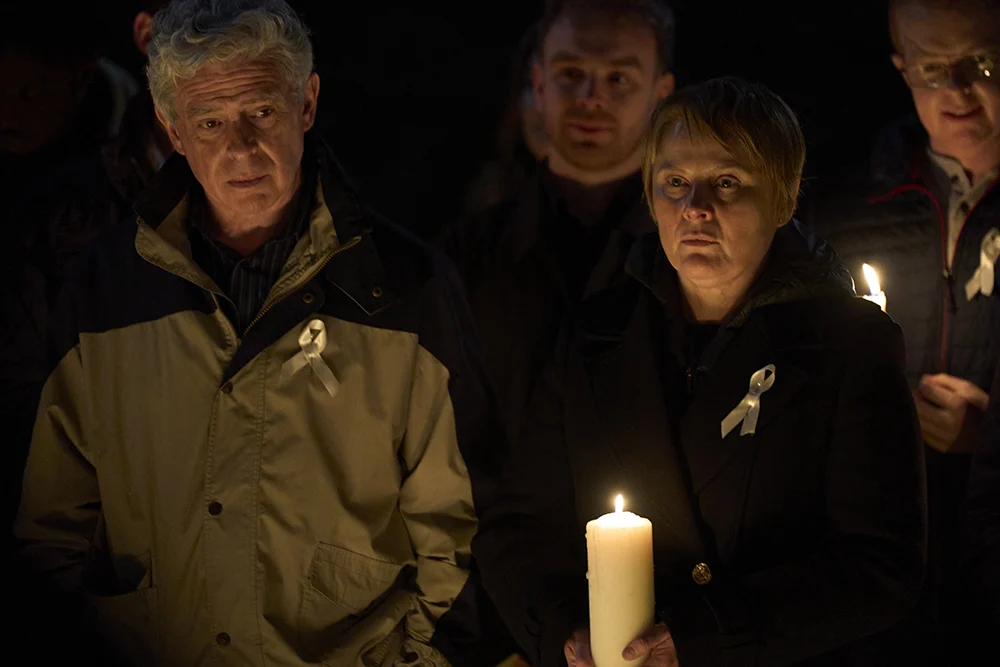
In the quiet solitude of his upstate New York home in late 2017, Liam Neeson opened a link to a New York Times article that would alter his perspective on his homeland forever. The piece, penned by journalist Dan Barry, chronicled a dark, long-hidden chapter of Irish history: the discovery of a mass grave at a former Catholic home for mothers and babies in Tuam, County Galway. Decades of institutional neglect had culminated in the harrowing revelation that nearly 800 infants and children had been interred in unmarked graves, with some remains unceremoniously deposited in a decommissioned sewage tank.
Almost a decade later, the veteran actor remains deeply affected by the narrative. Speaking to Variety, Neeson admits he is “still coming to terms with my reaction to it.” What began as a moment of personal reckoning for the Irish-born star soon transformed into an eight-year cinematic crusade to ensure that the victims of the Tuam home were neither forgotten nor erased by the passage of time.
A Legacy of Institutional Injustice
The scandal centered on the Bon Secours Mother and Baby Home in Tuam, which operated under the auspices of the Catholic Church until the early 1960s. For years, the facility existed in the shadow of local memory, a place where unmarried mothers were sent to endure the social stigma of their time and where their children often faced mortality rates that defied modern medical logic.
The light was finally brought to this darkness by Catherine Corless, an amateur local historian whose relentless pursuit of archival records and public registers exposed the discrepancy between the number of children who died at the home and the lack of official burial markers. Corless’s work, initially met with institutional indifference and at times overt resistance from the Catholic Church, eventually sparked a national outcry in Ireland. However, it was the international amplification provided by the New York Times that caught the attention of Neeson.
“There certainly was a growing rage, an embarrassment,” Neeson reflects. “I was brought up a Catholic. I was an altar boy for a bunch of years, and I was kind of staggered by it. And, for the first time in my professional life, I remember thinking: ‘Whatever my celebrity status is in this business, I want this story to be shown to more people.’”
Chronology: From Investigative Journalism to Global Premiere
The journey from article to film was marked by a commitment to patience and sensitivity. Recognizing that the story required a delicate hand, Neeson took the unprecedented step of moving behind the camera as a producer, optioning the rights to the story.
- 2017: Liam Neeson encounters the New York Times exposé by Dan Barry.
- 2017–2018: Initial outreach to Catherine Corless. Neeson travels to Ireland to meet with her personally, promising to shepherd the project with the same gravity as his historical dramas like Schindler’s List.
- 2019–2022: Development of the script with Rebecca Lenkiewicz, known for her work on She Said. The team prioritizes historical accuracy and the inclusion of survivor narratives.
- 2023–2024: Production begins on location in Tuam. Frank Berry, acclaimed for his empathetic directorial approach in Michael Inside and Aisha, is tapped to helm the project.
- 2025: World premiere at the Galway Film Fleidh, followed by screenings at the Toronto International Film Festival.
The Vision of Director Frank Berry
When selecting a director, Neeson sought someone capable of capturing the atmospheric weight of the tragedy without resorting to exploitation. He settled on Frank Berry, whose previous work demonstrated an uncanny ability to allow silence to speak volumes.

“Frank wonderfully eavesdrops with his camera and allows the story to breathe,” Neeson says. “Especially with this, you do not want to highlight the horror. You just let the story breathe, and the horror will reveal itself.”
For Berry, the project was a monumental responsibility. “There’s a lot of people in Ireland and throughout the world who are affected by religious institutions, so that was on our minds every single step of the way,” Berry explains. “How would survivors feel when they’re watching this scene or when they’re listening to this dialogue?”
The production team, including frequent collaborator Jules Daly and Irish production powerhouse Element Pictures, insisted on filming in and around Tuam. By hiring survivors of the home as extras and consultants, Berry ensured that “lived experience” remained at the core of every creative decision.
The Central Figure: Catherine Corless
At the heart of the film is the portrayal of Catherine Corless, played with quiet intensity by Monica Dolan. During the premiere in Galway, it was clear that Corless remains the emotional compass of the project. Berry recounts the moment he told Corless of Neeson’s interest in the story: “She said she nearly fell off her chair.”
Neeson’s subsequent meeting with Corless was not a celebrity photo-op, but a solemn promise. “I had a wonderful afternoon just listening to her, assuring her this would come to the screen and for her to please exercise extraordinary patience,” Neeson says, drawing a parallel to his own career milestones. “I said, ‘Schindler’s List took over 10 years.’”
For Corless, the film is not a capstone, but a tool for advocacy. Her primary objective remains the complete excavation of the site, a respectful reburial of the children, and the creation of a lasting memorial. “This film is part of that journey,” Berry notes. “She’ll rest when that happens.”
The Wider Implications for Irish Society
The significance of The Lost Children of Tuam extends far beyond the perimeter of one specific facility. The film serves as a mirror for a nation still grappling with the multi-generational trauma inflicted by religious institutions.

“There’s so many religious institutions in Ireland that have hurt people, and that pain is very, very palpable in Irish society,” Berry observes. He points to the systemic abuse within the secondary school systems and the notorious Magdalene Laundries, which continued their operations into the 1990s.
The film acts as a catalyst for catharsis. By documenting the work of Corless, the filmmakers are effectively opening a space for long-suppressed grief to be aired. As Berry puts it, “There are survivors everywhere—and that’s why we made the film. A lot of that pain is hidden in Ireland and there’s a lot of wounds that need air.”
A Call to Remembrance
Neeson, who emphasizes that this project may be his only foray into the producer’s chair, views the film as a moral imperative. He remains steadfast in his decision not to appear on screen, noting that the focus must remain entirely on the children and the woman who fought for them.
In his final remarks on the project, Neeson invokes the words of the late Irish journalist Con Houlihan to summarize the existential necessity of the film: “To be forgotten is to die twice.”
Through The Lost Children of Tuam, the victims of a system that tried to render them invisible have been granted a second life in the public consciousness. The film stands as a testament to the power of persistence, the importance of historical accountability, and the belief that even in the face of the most profound institutional betrayals, the truth can—and must—eventually surface.
As the credits roll and the lights come up in theaters across the world, the legacy of the children of Tuam is finally, irrevocably, reclaimed.


 Ammar Sabilarrohman
 Asep Darmawan