Nana
Nana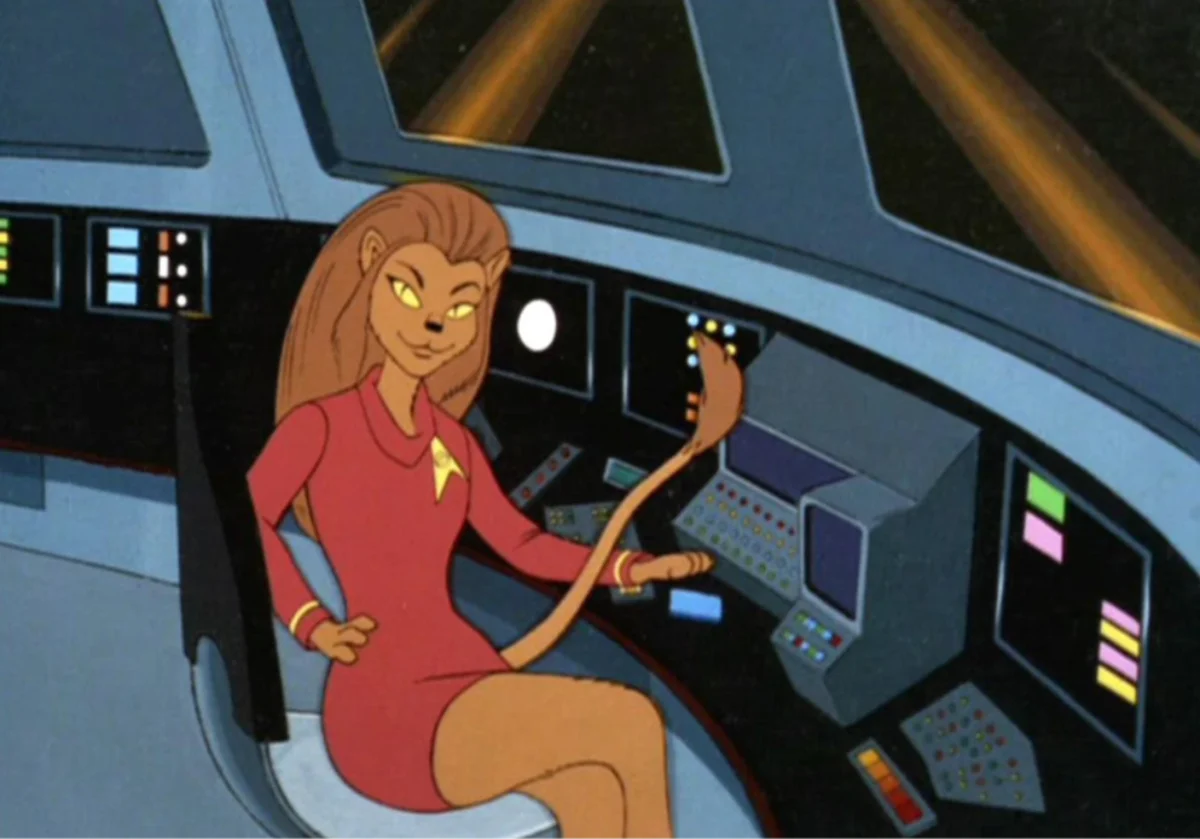
The latest installment of Star Trek: Strange New Worlds has once again proven that the franchise thrives when it leans into its own legacy. By blending high-stakes narrative tension with the "what-if" scenarios that define classic Star Trek time-travel episodes, the showrunners have delivered a masterclass in fan service. While the episode—titled "Tomorrow’s Enterprise"—offers a wealth of narrative complexity, the discourse among the fanbase has been hijacked by a singular, blink-and-you’ll-miss-it detail: the inclusion of a feline humanoid, widely identified as the rare Caitian officer M’Ress.
For a franchise that frequently navigates the precarious tightrope of continuity, these cameos are more than mere window dressing; they represent a deliberate, if playful, nod to the history of the Gene Roddenberry universe. As the series continues to bridge the gap between the mid-22nd century and the original The Original Series (TOS) era, these brief glimpses into the background of the U.S.S. Enterprise serve as a reminder of the depth of the Star Trek tapestry.
A Brief Appearance, A Lasting Impact
The cameo occurs during a sequence involving an impending spacewalk by Communications Officer Nyota Uhura. For those with a keen eye on the background of the shuttle bay, a figure is visible donning a Starfleet uniform—a distinctively feline humanoid. All signs point to this being M’Ress, a character who first graced television screens in the 1970s Star Trek: The Animated Series (TAS).
M’Ress, a Caitian, was a standout character in the animated era, known for her unique vocal tics and her versatility as a bridge officer. Since her animated debut, she has appeared only sporadically in literature, comics, and fringe lore, making this live-action appearance a significant event for long-term devotees. The inclusion of such a niche character suggests a production team that is deeply committed to mining every corner of the Star Trek archives.
The Chronological Conundrum
To truly appreciate the inclusion of M’Ress, one must look at the timeline. Strange New Worlds is generally understood to be set in the mid-2260s—specifically around 2263. In contrast, The Animated Series begins its narrative arc around 2269. This discrepancy has sparked a predictable, yet enthusiastic, debate within the fandom.
The "Comic Book Guy" Perspective
For the most dedicated continuity purists, the appearance of M’Ress in 2263 feels like a chronological slip-up. If the character is established as serving aboard the Enterprise during the late 2260s, her presence six years prior seems anachronistic. However, this interpretation assumes a rigid, linear career path for every Starfleet officer.
The Creative "Out"
Showrunners for Strange New Worlds have historically been adept at utilizing the "glass canon" of the franchise to their advantage. The theory currently circulating is that M’Ress may not have been a permanent fixture of the Enterprise crew at this time, but perhaps an officer on a temporary assignment or a diplomatic exchange. By leaving the details of her service record ambiguous, the writers have effectively granted themselves a "chronological out." This allows the show to honor the legacy of The Animated Series without forcing a rigid adherence to dates that were never meant to be as scrutinized as they are today.
Beyond the Cat: The Case of Aleek-Om
Interestingly, the presence of M’Ress is not the only nod to The Animated Series in this sequence. Astute viewers have also identified a tall, yellow, bird-like creature in the same shuttle bay scene. This appears to be a representative of the Aurelian species, likely intended to be Aleek-Om, a character who previously appeared in the TAS episode "Yesteryear."
The Aleek-Om cameo is arguably more significant from a narrative standpoint than that of M’Ress. In the established lore of the tie-in novels, Aleek-Om was involved in studying the past alongside the Guardian of Forever—the iconic time-portal entity. Furthermore, the character is noted to have joined the Department of Temporal Investigations. Given that the current episode of Strange New Worlds deals directly with temporal anomalies and the bending of time, the presence of an expert like Aleek-Om—even if it is just a background nod—adds a layer of thematic resonance to the episode. It suggests that the Enterprise is being monitored, or perhaps influenced, by forces aware of the precarious nature of their current timeline.
Supporting Data: Why These Cameos Matter
The inclusion of these characters serves several functions within the modern production of Star Trek:
- World-Building: By populating the background with species from the animated era, the show makes the universe feel lived-in and expansive. It suggests that the crew of the Enterprise is part of a diverse, intergalactic society that extends far beyond the human leads.
- Legacy Recognition: The Animated Series was, for decades, relegated to the "lower tier" of Star Trek canon. By elevating characters like M’Ress and Aleek-Om to live-action status, the show is validating the contributions of the animated writers and voice actors who helped keep the franchise alive during the 1970s.
- Engaging the Fanbase: Star Trek is a franchise that rewards obsessive viewing. These "Easter eggs" create a feedback loop of social media speculation, analysis, and re-watching, which keeps the show in the cultural conversation long after the credits roll.
Official Responses and Production Philosophy
While the production team has not issued a formal press release regarding these specific cameos, the general philosophy of Strange New Worlds has been one of "respectful expansion." Producers have frequently cited their desire to lean into the episodic nature of the 1960s original while utilizing modern visual effects and character-driven storytelling.
The decision to include legacy characters is a hallmark of this current era of Star Trek. It reflects a production team that is not afraid to acknowledge the "rough edges" of the franchise’s history. Instead of attempting to retcon or erase the oddities of the past, they choose to incorporate them into the modern narrative, turning potential plot holes into points of interest.
Implications for the Future of the Franchise
What does this mean for the future of Strange New Worlds? It suggests that no character or concept from the franchise’s 58-year history is truly off-limits. As the show progresses, we may see more deep-cut references that bridge the gap between the various series.
Furthermore, the focus on temporal anomalies—and the subtle hints that entities like the Department of Temporal Investigations are watching—suggests that the series may be building toward a larger, overarching mystery. If the showrunners are planting these seeds now, it is highly probable that we will see these characters, or at least the organizations they represent, play a more significant role in future arcs.
The Caitian officer in the shuttle bay is more than just a nod to a cartoon cat; it is a signal. It tells the audience that the producers of Strange New Worlds are watching their own history as closely as the fans are. It reinforces the idea that Star Trek is not just a show, but a living, breathing history that is constantly being revisited, honored, and expanded upon.
Whether M’Ress returns to the screen for a speaking role or remains a permanent fixture of the "background lore," her presence serves as a triumph for fans of the animated era. It is a testament to the fact that, in the world of Star Trek, even the smallest detail can hold the weight of a galaxy of stories. As the Enterprise continues its mission, one can only wonder which long-lost character will make an appearance next, reminding us that in space, and in time, nothing is ever truly gone—it is only waiting for the right moment to return.

 Nana Muazin
 Siti Muinah