Introduction: The Fragility of Digital Organizing
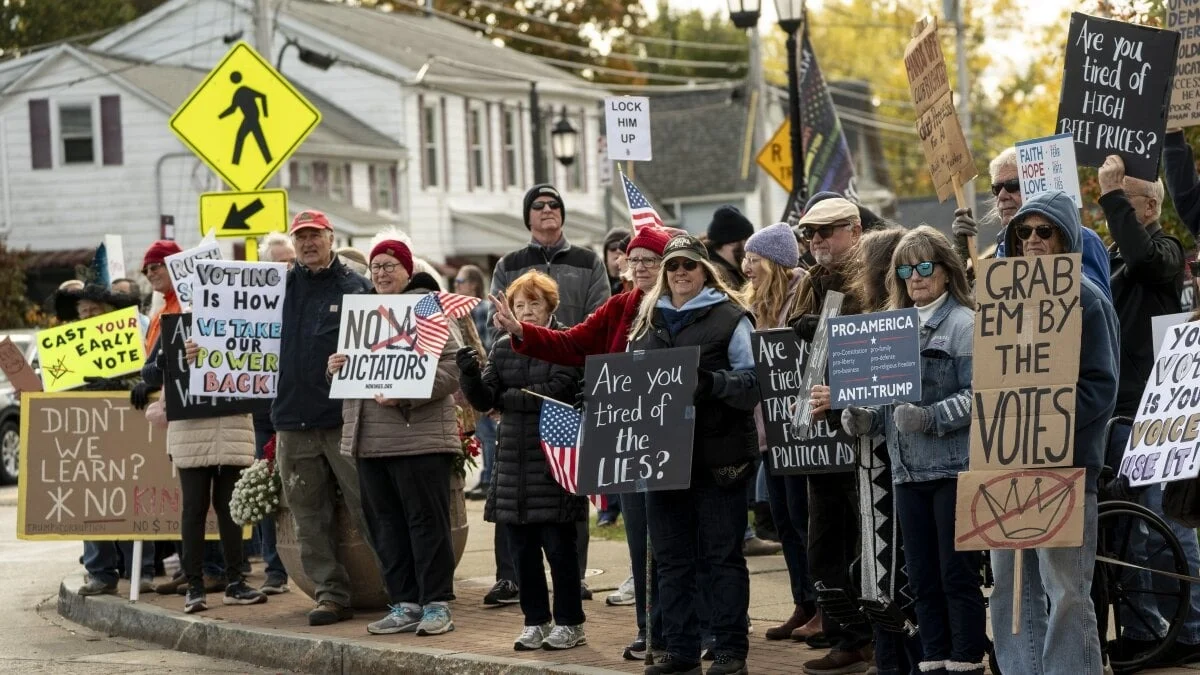
In an era where social media serves as the primary town square for political mobilization, the sudden disappearance of a high-profile activist account is not merely a technical glitch—it is a disruption of democracy. On October 17, the No Kings Coalition, a social justice movement responsible for organizing historic, large-scale demonstrations, found its primary communication channel on Instagram abruptly severed. The shutdown, occurring amidst a critical period of voter mobilization and nationwide protests, has reignited a fierce debate regarding Meta’s automated content moderation, the transparency of its enforcement tools, and the potential for platform censorship to stifle political dissent.
Meta has since issued a formal apology, attributing the blackout to an "incorrect enforcement" of its automated systems. However, for the activists and civil rights groups watching from the sidelines, the apology does little to mitigate the chilling effect caused by the silencing of a movement at its most pivotal hour.
The Chronology of the Blackout
The disruption began on the morning of October 17, a day marked by planned demonstrations and critical voter activation initiatives ahead of the midterm elections. According to reports from the No Kings Coalition, their Instagram presence—a vital hub for logistical coordination and outreach—vanished from the platform without warning.
A 90-Minute Silence
For approximately 90 minutes, the coalition was unable to reach its followers, effectively paralyzing its ability to provide real-time updates to protesters on the ground. The timing was particularly devastating; as activists were coordinating logistics and disseminating information regarding civic participation, the absence of the account created a vacuum of information.
Even after Meta signaled that the account had been "restored," the coalition reported significant friction. Administrators found themselves locked out of the page, unable to post content or access administrative tools, extending the period of dysfunction well beyond the initial ninety-minute window. This inability to regain control immediately after a restoration suggests that the impact of automated errors can have a "long-tail" effect, paralyzing an organization’s digital infrastructure long after the technical glitch has theoretically been resolved.
Technical Context: The "Bot" Misinterpretation
Meta’s explanation for the incident points to the complexities of managing traffic on a platform with billions of users. According to Andy Stone, a spokesperson for Meta, the company’s automated protection systems flagged the No Kings Coalition account due to "abrupt, high-volume" requests.
The Role of Third-Party Tools
Meta claims that a third-party tool—specifically one leveraging the Claude AI model—was accessing the coalition’s profiles, posts, and hashtags at a frequency that the platform’s security algorithms interpreted as malicious bot activity. In an attempt to prevent scraping and protect platform integrity, Meta’s automated moderation tools triggered a preemptive strike, taking the account offline to neutralize what it perceived to be a threat.
While Meta frames this as a standard security protocol, it raises a significant question: Why are systems designed to protect the platform so poorly calibrated that they cannot distinguish between high-traffic organic activism and genuine platform abuse? The "incorrect enforcement" of these protections highlights a dangerous blind spot in Meta’s reliance on artificial intelligence for content moderation. When algorithms prioritize speed and automated safety over context, social movements are often the first to suffer.
Supporting Data and Broader Trends
The silencing of the No Kings Coalition is not an isolated incident; it is part of a broader, well-documented trend of activists, marginalized groups, and niche communities reporting unexplained account restrictions on Meta’s platforms.
A Pattern of "Shadow-Banning"
Over the past several years, various groups—including reproductive health organizations, LGBTQ+ influencers, and small business owners—have repeatedly alleged that their accounts are subject to "shadow-banning," where content visibility is throttled without clear notification or justification. These users often point to "innocuous" posts that suddenly result in warnings or account removal, leaving them with no clear path to appeal or understand which community standards were supposedly violated.
The Impact of 2025 Policy Shifts
The environment in which these incidents occur has changed significantly following Meta’s 2025 decision to roll back key protections against hateful conduct. Industry analysts and civil rights advocates have linked this shift to the political climate, specifically the aggressive anti-DEI (Diversity, Equity, and Inclusion) policies championed by the Trump administration. By reducing the guardrails that once protected marginalized groups from harassment and arbitrary censorship, Meta has created an environment where the "enforcement" of its rules has become increasingly erratic.
Critics argue that the company is attempting to appease political pressure by weakening its moderation standards, yet in doing so, it has made the platform more prone to both the proliferation of hate speech and the accidental silencing of legitimate political speech.
Official Responses and Public Outrage
The response from the broader activist community was swift and uncompromising. Following the blackout, allies of the No Kings Coalition flooded social media to demand accountability.
The League of Women Voters’ Stance
The League of Women Voters, a prominent voice in civic advocacy, issued a stinging critique of the event via Instagram. "The timing matters," the organization stated. "When people are gathering, organizing, and seeking information about civic participation, cutting off a movement’s primary communication channel—even temporarily—is deeply troubling." Their message emphasized that for political movements, the digital platform is not merely a "nice to have" but an essential utility for democratic engagement.
Meta’s Official Apology
Meta’s response, delivered through Andy Stone, was a textbook example of corporate damage control. "This activity caused our automated protections to incorrectly take the No Kings Instagram account offline," the statement read. "It unfortunately took additional time for us to straighten out the situation with admin access… We want to reiterate our sincere apology for the error."
While the apology acknowledges the mistake, it stops short of explaining how Meta intends to fix the underlying issues within its automated moderation systems. For the No Kings Coalition, an apology does not restore the lost momentum of a protest or the lost trust of an audience that relies on consistent, reliable communication.
Implications: The Future of Digital Democracy
The incident with the No Kings Coalition serves as a case study for the risks of relying on centralized, algorithmic power for the functioning of public discourse.
The Problem with Algorithmic Governance
When a single corporation holds the keys to the communication networks of millions, the impact of a "bug" or "incorrect enforcement" is inherently political. By allowing automated systems to make high-stakes decisions about who can speak and when, Meta is effectively outsourcing the governance of the public square to software that lacks nuance, historical context, or an understanding of social justice dynamics.
The Need for Transparency
Activists and tech ethicists are increasingly calling for greater transparency in how Meta’s moderation algorithms are trained and audited. If a system can shut down a national protest movement due to "high-volume traffic," that system is fundamentally broken. Without clear, independent oversight, these automated tools remain a black box—one that is susceptible to both incompetence and potential political manipulation.
A Warning for the Midterms
As the nation approaches midterm elections, the vulnerability of digital organizing tools has never been more apparent. If movements cannot rely on their primary channels of communication, they are forced to find workarounds, often at the cost of reach and efficiency. The No Kings Coalition incident is a reminder that in the digital age, the freedom to organize is increasingly contingent upon the compliance of tech giants.
Conclusion
The apology from Meta provides a technical explanation for a digital disaster, but it fails to address the structural crisis. As long as Meta continues to prioritize aggressive, automated moderation over human-centric review and transparency, activists will remain at the mercy of algorithms that are as likely to stifle dissent as they are to stop bots. The No Kings Coalition blackout was not just a technical glitch; it was a warning that the digital infrastructure of modern democracy is, at best, fragile, and at worst, fundamentally hostile to the movements that need it most.
Moving forward, the pressure will be on Meta to prove that it can foster a space for civic engagement without acting as an arbiter of who gets to be heard. Until then, the "incorrect enforcement" of yesterday remains the looming threat of tomorrow.