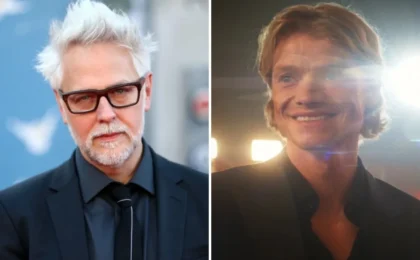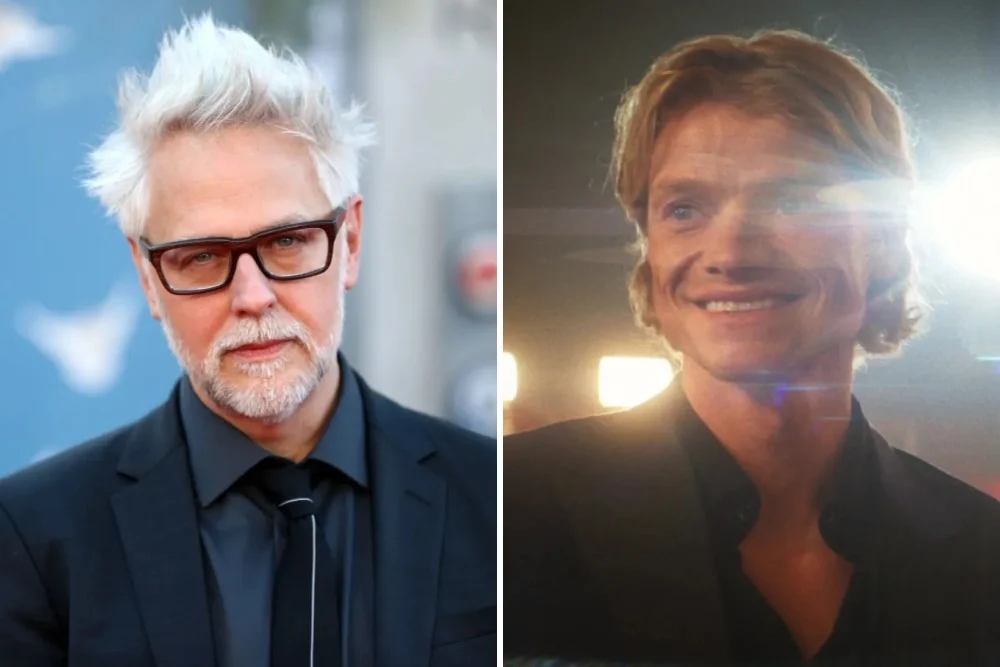
In an era defined by the "Marvelization" of blockbuster cinema—where every standalone film is scrutinized for its role as a cog in a larger, years-long narrative machine—DC Studios co-head James Gunn is making a deliberate attempt to pivot. Facing vocal criticism from fans and analysts regarding the apparent lack of a singular, looming "crossover" event for his new DC Universe (DCU), Gunn took to the social media platform Threads this past Saturday to offer a manifesto on his creative philosophy.
For Gunn, the mandate is clear: the DCU should not be viewed as a rigid, interconnected roadmap, but rather as a diverse, malleable landscape of storytelling. By prioritizing the integrity of individual projects over the necessity of a cinematic "grand finale," Gunn is challenging the modern audience’s expectations of what a shared superhero universe must look like.
The Foundation of the Debate: "What Is This Building Towards?"
The discourse began when a social media user posted a graphic detailing the current slate of Gunn’s DCU projects—including Superman, Peacemaker, Supergirl, Creature Commandos, Clayface, and Lanterns—with the pointed caption: "What is this building towards???"
This question encapsulates a tension that has gripped the comic book movie genre for over a decade. Since the inception of the Marvel Cinematic Universe (MCU), audiences have been conditioned to view individual superhero films as "chapters" in a saga. A movie is often judged not by its internal merits, but by how effectively it sets up the next team-up film or the next major villain reveal.
Gunn’s response was swift and unequivocal. "I couldn’t agree more," he wrote, addressing the notion that the DCU does not need to be a linear foundation for a massive crossover. "DCU is just an alternate universe; we can enter at any location or time and tell THAT story. I dislike the idea that individual stories aren’t meaningful unless they lead to something else."
A New Philosophy: The "Star Wars" Model of Storytelling
To illustrate his point, Gunn looked to one of the most successful franchises in cinematic history: Star Wars. "People not understanding this is strange to me, because Star Wars has essentially been doing this for 50 years across movies, shows, games, and books," Gunn noted.
While Star Wars has its central trilogies, its sprawling expansion into spin-offs, anthology films, and television series has often operated with a degree of narrative autonomy. Gunn argues that the DCU should operate with a similar flexibility, offering tonal variety that is arguably broader than what the Star Wars galaxy currently permits. He posits that if a film is strong enough to stand on its own, it justifies its existence without needing to act as a prequel to a Justice League-style event.
This approach is a sharp departure from the previous "Snyderverse" era of DC, which was heavily focused on the rapid assembly of the Justice League. By slowing the pace and emphasizing the "individual story," Gunn is betting that audiences are suffering from "crossover fatigue" and will gravitate toward high-quality, genre-specific films that prioritize character development over Easter eggs and post-credit scenes.
Chronology: The Evolution of the DCU Slate
The current slate reflects a diverse array of genres, signaling that the DCU is intended to be a tapestry of styles rather than a single, uniform epic.
- 2025 – Superman: The cornerstone of the new universe, setting the tone for the heroism and world-building of the DCU.
- 2026 – Supergirl: A follow-up that expands the cosmic reach of the universe.
- 2026 – Clayface: A dark, horror-inflected character study that has recently hit theaters.
- 2027 – Superman: Man of Tomorrow: The upcoming installment in the Superman saga, slated for a July 9, 2027 release.
The success of Clayface, which secured the No. 1 spot at the North American box office with a $24 million debut, serves as a litmus test for Gunn’s strategy. Despite Clayface being a relatively "niche" character compared to mainstream titans like Batman or Wonder Woman, the film’s strong performance suggests that audiences are willing to engage with obscure comic book properties if the film itself is compelling.
The Case Study: Clayface as a Genre-Meld
Directed by James Watkins, Clayface has been praised by critics for its refusal to follow the standard "superhero" formula. The film follows Matt Hagen (Tom Rhys Harries), a rising Hollywood star who undergoes a horrific experimental procedure after a disfiguring accident. It functions more as a psychological horror-drama than a traditional comic book romp.
In his review for Variety, critic Guy Lodge described the film as "its own ugly animal." He noted that while the character dynamics might struggle if they were forced into a traditional franchise framework, they excel in the context of a standalone, genre-melding experience.
Gunn echoed this sentiment in his defense of the project: "I would love people to be seeing Clayface because it’s a great, fun horror movie unto itself, not because of where else Clayface will show up three movies from now."
Implications for the Industry
The implications of Gunn’s strategy are significant for both the industry and the consumer. By decoupling the "shared universe" requirement from the production of DC films, Warner Bros. and DC Studios are essentially de-risking their slate. If a film is not required to set up five future sequels, the studio can focus on hiring visionary directors who are allowed to execute a singular creative vision without the interference of a "master plan."
However, this strategy is not without its risks. The "shared universe" model has historically been a massive financial engine for Hollywood, largely because it creates a "must-watch" culture. If audiences begin to feel that the DCU is merely a collection of unrelated movies, will they maintain the same level of investment that they have for interconnected sagas?
Gunn acknowledges that there is still a baseline of connectivity, noting that the Superman saga will inherently contain characters introduced in other films. Yet, he is careful to draw a line: connectivity should be organic, not mandatory. It is the difference between a universe that feels like a lived-in world and one that feels like a corporate spreadsheet.
Official Responses and Public Perception
The debate on Threads highlights a deep divide in the fan community. Purists who grew up on the serialized nature of comic books often demand that the film adaptations mirror that structure. Conversely, cinephiles have long lamented the decline of the standalone blockbuster.
Gunn’s transparency is a rare trait for an executive of his stature. By engaging directly with fan critiques, he is attempting to reshape the narrative before the audience decides that the lack of a "crossover" is a failure of leadership. He is essentially asking the audience to trust his vision of the DCU as a library of stories rather than a single book.
Conclusion: A Shift in the Cinematic Paradigm
As we look toward 2027 and the release of Superman: Man of Tomorrow, the success of the DCU will ultimately be measured not by how many characters share a screen, but by the resonance of the individual stories being told. James Gunn is taking a calculated gamble that quality, tonal diversity, and thematic integrity are more valuable in the long run than the promise of a big team-up.
If he succeeds, he may well be the architect of a new era of superhero filmmaking—one where the "universe" is defined by its characters, not its checklists. If he fails, the pressure to conform to the traditional, serialized crossover model will inevitably mount. For now, the DCU remains a bold, experimental project that is, for the first time in a long time, prioritizing the "story" over the "saga."