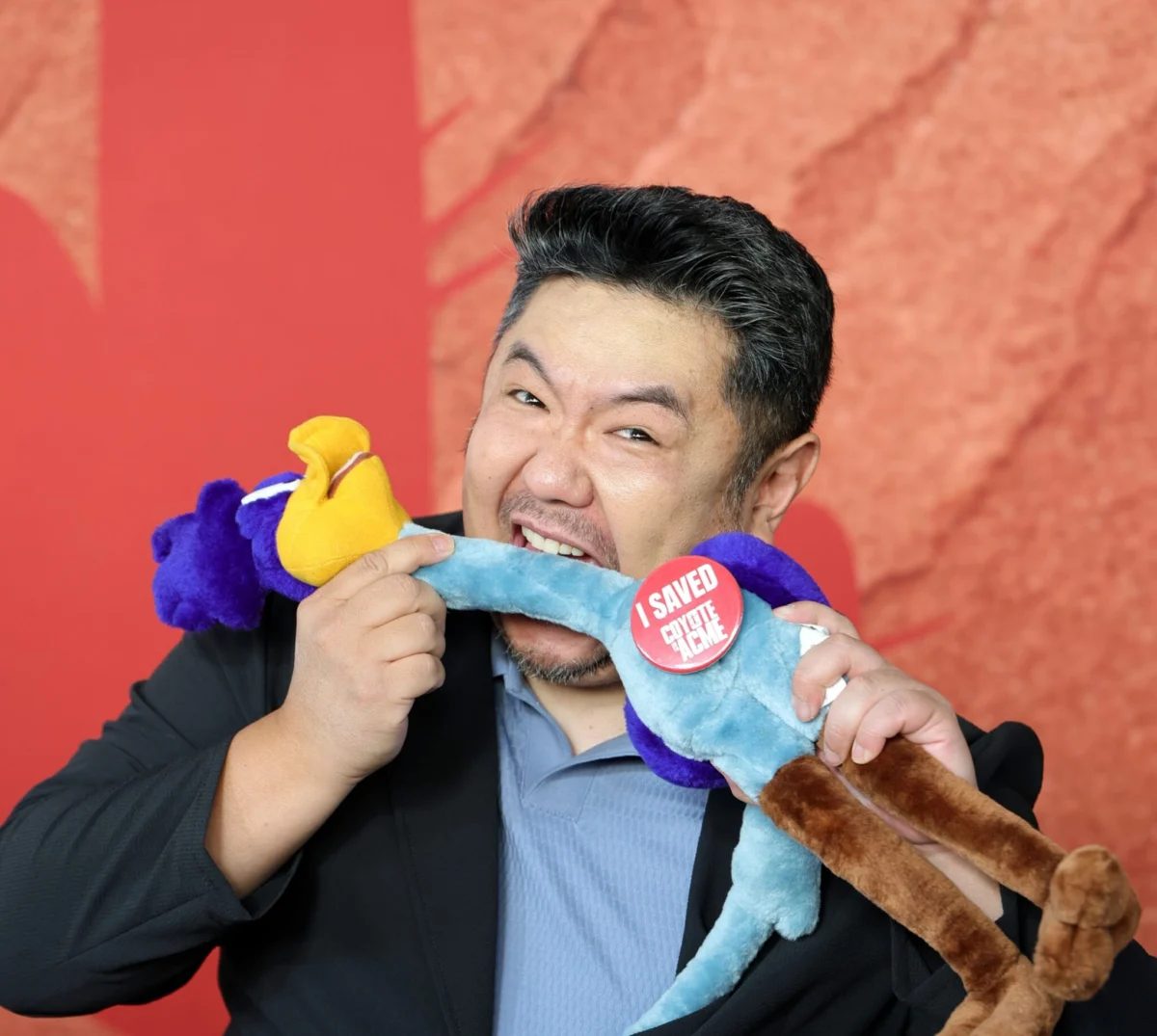
The animation industry is reeling following the sudden passing of Eric Bauza, the legendary voice actor whose vocal chords served as the lifeblood for the modern era of the Looney Tunes. Bauza, a titan of the voice-over world and a vital steward of animation history, died last night, leaving behind a legacy that bridges the gap between the golden age of animation and the digital frontier.
The news was confirmed by Chris DeFaria, the former president of animation and innovative technology at Warner Bros. and a producer of the upcoming Coyote vs. Acme. In a poignant tribute, DeFaria painted a picture not just of a talented performer, but of a man who viewed his profession as a sacred trust.
The Man Behind the Masquerade
For millions of fans, Eric Bauza was not merely a voice; he was the spirit of the Looney Tunes. As the primary voice behind iconic characters such as Bugs Bunny, Daffy Duck, Porky Pig, and Marvin the Martian, Bauza occupied a singular space in Hollywood. His ability to inhabit these characters—to think like the scheme-driven Daffy or stutter with the unique cadence of Porky—elevated his work from mere mimicry to an art form that felt authentically alive.
“He never treated them as a job,” DeFaria noted in his tribute. “To him, they were icons who deserved to be honored, protected, and kept alive for new generations.”
Bauza’s career was defined by his profound reverence for the past, specifically the late Mel Blanc, the “Man of a Thousand Voices” who originated the Looney Tunes roster. Bauza often spoke of his craft using a metaphor that defined his humility: he was simply “borrowing Mel’s Cadillac,” with a promise to return the keys when his time was done.
Chronology of a Legendary Career
To understand the magnitude of Bauza’s loss, one must look at the vacuum he filled. Following Mel Blanc’s passing in 1989, the immense vocal load of the Looney Tunes cast was divided among a cadre of talented performers. For decades, the industry operated under the assumption that no single person could replicate the breadth of Blanc’s range.
Then, Eric Bauza arrived.
- Early Beginnings: Bauza entered the industry as a largely self-taught talent. His range was not the product of formal schooling, but rather an obsession with the craft—a result of relentless practice and an insatiable curiosity about the nuances of human and cartoon expression.
- The Rise to Prominence: Over the last two decades, Bauza systematically mastered the Looney Tunes roster. He didn’t just learn the sounds; he learned the psychology of the characters.
- The Recent Era: His most recent high-profile work, Coyote vs. Acme, saw him pushing the boundaries of what these classic characters could do in a hybrid live-action/animated landscape. It was here, working closely with producers like DeFaria, that his reputation as a collaborator and a creative force was solidified.
The Anatomy of a Master: Why Bauza Was Unique
What set Bauza apart in a crowded field of voice actors was his refusal to rely on caricatures. In the history of animation, many have attempted to voice Bugs Bunny, but few have managed to make the character feel contemporary without sacrificing the essence that made him a global icon.
DeFaria notes that Bauza’s process was deeply internal: “He learned to be them, to think like Bugs, to scheme like Daffy, to stutter and squirm like Porky. That’s why they never sounded like imitations when he performed them. They sounded alive.”
This "alive" quality required a level of emotional intelligence that is rare in the industry. Bauza understood that the Looney Tunes were not just cartoons; they were archetypes of human folly and triumph. By infusing them with his own “devilish wit,” he ensured that these characters remained relevant in an era dominated by hyper-realistic CGI and rapid-fire modern humor.
Supporting Data: The Impact of Voice-Over Stewardship
Bauza’s role as a custodian of the Looney Tunes cannot be overstated. According to industry metrics, the Looney Tunes franchise remains one of the most profitable and culturally significant IP portfolios in history. The consistent success of the brand in the 21st century—across television, streaming, and feature films—is directly tied to the consistency of its voice cast.
When a character’s voice changes, the audience’s connection to the character is tested. Bauza’s ability to anchor this connection allowed Warner Bros. to continue producing content that felt cohesive with the legacy established in the 1940s and 50s. His work served as the connective tissue for a multi-generational audience, ensuring that a child watching cartoons in 2024 felt the same magic as a child watching in 1954.
Official Responses and Industry Mourning
The industry response to Bauza’s death has been one of collective shock. Peers, directors, and fans have taken to social media to express their grief, highlighting not only his talent but his character.
“Eric was always late,” DeFaria shared, offering a final, touching anecdote. “I like to think that somewhere right now, Bugs, in fact, is tapping his foot and checking his watch, and Eric is strolling in with a grin, a perfect excuse in a line so funny that all is forgiven within seconds. He was worth the wait every single time.”
As of this writing, Warner Bros. has not issued a formal statement regarding the future of the Looney Tunes voice cast, but industry analysts suggest that the loss of Bauza represents a “generational pivot point” for the studio.
Implications: The Future of the Looney Tunes
The passing of Eric Bauza forces a difficult conversation about the future of iconic vocal roles. In an era where artificial intelligence and synthetic voice technology are increasingly debated, Bauza’s career stands as a testament to the irreplaceable nature of human intuition.
His process—defined by curiosity, emotional depth, and a mischievous spark—cannot be replicated by algorithms. The “keys to the Cadillac” that he so famously spoke of are now back in the ether, and the studio faces the daunting task of finding a successor who possesses not just the vocal cords, but the soul required to carry the weight of these icons.
For now, the industry is in a period of mourning. The laughter Bauza provided to millions remains, but the man who brought the ink and paint to life has exited the stage. As DeFaria so fittingly put it in his closing remarks: “Thank you, Eric, for the laughter, the artistry, the joy you gave us all. I know you promised to return Mel’s keys when you’re done. Take your time. You always did.”
As the animation community begins to process this loss, it is clear that while characters like Bugs Bunny and Daffy Duck are technically immortal, the heart that pumped blood into them for this generation will be sorely missed. The legacy of Eric Bauza is one of love, mischief, and a profound respect for the history of the art form he helped define.