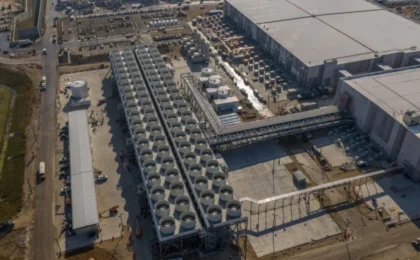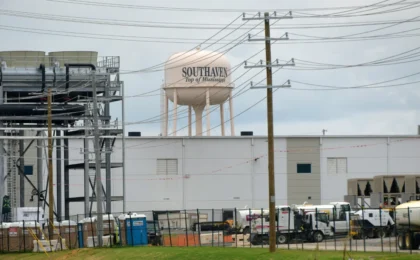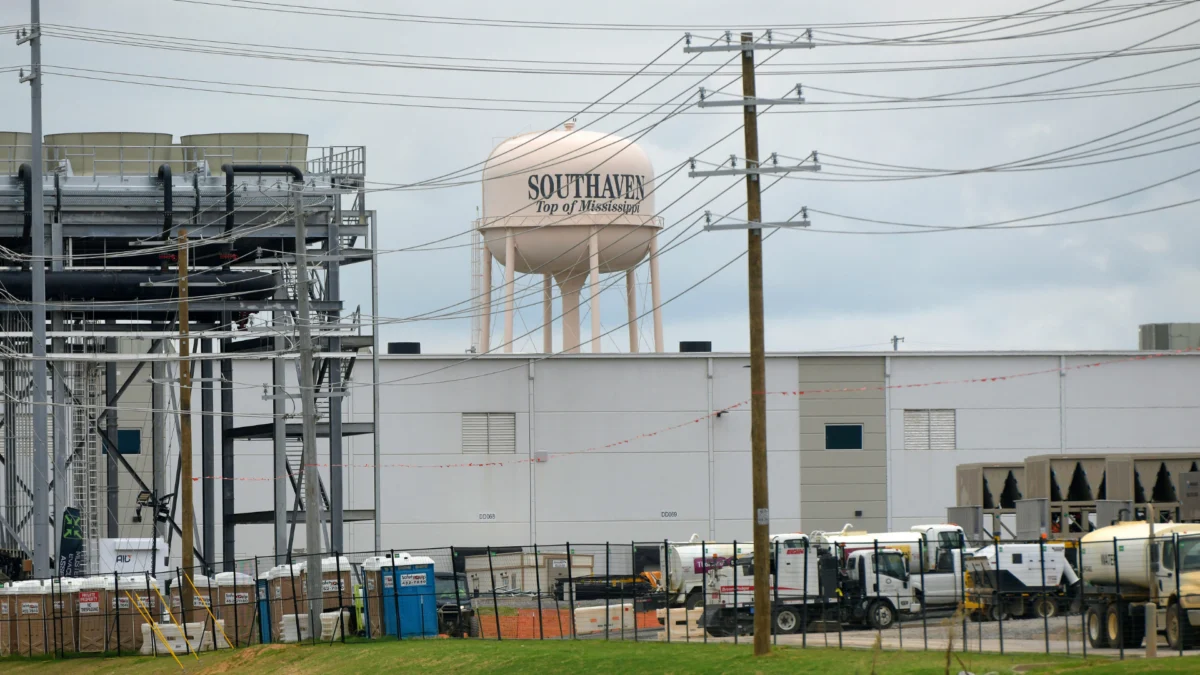
In the quiet, residential sprawl of Colonial Hills, Southaven, Mississippi, a seismic shift is underway—one driven not by tectonic plates, but by the voracious energy demands of artificial intelligence. SpaceXSI, the data center infrastructure subsidiary of Elon Musk’s empire, is currently orchestrating a massive real estate acquisition strategy that has local residents, city officials, and legal experts on edge. The company, which provides the critical computational backbone for the Grok AI model, is reportedly moving to purchase 418 residential properties in the neighborhood, a move that critics suggest is less about corporate expansion and more about silencing dissent.
The neighborhood sits a mere half-mile from the massive power plant—dubbed Colossus II—that feeds the GPUs required to train and run Musk’s AI endeavors. As the facility scales up, so too has the ambient noise generated by its industrial gas turbines, leading to a burgeoning class-action lawsuit from residents who claim their quality of life has been decimated by a persistent, low-frequency hum.
The Core Facts: A Neighborhood Under Siege
The situation in Southaven has reached a boiling point. Real estate agents, acting as proxies for MZX (the SpaceXSI subsidiary operating the site), have been conducting a door-to-door campaign. Their pitch is direct and transactional: homeowners are being offered lucrative buyouts for their properties, contingent upon a specific legal waiver. To accept the offer, residents must agree to abstain from joining or participating in the ongoing class-action lawsuit regarding noise pollution.
This strategy has effectively split the community. For some, the offer represents an "exit ramp" from an increasingly inhospitable environment. For others, it is viewed as an attempt to "buy out" the evidence of the facility’s negative externalities. The proximity of the 418 targeted homes to the power plant is no coincidence; by acquiring this footprint, SpaceXSI gains a buffer zone that could mitigate future legal challenges while simultaneously consolidating land for physical expansion.
A Chronology of the Conflict
The friction between Southaven residents and the tech giant did not emerge overnight. It is the culmination of a rapid, aggressive industrial deployment.
- Early 2026: SpaceXSI selects Southaven, Mississippi, as the strategic location for its Colossus II data center, citing regional power infrastructure and favorable logistics.
- Spring 2026: Construction begins at a breakneck pace. Residents report immediate changes to the local environment, including increased traffic and, crucially, the activation of massive gas turbines designed to provide consistent, high-load electricity to the GPU clusters.
- Summer 2026: The "hum" begins. Residents describe a persistent, low-frequency sound that resonates through their homes, causing sleep deprivation and psychological distress. Initial complaints to local authorities are met with promises of mitigation that fail to materialize.
- September 2026: The class-action lawsuit is filed. Plaintiffs allege that MZX has ignored environmental zoning norms and failed to provide adequate noise dampening for the turbines.
- October 2026: SpaceXSI’s acquisition arm begins its door-to-door campaign in Colonial Hills. Reports surface of agents pressuring homeowners with "take it or leave it" offers tied to the waiver of legal rights.
- Present Day: The standoff continues. Reports emerge that Elon Musk himself is overseeing operations, spending four nights a week in an Airstream trailer on-site to ensure the Grok infrastructure meets its aggressive deployment timelines.
Supporting Data: The Energy Cost of Intelligence
To understand why SpaceXSI is so desperate to control the land around its Mississippi site, one must understand the sheer scale of the power required for modern AI.
Colossus II is not a standard data center; it is an industrial-scale computing facility engineered specifically for the massive matrix multiplications required by Grok. These systems consume gigawatt-hours of electricity. Because commercial power grids are often insufficient for such instantaneous, high-density loads, SpaceXSI has opted for on-site power generation using industrial-grade gas turbines.
The Physics of the "Hum"
The noise pollution in question is not merely the sound of fans or air conditioning. Gas turbines of the scale required to power thousands of H100 or B200 GPUs produce significant low-frequency sound waves. These frequencies are notoriously difficult to dampen and can travel long distances, penetrating brick and drywall.
Real Estate Impact
The 418 properties identified for purchase represent a significant portion of the Colonial Hills tax base. If SpaceXSI succeeds in buying the entirety of the targeted area, they will effectively transform a residential zone into an industrial annex. Data from local property records suggest that the offers being made are significantly above market value, an acknowledgment by the company of the "nuisance premium" they are paying to clear the land.
Official Responses and Corporate Strategy
The public relations battle has been just as intense as the legal one.
The MZX Open Letter
In an open letter circulated to residents, MZX stated: "The company requires property for its business purposes to ensure the operational security and continued growth of our AI initiatives." The letter frames the acquisition as a necessary evolution of the site’s infrastructure, implying that the land will be repurposed for staff housing and support facilities.
The Mayor’s Perspective
Southaven Mayor Darren Musselwhite has adopted a cautious stance. He has publicly echoed the company’s line, suggesting that the property acquisition is intended to house the growing workforce SpaceXSI is bringing into the area. However, critics point out that the Mayor’s office has been a beneficiary of the tax revenue generated by the data center, creating a potential conflict of interest regarding his role as an arbiter of the residents’ grievances.
The Musk Factor
Perhaps the most peculiar aspect of the saga is the direct involvement of Elon Musk. By stationing himself in an Airstream trailer at the facility four nights a week, Musk is signaling that the Colossus II project is a "mission-critical" endeavor for his AI ambitions. For Musk, the data center is not just a building; it is the physical manifestation of his competition with OpenAI, Google, and Meta. This "wartime" management style leaves little room for the "neighborhood nuisances" that usually accompany industrial construction.
The Broader Implications: AI vs. The Public Interest
The Southaven situation is a microcosm of a larger, systemic tension between the rapid expansion of artificial intelligence and the rights of local communities.
The Precedent of "Legal Silencing"
The tactic of conditioning property buyouts on the dismissal of lawsuits is a controversial legal strategy. If successful, it effectively creates a "private eminent domain," where a corporation bypasses the democratic process of zoning and community mediation by simply buying out the opposition. Legal experts argue this could set a dangerous precedent for future tech infrastructure projects.
The Energy-AI Nexus
As the race for AGI (Artificial General Intelligence) intensifies, the energy requirements of these companies will continue to skyrocket. We are moving toward a future where tech companies act as their own utilities, building power plants and infrastructure that operate outside the traditional regulatory oversight of urban planning. When a company as powerful as SpaceXSI decides a neighborhood is in its way, the power dynamic is inherently lopsided.
The Future of Colonial Hills
What happens to Southaven will likely be studied for years to come. If the neighborhood is hollowed out and converted into an industrial site, it will serve as a testament to the "move fast and break things" philosophy being applied to physical infrastructure. If, however, the class-action lawsuit succeeds in forcing the company to install significant noise-reduction technology or to halt operations during specific hours, it could provide a blueprint for how small communities can push back against the might of the Silicon Valley giants.
The residents of Colonial Hills find themselves at the tip of the spear in a battle that is fundamentally about the cost of progress. As the gas turbines continue to hum and the Airstream trailer remains parked on the edge of the site, the message from the tech elite is clear: the advancement of AI takes priority, and in the shadow of the data center, the quiet of a residential life is a commodity that can be bought, sold, and eventually, extinguished.