The second season of Apple TV+’s high-concept science fiction thriller Dark Matter has reached its conclusion, leaving audiences reeling from a finale that serves as both a visceral adrenaline rush and a meditative exploration of the multiverse. Based on the acclaimed novel by Blake Crouch, the series has consistently challenged viewers to grapple with the existential weight of choice. As the curtains close on this latest chapter, creator Blake Crouch reflects on the thematic and technical hurdles of translating his literary vision into one of television’s most ambitious visual spectacles.
The Multiverse as a Narrative Canvas
At its core, Dark Matter operates on the premise that every decision we make spawns a new reality. The series has spent two seasons illustrating the beauty and the horror inherent in this infinite potential. For Jason Dessen (Joel Edgerton), the "box"—the gateway between these disparate realities—is both a miracle of engineering and a source of profound, soul-crushing tragedy.
"The box can create absolutely beautiful experiences and absolutely horrendous experiences," Crouch noted during a recent interview. "The finale was designed to be a complete encapsulation of that dichotomy. We wanted to show that the multiverse isn’t just a playground for adventure; it is a mirror reflecting the best and worst of the human experience."
This season’s narrative arc has been compared by its creator to an album—a collection of distinct tracks that, while varying in tempo and mood, contribute to a cohesive sonic and emotional journey. The finale represents the climax of this record, balancing quiet, introspective moments with high-octane sequences that push the physical boundaries of the characters.
Chronology: A Journey Through Hellish Realities
The finale’s most harrowing sequences follow Jason and Blair (Amanda Brugel) as they navigate a series of increasingly unstable worlds. Their journey serves as a grim tour of the cost of interference with the laws of nature.
The War-Torn Chicago
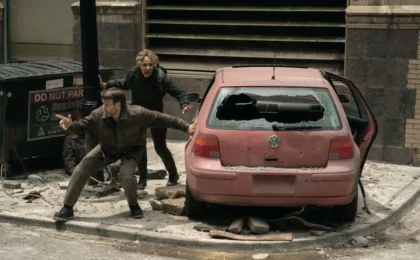
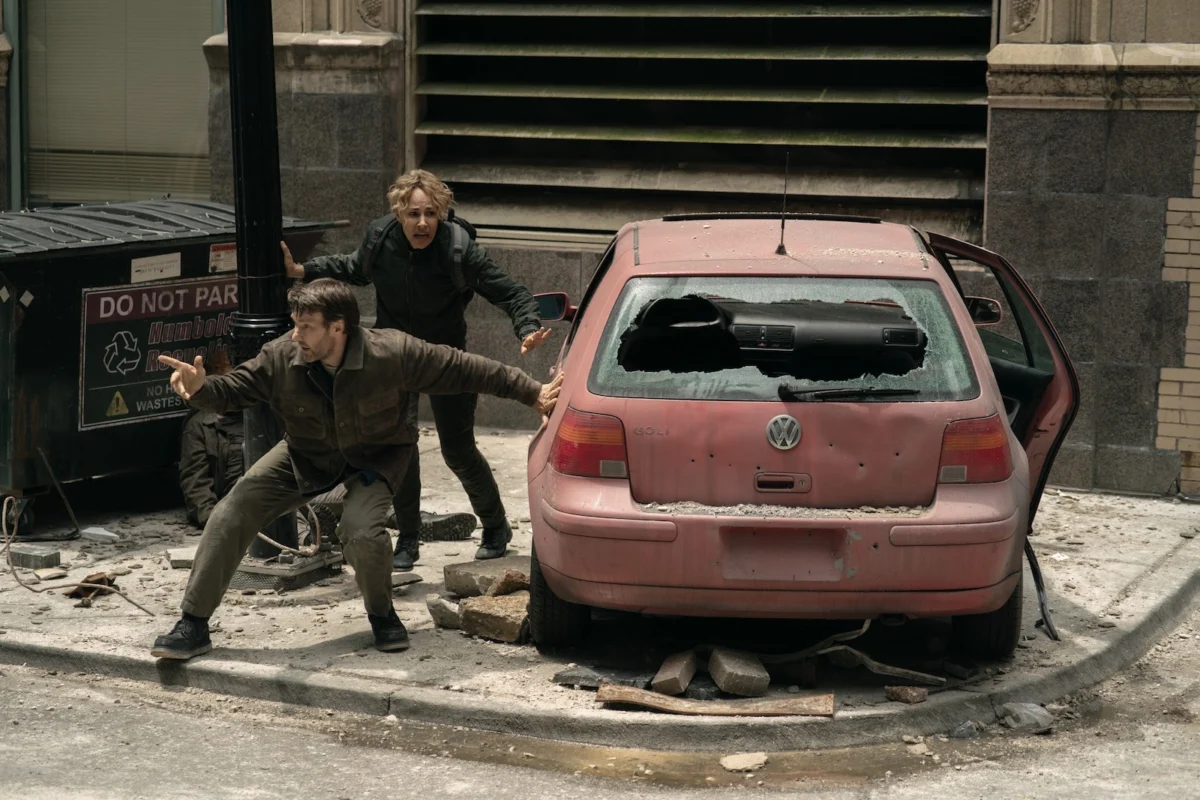
The duo’s first stop is a version of Chicago transformed into a literal, grinding battlefield. Factions locked in an eternal, brutal struggle turn their weapons on the travelers, turning the city’s familiar architecture into a deathtrap. This sequence was not merely a feat of CGI; it was born from a serendipitous discovery.
Crouch recalls walking home from lunch with his co-writer, Jacquelyn Ben-Zekry, when they took a shortcut through an alleyway. "Suddenly, I’m looking around, and there are these burned-out cars," he said. "It was completely unexpected. I asked, ‘Wait, what the hell happened?’ And then it hit me: this is our show." The production team leaned into this authenticity, filming on location to capture the visceral grime of a society collapsed under the weight of perpetual warfare.

The Physics-Defying Abyss
Perhaps the most visually arresting sequence of the finale involves a world where the fundamental laws of physics have seemingly ceased to function. In this environment, buildings drift upward into a pale sky, and the box itself floats, untethered by gravity.
What began as a throwaway joke during a writers’ room brainstorming session quickly evolved into a technical "throwdown" for the production crew. "I remembered a concept I had written in my journals for the original book but never actually used," Crouch explained. "I threw it out as a joke, but the team took it as a challenge."
Technical Mastery and Visual Effects
The production of the low-gravity sequence required an unprecedented level of coordination between the stunt team, the set designers, and the visual effects department. To achieve the effect, the crew constructed a duplicate of the box, mounting it on a sophisticated gimbal system. The actors were then suspended by wires, forced to navigate a space that defied conventional orientation.
"It was wild," Crouch recalled. "On the day we shot it, standing on the set, you honestly had no idea if it was going to work. It looked a bit goofy in its raw, practical form. You’re watching actors hanging from wires, and you wonder if the audience will buy it."
The final result, however, proved the efficacy of the collaborative process. Under the guidance of visual effects lead John Heller and editor Joe Leonard, the "goofy" practical elements were seamlessly blended with digital enhancements. The final cut exceeded even the creator’s initial expectations, offering a sequence that feels both ethereal and deeply threatening. This "North Star," as Crouch refers to it, was the goal from the very first day of production: to create a corridor fight that would force characters to tumble out of reality and into the terrifying unknown.
Official Insights: The Road Ahead
As the dust settles on the season 2 finale, the narrative threads left hanging have sparked intense speculation regarding a potential third and final season. While Apple TV+ has yet to provide official confirmation, the creative team is clearly positioning the story for a definitive conclusion.
One critical detail shared by Crouch serves to clarify the confusing status of the characters: the reality in which Daniela (Jennifer Connelly) and Charlie (Oakes Fegley) find themselves is definitively not the same one they inhabited previously, where the character of Max was still alive. This distinction is vital, as it confirms that the characters are still drifting—or perhaps, finally lost—in the vast, uncaring expanse of the multiverse.

When pressed for more information on the potential final season, Crouch remained guarded but optimistic. "We do have a very strong, mind-blowing idea for what the last season would be," he teased. "If we’re fortunate enough to get to make it, it will be the closure the fans deserve."
Implications: The Existential Weight of the Multiverse
The success of Dark Matter lies in its ability to ground high-concept science fiction in human emotion. While the visuals of floating buildings and war-torn cityscapes are captivating, the true stakes are always personal. The box is not just a device for travel; it is a manifestation of regret. It is the temptation to fix mistakes, to find a "better" version of oneself, and to escape the consequences of the life we have chosen.
The Human Cost
By forcing characters like Jason and Blair to witness the outcomes of various timelines, the series suggests that there is no "perfect" world. Even in realities where some tragedies are averted, new, unforeseen horrors inevitably take their place. This serves as a cautionary tale: the desire to control one’s destiny, when taken to the extreme, can lead to the erosion of the very identity one seeks to protect.
The Future of Serialized Sci-Fi
Dark Matter has set a high bar for genre television. By blending the grounded, gritty aesthetics of a thriller with the expansive, imaginative possibilities of quantum mechanics, the series has proven that audiences are hungry for sophisticated narratives. The production’s reliance on practical effects combined with cutting-edge VFX offers a blueprint for future science fiction series, demonstrating that the best results come from a willingness to take risks—even those that start as jokes in a writers’ room.
As viewers digest the final moments of season two, the consensus remains that the show has successfully evolved from a tense, intimate thriller into a grand, sweeping epic. Whether the story concludes in a third season or remains a "to be continued" enigma, the journey through the box has left an indelible mark on the landscape of contemporary science fiction.
For now, the first two seasons of Dark Matter are available for streaming on Apple TV+, inviting viewers to re-examine the corridors and the realities that define the Dessen family’s struggle for home. In a world of infinite choices, perhaps the most important one is simply staying present in the one we have.