In the quiet, deliberate frames of Between Us, director Matsumura Shingo has crafted a cinematic meditation on the space between people—both the physical distance that separates us and the emotional gulfs that persist long after a trauma has faded from the headlines. Currently featured in the Nippon Cinema Now section of the Tokyo International Film Festival, the film stands as a testament to the power of restraint, proving that what is left unsaid is often far more resonant than the loudest of declarations.
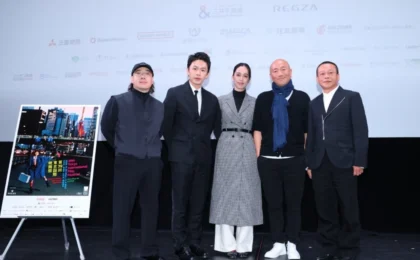
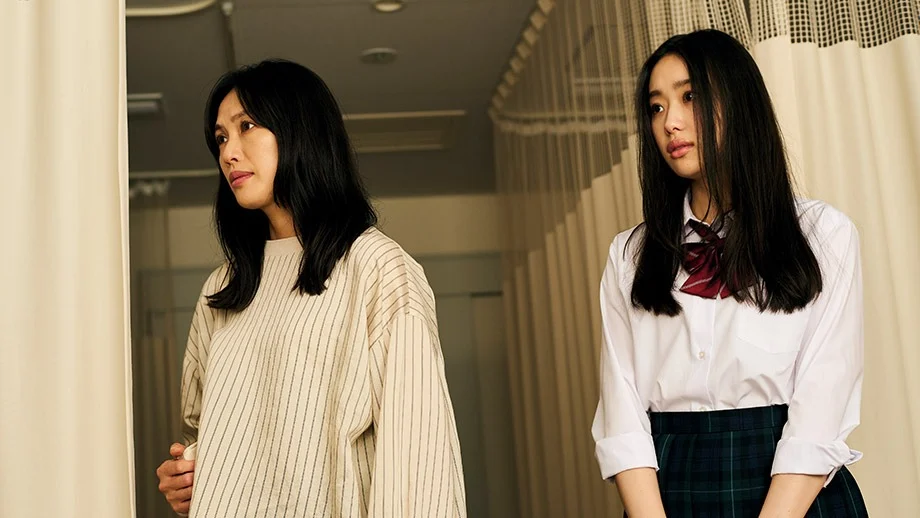
Featuring a cast that includes Kawashima Ririka, Kurasawa Anna, Kikuchi Akiko, Usuda Asami, Saito Yoichiro, and Miura Takahiro, Between Us tracks the fractured relationship of Makoto and Kasumi. Once inseparable childhood best friends, the two are torn apart by a cryptic, life-altering incident during a family camping trip. When they reunite six years later within the confines of a high school drama club, the film begins a delicate process of emotional excavation, using the artifice of theater to confront the realities they have spent years avoiding.
A Chronology of Disconnection and Reconnection
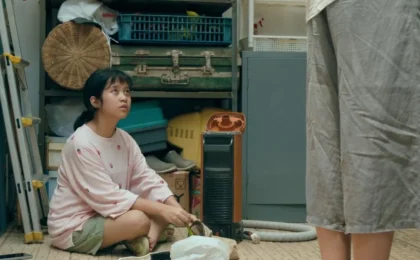
The narrative arc of Between Us is one of slow, painful mending. We meet Makoto and Kasumi at a moment of profound estrangement. The childhood intimacy that once defined them has calcified into a heavy, unspoken tension. When they are reunited in the high school drama club, the setting acts as a crucible for their unresolved history.
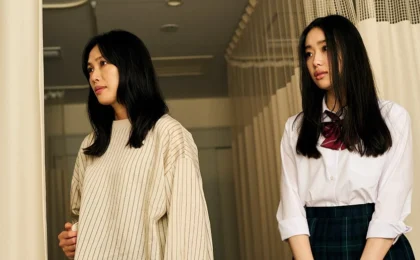
Kasumi, portrayed with an intensity that often alienates her peers, dominates the drama club, pushing the group to their breaking points. It is within this environment that the two girls begin to cross paths again. The genius of Matsumura’s storytelling lies in the refusal to force a rapid reconciliation. Instead, he utilizes the very script the characters are performing to bridge the divide.
In a pivotal sequence, Matsumura employs an editing technique that serves as the film’s emotional anchor: he cuts between the girls’ separate read-throughs of a play, interweaving their lines so that they appear to be speaking to one another. Despite being in different rooms, the editing creates a psychological proximity that their physical reality denies. By speaking lines of fiction, they are finally able to articulate the truths that have haunted their real lives for six years. The script they discover—the titular "Between Us"—becomes the conduit for their healing, turning the act of performance into an act of confession.
The Aesthetic of Stillness: A Rejection of the Modern Lens
Matsumura’s directorial philosophy is defined by a rigorous commitment to stillness. In an era dominated by the frenetic pace of social media and the ubiquity of handheld, high-definition digital footage, Matsumura has imposed a strict rule upon his sets: no handheld camerawork.
"All the cameras are becoming compact right now, and you see all these videos shown on YouTube and social media shot by those cameras," Matsumura explains. "I wanted to differentiate what I show on the big screen from that kind of content. That is one of the reasons why. The second reason is that I want to capture the emotion of the actors truthfully, and slowly."
This "deliberate observation" creates a visual language of precision. By fixing the camera in place, Matsumura forces the audience to study the characters’ movements within the frame. He utilizes the blocking of his actors to manifest their emotional distance; when Makoto and Kasumi are at odds, they are physically sequestered in the far corners of the frame. As they begin to heal, the spatial geometry of the shots shifts, bringing them closer through composition rather than camera movement.
Supporting Data: The Collective Weight of Global Trauma
While Between Us functions as a personal, intimate drama, its origins are rooted in the broader, more turbulent history of 21st-century Japan. Matsumura cites a "run of disasters"—the 2011 Great East Japan Earthquake, the subsequent nuclear crises, the global COVID-19 pandemic, and the persistent specter of war—as the thematic bedrock for the film.
"There was a period in my life when I thought it was impossible for one to connect with others," Matsumura admits. He began the project with a fundamental question: if you take two people facing away from each other and force them to look at one another, what kind of energy is born from that encounter?
Though the film does not reference these global events explicitly, the internal trauma experienced by Makoto and Kasumi mirrors the societal trauma of a nation that often buries its grief. "I think that reflects the current situation," Matsumura notes. "Whether it’s the earthquake or the nuclear power plant, if it’s on the media, we look into it. But once it’s not on the news, we feel that it’s in the past—solved. But it’s not, in reality."
The "unresolved" nature of the girls’ conflict serves as an allegory for the lingering, unaddressed anxieties of a population that has been taught to move on before the healing has truly begun.
Official Responses and Creative Process
Regarding the performances, Matsumura adopted an observational, hands-off approach. Rather than imposing his vision upon the actors, he trusted their instincts. "There was no specific direction that I gave them," he says. "They have an interest in others, they listen closely, and they take in words and make them their own. It was very natural for them to perform these characters, and I just let them freely perform what they felt."
This trust in the performer, combined with the rigid structure of the frame, creates a naturalistic paradox: the actors feel free within a cage of meticulous, static composition. It is this tension that provides the film with its unique, haunting atmosphere.
Implications for the Future of Japanese Cinema
The success of Between Us at the Tokyo International Film Festival underscores a broader shift in the Japanese film landscape. Matsumura argues that there is no longer a singular "mainstream" in Japanese cinema, partly due to the economic realities of the industry.
"The budget that we have for one film is very limited in Japan—it’s not like in the U.S.," he observes. "Because of that, there is a limit to what we can portray. We are all trying to make a film about a subject that is within our reach. We’re not making a film about one big subject; each of us is making films about a variety of small subjects."
This constraint has become a catalyst for artistic diversity. Rather than chasing the massive, high-concept blockbusters of Hollywood, independent directors like Matsumura are focusing on the "small," the domestic, and the deeply personal. By scaling down the scope, they are finding ways to explore the depths of the human condition with more nuance than a larger budget might allow.
As for his own trajectory, Matsumura finds himself at a crossroads. He is currently weighing the pull of purely artistic, introspective filmmaking against the pressure to create content for a mass audience. "I could follow my instinct and make an artistic film, or I could make a film for the mass audience," he says. "I don’t know which way I’ll go, as of now."
Whatever path he chooses, Between Us serves as a powerful reminder of why we go to the cinema in the first place: to witness the quiet, often painful, but ultimately essential act of human connection. Through his lens, Matsumura has captured not just a story of two girls, but a snapshot of a generation grappling with the silence that follows a disaster—a silence that is only broken when we finally choose to speak the truth to one another.