In a move that reverberated across both the entertainment industry and the political landscape, Academy Award-winning actress Jennifer Lawrence recently broke her self-imposed silence on electoral participation. By invoking her most iconic cinematic persona, Katniss Everdeen, Lawrence utilized the cultural weight of The Hunger Games to mobilize her 8.7 million Instagram followers ahead of Election Day.
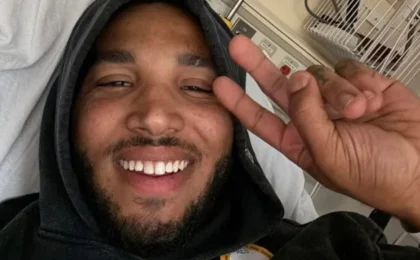
The actress shared a poignant photograph featuring herself performing the franchise’s signature three-finger salute—a symbol of resistance, unity, and hope in the dystopian world of Panem. Her caption, "Midterms [baby]. Don’t forget who burns with us. Go vote," served as both a rallying cry and a subtle nod to the revolutionary spirit of her character. The post included a direct link to Vote.org, ensuring her audience had immediate access to polling location data.
The Weight of the Mockingjay: Contextualizing the "Burn"
While Lawrence notably stopped short of issuing a formal endorsement for any specific candidate, the subtext of her message was unmistakable to fans of the franchise. The phrase "If we burn, you burn with us," originates from The Hunger Games: Mockingjay – Part 1 (2014). In that pivotal scene, an emotionally shattered Katniss addresses President Snow, the tyrannical ruler of the Capitol, following the indiscriminate bombing of a hospital.
The quote, "You can torture us and bomb us and burn our districts to the ground. But do you see that? Fire is catching. And if we burn, you burn with us!" serves as the emotional bedrock of the rebellion. By resurrecting this line during a heated political cycle, Lawrence tapped into a well-established narrative of resistance against authoritarian overreach. Observers were quick to draw parallels between the fictional President Snow and the polarized rhetoric surrounding Donald Trump, a figure Lawrence has vehemently criticized in the past.
A History of Vocal Advocacy
Lawrence’s engagement with political discourse is not a recent development. Following the 2016 U.S. Presidential Election, she authored a widely circulated op-ed expressing her profound concern regarding the victory of Donald Trump. In the piece, she argued that the election result signaled a regression in social equity, famously stating, "the only people that feel safe [in America], that their rights are recognized and respected, are white men."
For years, Lawrence leveraged her platform to champion progressive causes, often finding herself at the center of media storms. However, the last several years have seen a marked shift in her approach to public discourse—a change she has articulated with surprising vulnerability.
The Great Recalibration: Navigating Art and Activism
During the 2025 press tour for her film Die My Love, Lawrence opened up to The New York Times regarding her evolving philosophy on celebrity political advocacy. She admitted to a "complicated recalibration," questioning the efficacy of stars weighing in on national policy.
"As we’ve learned, election after election, celebrities do not make a difference whatsoever on who people vote for," Lawrence remarked. "So then what am I doing? I’m just sharing my opinion on something that’s going to add fuel to a fire that’s ripping the country apart. We are so divided."
This shift in perspective is rooted in a desire to protect the integrity of her craft. Lawrence expressed a fear that her personal political stances might alienate segments of her audience, effectively diminishing the power of the art she creates. "I don’t want to start turning people off to films and to art that could change consciousness or change the world because they don’t like my political opinions," she explained. "I want to protect my craft so that you can still get lost in what I’m doing."
Her concerns extend to her peers as well. "You watch these actors’ faces who have had incredible careers and made incredible contributions and then one half of the internet doesn’t want to see their face anymore. I get so upset for those people and it feels so wrong."

Chronology of a Cultural Icon
To understand the significance of Lawrence’s recent Instagram post, one must look at the trajectory of her relationship with the Hunger Games franchise:
- 2012: The release of the first Hunger Games film, which catapulted Lawrence to global superstardom and cemented the three-finger salute as a real-world symbol of protest in countries like Thailand and Myanmar.
- 2014-2015: The release of the Mockingjay films, where the character of Katniss evolved from a survivalist into a political symbol.
- 2016-2020: Lawrence becomes a frequent, outspoken critic of the Trump administration, using interviews and essays to address social justice issues.
- 2024-2025: Lawrence publicly pivots, stating her intent to step back from political commentary to focus on her artistic legacy and minimize further polarization.
- November 2026: Lawrence returns to the franchise that made her a household name with The Hunger Games: Sunrise on the Reaping, coinciding with her "Midterms" social media campaign.
The Return to Panem: "Sunrise on the Reaping"
Lawrence’s decision to re-engage with her political persona on social media arrives at a critical juncture: the promotion of the latest franchise installment, The Hunger Games: Sunrise on the Reaping.
In a recent appearance on the Call Her Daddy podcast, Lawrence spoke with palpable emotion about returning to the set after an 11-year hiatus. The reunion with original crew members and co-stars Josh Hutcherson and Woody Harrelson underscored the deep, familial bonds formed during the original production.
"It was so crazy. It was the same crew," Lawrence noted. "And with Josh and Woody… it was so emotional. Josh and I didn’t walk to the bathroom without our arms around each other. It was so beautiful."
The camaraderie remains as vibrant as the films, with Lawrence sharing anecdotes about Harrelson’s disregard for hotel room doors, reinforcing the tight-knit nature of the cast. The Hunger Games: Sunrise on the Reaping is slated for a theatrical release on November 20, 2026, under the Lionsgate banner.
Implications: The Power of Celebrity Mobilization
The intersection of Lawrence’s artistic return and her political nudge raises significant questions about the role of the modern celebrity. While she has attempted to distance herself from "partisan noise," her latest post demonstrates that she is keenly aware of her influence.
By opting for a symbolic, non-partisan message—focusing on the act of voting rather than the specific candidate—Lawrence has managed to navigate the tightrope she described in her 2025 Times interview. She is encouraging civic engagement without engaging in the "fire" that she feels is tearing the country apart.
However, the efficacy of this approach remains a subject of debate among political scientists. Research into "celebrity mobilization" suggests that while famous figures are excellent at increasing voter registration numbers and awareness, they are often less successful at swaying the actual vote choice of polarized individuals. Lawrence’s emphasis on Vote.org suggests she is prioritizing the former, leveraging her massive reach to ensure the democratic process remains active, even if she refrains from acting as a partisan surrogate.
Conclusion: A Delicate Balance
Jennifer Lawrence remains a unique figure in Hollywood—an actress who defined a generation through a character that embodied rebellion, now finding herself trying to balance that legacy with a personal desire for unity and professional longevity.
As Sunrise on the Reaping prepares to hit theaters, the world will be watching to see how the "Girl on Fire" handles the next phase of her career. Her recent foray into voter mobilization serves as a reminder that even when she attempts to step away from the political fray, the shadow of Katniss Everdeen is long, and the symbols she helped create are now woven into the fabric of the real-world political discourse. Whether she intended it or not, Lawrence has once again proven that her voice carries a weight that transcends the screen.