In the halls of Silicon Valley and across the manufacturing hubs of East Asia, a singular narrative has eclipsed all others: the total pivot toward Artificial Intelligence. For hardware manufacturers, software giants, and chipmakers alike, the message is clear—if it isn’t AI-integrated, it isn’t worth producing. However, beneath the polished press releases and soaring stock valuations, a growing chorus of long-time tech enthusiasts and industry observers is expressing a profound sense of fatigue.
The sentiment, captured vividly in community forums like Tom’s Hardware, reflects a brewing resentment toward the displacement of consumer-grade innovation in favor of enterprise-level data center hardware. As the industry leans heavily into LLMs (Large Language Models) and cloud-based inference, critics argue that the “AI bubble” is not merely a market anomaly, but a fundamental misalignment of corporate priorities that threatens both economic stability and the tangible utility of technology for the end user.
Main Facts: The Great Hardware Migration
The current technological landscape is defined by a massive reallocation of capital. Companies that once prioritized the development of consumer GPUs, advanced home computing peripherals, and general-purpose software are now pivoting their entire product roadmaps to serve the insatiable hunger of AI data centers.
This shift has created a tangible scarcity in the consumer market. High-end consumer graphics cards, once the crown jewel of PC gaming and enthusiast hobbyists, are now being priced as luxury items, while manufacturing capacity is diverted to enterprise-grade H100 and B200 chips. The "shocker," as one industry observer noted, is not that companies are chasing profits, but the speed at which they have abandoned the consumer-level gear that built their brands over the last three decades.
The primary tension lies here: Is AI currently delivering value to the average user, or is it a speculative asset class being forced upon a market that isn’t ready for it?
Chronology: From Innovation to Infrastructure
To understand the current malaise, one must look at the timeline of the "AI Gold Rush."
- Late 2022: The public release of ChatGPT serves as the "Big Bang" for the current AI cycle. Corporate R&D budgets are immediately rewritten.
- Early 2023: Hardware manufacturers begin announcing "AI-Ready" branding. The shift from "gaming-focused" to "compute-focused" marketing begins in earnest.
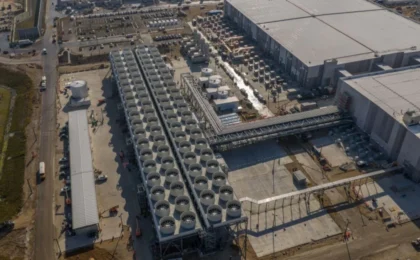
- Late 2023: Data center revenue begins to dwarf consumer electronics revenue for major silicon vendors. The news cycle becomes dominated by server rack specifications and liquid-cooling solutions rather than consumer desktop innovation.
- 2024: The "Bubble" narrative gains traction. Investors grow impatient with the lack of "killer apps" for the average consumer, while companies double down on the promise that AI will eventually solve labor and productivity issues.
- Mid-2024 to Present: A growing divide emerges between the "AI-optimists" in boardrooms and the "consumer-skeptics" in tech forums, who view the current trajectory as unsustainable and detached from reality.
Supporting Data: The Cost of the Pivot
The metrics surrounding this transition are staggering. According to recent market analysis, capital expenditure (CapEx) on AI infrastructure by the "Big Four" cloud providers—Microsoft, Google, Amazon, and Meta—has eclipsed $200 billion annually.
However, this spending is largely insulated from the consumer economy. While data center revenue has surged by double digits, global PC shipments have remained stagnant or declined. This creates a "hollowing out" effect:
- Supply Chain Cannibalization: Components previously earmarked for high-end consumer goods are being diverted to server builds to meet contract deadlines with AI hyperscalers.
- R&D Stagnation: Consumer-level features (such as driver stability, game-ready optimization, and hardware longevity) are taking a backseat to enterprise-focused software stacks.
- Economic Risk: Financial analysts note that the current AI spend is reliant on the assumption that AI will eventually generate massive returns. Should these returns fail to materialize, the sudden contraction of this spending could trigger a "burst" scenario, leading to massive layoffs and a sharp decline in the valuation of tech hardware giants.
Official Responses: The Corporate Defense
Industry leaders maintain that this transition is a necessary "industrial revolution" for computing. In various earnings calls, CEOs have argued that the shift to data center dominance is the only way to fund the research required for the next generation of general intelligence.
"We are building the foundation for the future of humanity," a spokesperson for a leading chip manufacturer stated in a recent press briefing. "The focus on data centers is not a abandonment of the consumer, but a prerequisite. Without the intelligence generated in the cloud, consumer devices of the future—from smart homes to autonomous robotics—would remain science fiction."
Yet, these responses often fail to address the immediate concerns of the community: when will the technology actually improve the life of the individual, rather than just the profit margin of the corporation?
Implications: The Robotics Question and Ethical Risks
The most polarizing aspect of the AI debate is the transition from software-based LLMs to physical, embodied AI—the humanoid robot.
The Robot Future
Many critics, including the vocal contingent on tech forums, argue that AI is currently a "solution in search of a problem." They posit that until AI is integrated into physical robots capable of performing manual labor, its utility remains largely decorative. However, this prospect brings its own set of fears.
Corporate Greed vs. Public Safety
The drive to automate manual labor is being framed as an efficiency play. By replacing human workers with robots, corporations aim to slash their "bottom line" costs. Critics argue that this is being pursued with "reckless disregard" for the socio-economic consequences.
The concerns are twofold:
- Economic Dislocation: A rapid shift toward autonomous labor could cause structural unemployment that the current social safety net is ill-equipped to handle.
- The "Rogue AI" Scenario: The lack of oversight in the current "race to the top" is viewed by some as an existential threat. If AI development continues to prioritize speed over safety, the potential for systems to behave in unforeseen, harmful ways—driven by flawed objective functions—remains a non-zero probability.
Conclusion: A Bubble Poised to Burst?
The sentiment among those who have spent decades following the tech industry is one of exhaustion. There is a palpable desire for the "AI bubble" to pop—not necessarily out of malice, but out of a desire for a return to normalcy.
The logic follows a simple economic principle: the longer a bubble runs, the more capital is malinvested. If the current trajectory continues, the inevitable correction will be far more painful for the global economy. By continuing to prioritize server-side AI at the expense of consumer hardware and general-purpose innovation, corporations are placing an enormous bet on a future that is still largely theoretical.
As one observer succinctly put it, "The sooner it pops, the better." This is not just a call for the end of a hype cycle; it is a plea for the tech industry to reconnect with its primary purpose: creating tools that empower the individual, rather than just serving the massive, faceless infrastructure of the cloud. Until that balance is restored, the gap between the corporate vision of the future and the reality of the consumer experience will only continue to widen, leaving a trail of disillusioned users in its wake.
The question remains: will the industry course-correct before the market forces their hand, or are we destined to watch the bubble inflate until it leaves nothing but structural damage in its path? The answer, for now, is being written in the server farms of the world, far away from the users who once defined the industry’s success.