In an automotive landscape increasingly defined by "always-on" connectivity, massive touchscreens, and subscription-based digital features, the Slate Truck stands as an ideological outlier. With a base price of $24,950, the Blank Slate electric pickup is being marketed as a minimalist’s dream, stripping away the "bloatware" that characterizes the modern driving experience. However, this radical simplicity comes with a catch: if you want the convenience of remote access, you are forced to opt into a bespoke hardware ecosystem.
The centerpiece of this debate is the $275 Telematics Module. By treating cellular connectivity as an aftermarket accessory rather than an integrated component, Slate is challenging the industry standard of the "connected car." This article explores the nuances of this approach, the technical realities of the module, and the broader implications for vehicle privacy and ownership in the digital age.
Main Facts: The Modular Approach to Connectivity
The core philosophy of the Slate Truck is that owners should pay only for the technology they intend to use. Unlike traditional manufacturers—such as Ford, Rivian, or Tesla—who embed modems, GPS trackers, and high-speed Wi-Fi hotspots into every vehicle rolling off the assembly line, Slate takes a "blank canvas" approach.
The vehicle ships from the factory as a "modem-free" machine. This is not merely a cost-saving measure; it is a design choice intended to appeal to users who value privacy and object to the pervasive data tracking found in contemporary vehicles. The $275 Telematics Module is a plug-and-play solution that bridges the gap between the vehicle’s internal systems and the external digital world.
Key facts regarding the module include:

- Pricing: The unit retails for $275, which includes the hardware and a one-year service subscription.
- Installation: Designed for the intermediate hobbyist, the module is not factory-installed. Owners can expect an installation time ranging from 30 minutes to two hours using standard tools.
- Functionality: The module facilitates cellular communication, enabling features such as remote battery pre-conditioning and basic remote access, which are inaccessible on the base-model truck.
- Independence: The truck remains fully operational without the module. Driving, charging, and general maintenance do not require the telematics hardware.
Chronology: How Slate Challenged the Status Quo
The narrative of the Slate Truck began with a clear directive: return to the roots of the pickup truck as a functional tool, rather than a rolling software platform.
- Early Concept Phase: Slate designers identified that the average consumer was becoming increasingly frustrated with complex infotainment systems and forced over-the-air updates. They prioritized mechanical simplicity.
- The "Modem-Free" Announcement: In recent technical briefings, including discussions with SAE Media, Slate confirmed that their base vehicle contains no cellular modem, effectively creating a "privacy bubble" for the driver.
- Accessory Development: Recognizing that some users would still desire modern conveniences—specifically the ability to warm a battery in freezing conditions—the company developed the Telematics Module as a discrete, optional accessory.
- Pre-Order Window: With pre-orders now open to U.S. residents, the market is beginning to evaluate the real-world utility of this modular approach, weighing the $24,950 base price against the potential for recurring connectivity costs.
Supporting Data: Technical Utility vs. Market Norms
To understand why a consumer might spend $275 on a module, one must analyze the specific performance benefits of telematics in an electric vehicle (EV) context.
Battery Pre-conditioning
The most scientifically significant feature provided by the module is remote battery pre-conditioning. Lithium-ion batteries are notoriously sensitive to ambient temperature. When an EV is left in sub-zero temperatures, its internal resistance increases, significantly reducing range and charging speed. By utilizing the module to trigger the vehicle’s thermal management system remotely—especially while the vehicle is plugged into a home charger—the owner ensures the battery is at an optimal temperature before the commute begins.
The "Smartphone as Infotainment" Paradigm
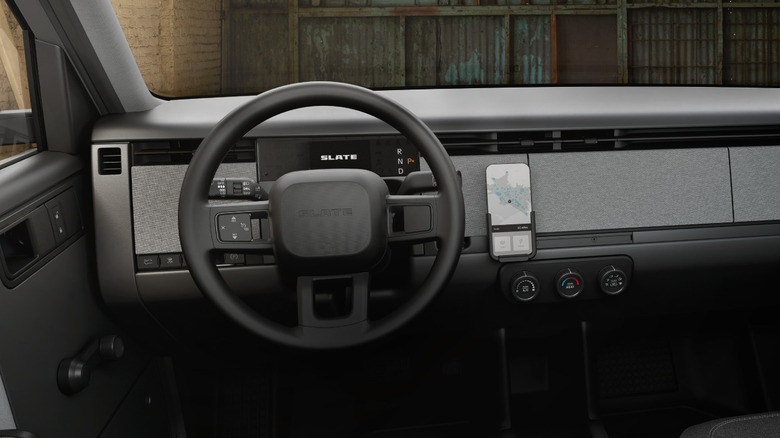
The Slate Truck relies on the user’s smartphone as the primary interface. Without the telematics module, the app can still monitor charge status and battery health via local Bluetooth or manual inputs, but it loses the ability to communicate with the vehicle from distance. The module acts as the cellular "middleman," allowing the cloud to send commands to the vehicle when the owner is not within physical range.
Comparative Industry Standards
The industry is currently divided on how to handle these features:

- Ford: Offers 5G modems as standard, with the promise of "free" features (like remote lock/unlock) upon activation, though this is often subsidized by the vehicle’s higher price point.
- Rivian: Takes a hybrid approach, offering standard remote commands but gating more advanced telematics behind service tiers.
- Slate: Is the only manufacturer currently putting the hardware choice entirely in the hands of the consumer, turning what was once a mandatory cost of ownership into a line-item accessory.
Official Responses and Strategic Rationale
Slate’s leadership has been transparent about the "why" behind their architecture. By keeping the vehicle off the grid, they reduce the risk of remote hacks and circumvent the "data-mining" business model that has become prevalent in the automotive industry.
When asked about the future of the service subscription, the company has been notably cagey. While the $275 price covers the first year, there is no public pricing structure for what happens in Year Two. This lack of transparency has led to speculation among industry analysts: will the features simply cease to function, or will there be a tiered monthly fee?
Regarding data privacy, the company has explicitly stated to media outlets that they have no intention of selling driver data—a direct jab at larger competitors whose privacy policies often read like data-collection manifests. However, critics point out that by introducing a module that connects to a cellular network, Slate is essentially opening the door to the very vulnerabilities they claim to avoid.
Implications: The Future of Modular Vehicles
The Slate Telematics Module experiment raises profound questions about the future of vehicle ownership.
The "Right to Not Connect"
For decades, consumers have been forced to accept increasingly invasive technology. By making the modem an accessory, Slate is validating a niche market for the "analog-minded" EV buyer. It is a bold assertion that connectivity should be a feature, not a requirement.
The Financial Burden
While $275 seems like a reasonable entry price, the long-term cost of ownership remains a variable. If an owner decides not to renew their subscription, they are left with a hardware module that may become a "brick." Furthermore, the difficulty of self-installation (rated as "intermediate") may deter less mechanically inclined buyers, effectively creating a two-tier ownership experience: those who have the skills to maintain their connected vehicle and those who must pay for professional installation or go without.
Privacy and Security
The most significant implication is the privacy trade-off. By keeping the modem separate, the user has the power to physically remove the telematics component if they become uncomfortable with their data footprint. This level of granular control is unprecedented in the automotive sector. It forces a conversation about whether we want our cars to be computers that we happen to drive, or tools that occasionally interface with the digital world.
A New Model for Aftermarket Upgrades
If the Slate approach proves successful, we may see a shift in how vehicles are sold. Instead of choosing between "Trim A" and "Trim B," consumers could see a future where vehicles are sold as "barebones" platforms, with specific features (autonomous driving sensors, telematics, upgraded sound systems) sold as modular kits. This would significantly lower the barrier to entry for electric vehicle ownership, allowing the base price of cars to drop, provided the buyer is willing to forgo certain luxuries.
Conclusion
The Slate Telematics Module is more than a piece of hardware; it is a litmus test for the automotive market. It asks the consumer to define what they actually need from their vehicle. For the user who lives in a cold climate and requires remote pre-conditioning, the $275 is a small price for significant efficiency gains. For the purist who wants nothing more than a reliable, silent, and private way to get from Point A to Point B, the module is an unnecessary intrusion.
As the automotive industry continues its march toward total digitization, Slate’s decision to keep the modem in a box—and let the customer decide whether to open it—is a refreshing, if risky, deviation from the norm. Whether this model can scale beyond the early-adopter, tech-savvy, and privacy-conscious niche remains to be seen, but it undeniably provides a roadmap for a more customizable, user-centric future in transportation.