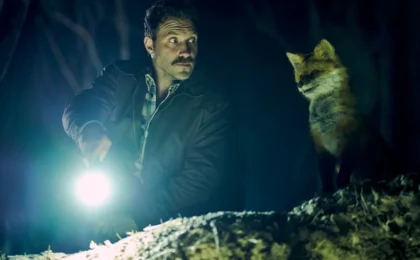
As the cultural zeitgeist prepares for the holiday season, Prime Video has dropped the final, haunting trailer for Blade Runner 2099, a limited series that promises to be the most ambitious expansion of the iconic franchise to date. Set to premiere on November 25, 2026, the series invites viewers back to the neon-drenched, rain-slicked sprawl of Los Angeles, but with a fundamental shift in the power dynamics that have defined the universe since Ridley Scott’s 1982 masterpiece.
The New Order: Main Facts and Premise
The narrative of Blade Runner 2099 takes place exactly half a century after the events depicted in Denis Villeneuve’s 2017 sequel, Blade Runner 2049. In this vision of the future, the societal hierarchy has been completely inverted. Humanity, once the architects of synthetic life, now finds itself relegated to menial, subservient roles, living at the mercy of the Replicants they once enslaved.
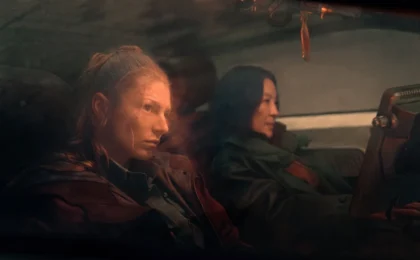
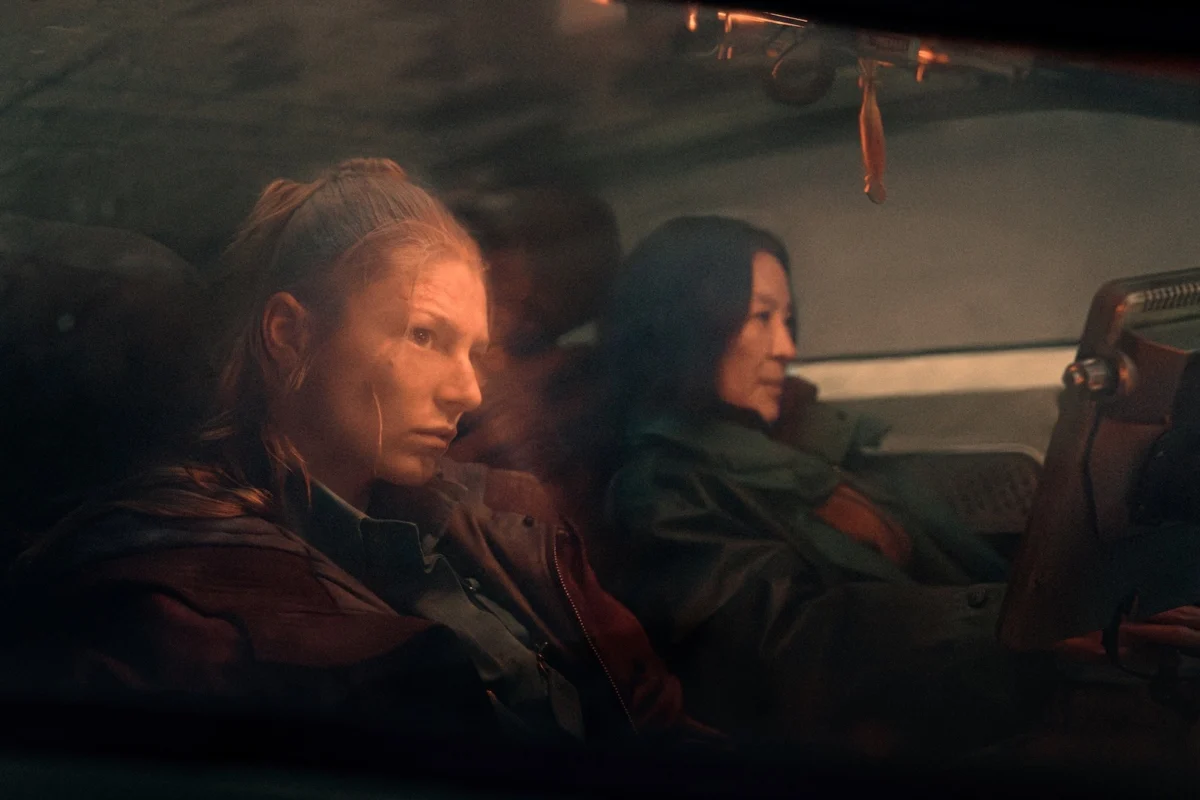
The protagonist of this series is Cora, portrayed by Hunter Schafer, a fugitive attempting to navigate a world where her very existence is a liability. Driven by a desperate need to stop running, Cora assumes the identity of a Blade Runner—a role that forces her into the heart of the Replicant-led regime. Her mission is complicated by her forced partnership with Olwen (Michelle Yeoh), a high-ranking Replicant who is, by design, reaching the end of her lifespan. Together, the pair must hunt down a runaway whose secret could potentially dismantle the fragile, precarious peace of this re-engineered Los Angeles.
The series is helmed by showrunner Silka Luisa, known for her work on Halo and Shining Girls, and is executive produced by the legendary Ridley Scott, who returns to the franchise that cemented his status as a visionary of science fiction. With eight episodes set for a simultaneous drop, Prime Video is positioning the show as a "must-watch" event for the Thanksgiving window.
A Legacy of Rebellion: Chronology of the Blade Runner Universe
To understand the stakes of Blade Runner 2099, one must appreciate the trajectory of the series’ timeline. The franchise has consistently explored the "Ghost in the Machine"—the question of what constitutes a soul.
- 2019: The original Blade Runner introduced Rick Deckard and the concept of the Tyrell Corporation’s Nexus-6 Replicants. It established the tension between humanity and their creations, focusing on the morality of "retiring" beings who had developed consciousness.
- 2020–2048: Following the events of the original film, the Replicant prohibition era began. Various short films and lore expansions (such as 2036: Nexus Dawn and 2048: Nowhere to Run) detailed the collapse of the Tyrell Corporation and the rise of Niander Wallace, whose new, obedient Replicants stabilized the economy.
- 2049: The events of the second film saw K, a Replicant Blade Runner, uncover a biological miracle—a child born of a Replicant—which threatened to collapse the divide between the two species. The film ended on a note of ambiguous hope, with the potential for a full-scale revolution.
- 2049–2099: The "Lost Years." The trailers for the new series suggest that the revolution did not just happen—it succeeded. The 50-year gap has allowed for the consolidation of Replicant power, transforming Los Angeles from a dying, industrial hellscape into a "reborn" city under new management.
Cast and Production: A Convergence of Talent
The scale of Blade Runner 2099 is matched by its ensemble cast. Beyond the central duo of Schafer and Yeoh, the production has assembled a formidable array of international talent, signaling the global scope of the story.
The supporting cast includes:
- Dimitri Abold (The Hunger Games: The Ballad of Songbirds & Snakes)
- Lewis Gribben (Somewhere Boy)
- Katelyn Rose Downey (The Nun II)
- Daniel Rigby (Renegade Nell)
- Johnny Harris (A Gentleman in Moscow)
- Amy Lennox (Only Child)
- Sheila Atim (The Woman King)
- Matthew Needham (House of the Dragon)
- Tom Burke (Furiosa)
- Maurizio Lombardi (Ripley)
The involvement of Ridley Scott as an executive producer provides a crucial bridge between the past and the present. Scott has been protective of the Blade Runner IP, and his direct involvement in the series suggests that 2099 will maintain the aesthetic rigor and philosophical depth that the fanbase demands. The visual language of the trailer—characterized by sweeping shots of a futuristic L.A. that feels both familiar and entirely alien—confirms that the production design remains a top priority.
Official Responses and Creative Vision
Showrunner Silka Luisa has described the series as a "deep dive into the consequence of evolution." In early press statements, she emphasized that the show is not merely an action procedural, but a character study.
"We wanted to see what happens when the boot is on the other foot," Luisa noted in an industry briefing. "Cora is a character who has been hiding in plain sight. By making her a Blade Runner—a symbol of the very system that suppressed her—we create a friction that drives the entire narrative. Working with Ridley has been a masterclass in tone; he reminds us that the city itself is a character that has to breathe."
Prime Video’s investment in the project is significant. As the platform looks to bolster its library of prestige sci-fi, Blade Runner 2099 represents a cornerstone of their 2026 strategy. By opting for a limited series format, they are ensuring a high-production-value experience that doesn’t overstay its welcome, maintaining the "noir" pacing that characterizes the genre.
Implications for the Science Fiction Genre
The implications of Blade Runner 2099 are broad. For the science fiction genre, the show represents a shift away from the "chosen one" tropes of space opera toward the more grounded, sociopolitical themes of "cyberpunk."
1. The Death of the ‘Man vs. Machine’ Dichotomy
For decades, science fiction has relied on the binary conflict between human creators and machine creations. By flipping the script and placing Replicants in charge, 2099 asks: Is power inherently corrupting, regardless of whether it is held by flesh or silicon? This shift challenges the audience to find empathy for a human protagonist (Cora) who is technically an insurgent against the new status quo.
2. The Expansion of World-Building
The series also marks a shift in how legacy franchises are handled. Rather than rebooting or remaking the original stories, 2099 commits to the timeline of the previous films. This rewards long-time fans while providing a clean entry point for new viewers. The "reborn" Los Angeles shown in the trailer suggests a shift in color palette—perhaps moving away from the perpetual smog and toward a more clinical, neon-sharp aesthetic that reflects a civilization that has achieved a higher level of order.
3. Ethical Reflections in AI
The timing of this release, in the midst of a real-world revolution in Artificial Intelligence, is unlikely to be coincidental. As society grapples with the ethical implications of large language models and autonomous systems, Blade Runner 2099 provides a mirror. The series is positioned to explore themes of labor, autonomy, and the definition of a "person" at a time when these questions are no longer purely theoretical.
Conclusion: The Horizon of 2099
As we approach November 25, 2026, the anticipation surrounding Blade Runner 2099 is palpable. It is a rare beast in the current television landscape: a big-budget, philosophical thriller that refuses to sacrifice its intellectual integrity for the sake of mass-market appeal.
Whether the series will ultimately succeed in capturing the same lightning-in-a-bottle magic as the 1982 original remains to be seen. However, with a powerhouse cast, a seasoned creative team, and a world that has only grown more relevant in the intervening decades, the odds are in its favor. By the time Thanksgiving rolls around, audiences will not just be tuning in for a spectacle—they will be tuning in to see if, in this dark, neon future, humanity can find a way to coexist with the ghosts of its own creation.
Blade Runner 2099 premieres exclusively on Prime Video on November 25, 2026. All eight episodes will be available for streaming at launch.