Neng Nana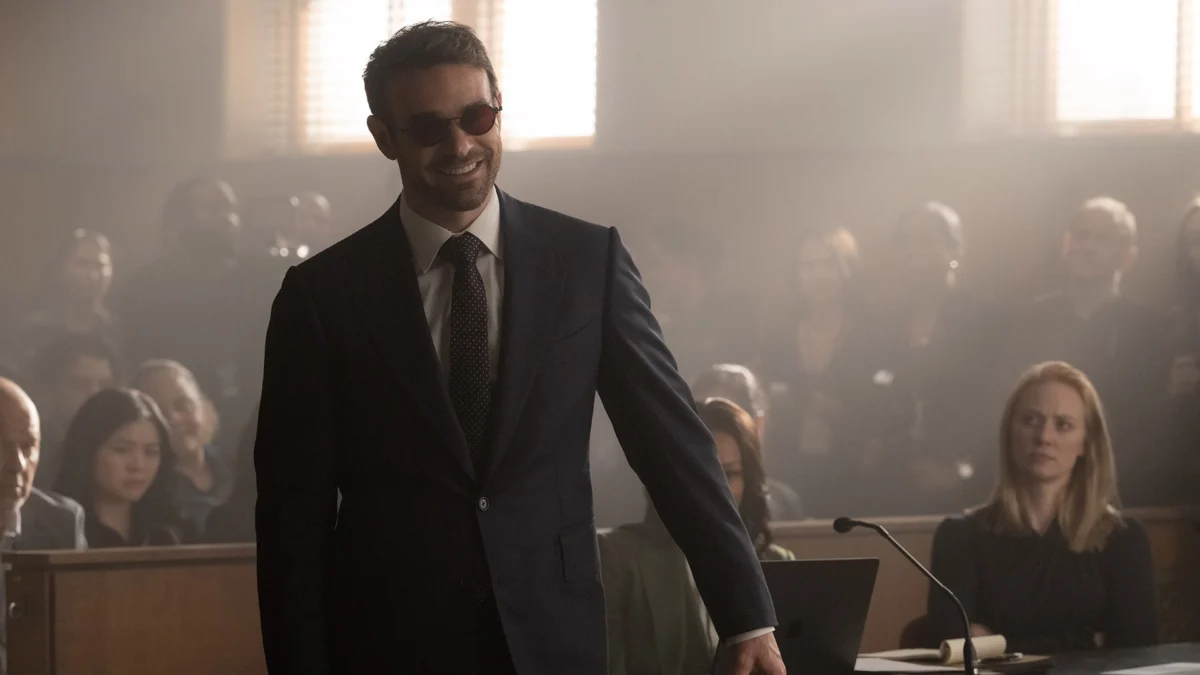
The Marvel Cinematic Universe (MCU) has long been a sprawling tapestry of interconnected heroes and villains, but few corners of this world have resonated as deeply with fans as the gritty, street-level vigilante justice of Hell’s Kitchen. Following the critical and commercial success of Daredevil: Born Again Season 2, the future of the franchise has shifted from hopeful speculation to concrete reality. Marvel Studios has officially greenlit a third season, which is currently in active production and eyeing a 2027 release window.
As the production team moves forward, all signs point to the adaptation of one of the most iconic narratives in comic book history: the 2006 "The Devil in Cell-Block D" arc by Ed Brubaker and Michael Lark. While fans had long suspected this trajectory, recent leaks from the production set have effectively confirmed that Matt Murdock’s next chapter will be defined by his incarceration.
The Roadmap: From Season 2 to the Cell-Block
The journey to a third season began with the narrative breadcrumbs left at the end of the second season finale. For those who have been tracking the show’s evolution, the shift toward a prison-based narrative is a natural, albeit harrowing, progression for the character.
A Chronology of Escalation
- The Born Again Foundation: The series re-established Matt Murdock’s place in the MCU, successfully blending his dual life as a high-stakes attorney and a shadow-dwelling vigilante.
- The Devil’s Reign Influence: Season 2 leaned heavily into the thematic weight of the Devil’s Reign comic storyline, forcing Murdock to confront the consequences of his actions in a public sphere.
- The One Last Kill Bridge: The upcoming Punisher-centric special, One Last Kill, is currently being positioned as the narrative glue between the events of Born Again Season 2 and the forthcoming Season 3.
- The 2027 Horizon: With production currently underway, the three-year development cycle suggests a polished, high-fidelity experience that aims to mirror the intensity of the Netflix-era Daredevil while maintaining its new, expanded MCU scope.
The Cost of Transparency: Showrunner Frustrations
The path to the screen has not been without friction. Showrunner Dario Scardapane has been candid regarding the impact of unauthorized leaks on the storytelling process. In a recent interview with Entertainment Weekly, Scardapane expressed his disappointment that the "Devil in Cell-Block D" reveal was spoiled for the audience before the show’s creative team could present it on their own terms.
"Yeah. This is what hurts about leaks," Scardapane remarked. "It’s what we all really wanted to build, and it’s there in the whole season… We realized very, very quickly that it floats us right into one of my favorite runs of all time. Until the latest round of leaks, I’d always said to everybody, ‘Watch the last 5 minutes of episode 8, and you’ll know what we’re doing in season 3.’ And I stand by that."
For the creative team, the leaks represent a loss of narrative agency. The intention was to deliver a shocking shift in status quo that would redefine Matt Murdock’s life. By forcing the hand of the reveal, the leaks have shifted the discourse from "What will happen?" to "How will they adapt this?"
Thematic Depth: Law, Justice, and Incarceration
The adaptation of "The Devil in Cell-Block D" is not merely a stylistic choice; it is a thematic necessity for a show that prides itself on topicality. Scardapane emphasizes that placing Matt Murdock—a man who has dedicated his life to the law—inside the very system he has spent years navigating is a "rich territory" for exploration.
"The idea of Matt, the lawyer, going into the justice system on the other end of it to pay for his crimes as a vigilante, that’s extremely rich territory," Scardapane noted. "Also, because we try to be somewhat topical, the current stress and strife at Rikers Island is pretty real, and the idea of building a flawed world that neither vigilante nor a lawyer can have any effect on, yeah."
This suggests that Season 3 will move beyond the traditional "superhero in prison" tropes. Instead, it promises a clinical, gritty look at the failures of the American carceral system, mirroring the real-world tensions currently surrounding facilities like Rikers Island. By stripping Matt of his mask and his legal bar card, the show intends to test the limits of his moral compass when he is no longer the arbiter of justice, but the subject of it.
The Evolution of Wilson Fisk: A Feral Transformation
Perhaps the most compelling mystery regarding Season 3 is the evolution of Wilson Fisk, played by the formidable Vincent D’Onofrio. Behind-the-scenes set photos showing D’Onofrio with a long, disheveled beard have fueled speculation that Fisk will be a fugitive, potentially drawing from the "Return of the King" comic arc or the aftermath of Devil’s Reign.
Scardapane has been careful not to spoil the specifics, yet he has promised a radical departure from the composed, suit-wearing Kingpin audiences are accustomed to. "At the end, both of these men are in prisons of their own making," Scardapane told Variety. "We have never seen this version of him. I don’t want to hype it too much. ‘Feral’ is the word that I can use."
This shift suggests that Fisk’s influence will move from the boardroom and the mayor’s office into the streets—and perhaps the prison system itself. If the Kingpin is "feral," the power dynamic between him and a incarcerated Murdock becomes significantly more dangerous, as the safety of established institutional power is stripped away for both parties.
Implications for the Wider MCU
The most significant aspect of the Daredevil: Born Again production is its role in consolidating the "street-level" corner of the Marvel Cinematic Universe. The inclusion of Luke Cage and the anticipated return of Finn Jones’s Iron Fist suggests that the MCU is looking to reclaim the continuity established by the Netflix series and integrate it into the larger tapestry.
Scardapane holds a strong opinion on this convergence: "The establishment of the street-level characters in Netflix’s Daredevil, Jessica Jones, Luke Cage, Iron Fist, The Defenders, Punisher—that’s the world that this is all heading towards, in my opinion."
This raises several questions regarding the timeline, particularly concerning Spider-Man: Brand New Day. While fans are eager to see how the Punisher’s arc in One Last Kill connects to the broader universe, even the showrunners seem to be managing a complex web of continuity.
"I don’t know a ton about what goes on in Brand New Day," Scardapane admitted to Variety, "and I know very well where we left [The Punisher] at the end of Punisher season 2. I think this [the upcoming special] tells the story of what happened next after Punisher and before and during the events of [Season 2]."
Final Thoughts: A High-Stakes Future
As we look toward 2027, Daredevil: Born Again Season 3 stands at a crossroads. It has the opportunity to define the future of adult-oriented storytelling within the Disney-owned Marvel ecosystem. By adapting one of the most celebrated runs in comic history, the show is signaling a commitment to character-driven narratives that are willing to push their protagonists to the brink of despair.
The success of this endeavor will hinge on whether the show can balance the grounded, gritty reality of the "Cell-Block D" storyline with the expansive, sometimes surreal requirements of the MCU. With a "feral" Kingpin and a vulnerable Matt Murdock, the stage is set for a season that will likely be remembered as the most intense chapter of the Daredevil saga to date.
For now, the wait continues. But for those following the production closely, it is clear that the devil is not just in the details—he is in the cell, waiting for the doors to open.

 Suro Senen
 Pevita Pearce