

Tokyo, Japan – [Date of Publication] – Sony Group Corporation has unveiled an ambitious, organization-wide strategy to significantly expand the integration of Artificial Intelligence (AI) across its diverse operations, with a particular emphasis on transforming game development within Sony Interactive Entertainment (SIE). The strategic pivot, detailed during the company’s latest corporate strategy presentation following its recent financial results, signals a profound commitment to leveraging AI not as a replacement for human creativity, but as a powerful amplifier and catalyst for unprecedented innovation in the gaming industry.
Hiroki Totoki, President and CEO of Sony Group Corporation, articulated the company’s overarching vision, stating that AI tools will "allow our teams to spend less time on manual, high-effort tasks and reinvest time into building richer worlds and gameplay." He further elaborated that AI is poised to "make it easier to take on more innovative and ambitious projects that were previously difficult to pursue due to constraints of cost and time." This forward-looking stance positions AI as a crucial enabler for breaking through traditional barriers in creative endeavors, promising a new era of expansive and immersive digital experiences.
The core philosophical underpinning of Sony’s AI strategy, as stressed by Totoki, is the unwavering belief that "human creativity must remain at the center." This principle serves as a guiding light, framing AI as "a powerful tool – but it is not a replacement for artists or creators. It is an amplifier of human imagination and a catalyst for new possibilities." This emphasis seeks to allay growing concerns within creative industries about AI’s potential to displace human talent, instead positioning it as a synergistic partner designed to elevate human ingenuity.
Main Facts: Sony’s Dual AI Imperative
At its heart, Sony’s AI initiative is driven by a dual imperative: to dramatically enhance efficiency in content creation and to unlock new frontiers of creative expression. The company’s leadership views AI as a fundamental technological pillar that will streamline complex production pipelines, thereby freeing up valuable human resources to focus on higher-order creative tasks. Simultaneously, AI is expected to enable the realization of imaginative concepts that were previously considered unfeasible due to the sheer scale of manual labor or technical complexity involved.
Key to this strategy is the systematic deployment of AI tools across various stages of game development, from intricate asset creation to sophisticated gameplay mechanics and dynamic world-building. Sony Interactive Entertainment CEO and president Hideaki Nishino provided concrete examples of these advancements, highlighting several proprietary AI solutions already being adopted by first-party studios such as Naughty Dog and San Diego Studio. These include tools for automating labor-intensive animation processes, enhancing visual fidelity, and creating more intelligent and reactive in-game environments.
Beyond development, Sony also envisions AI playing a pivotal role in refining the player experience itself. This encompasses everything from hyper-realistic graphics rendered at optimal performance to personalized content discovery and the creation of more engaging and challenging gameplay through advanced AI opponents. The overarching goal is to foster an ecosystem where technology seamlessly empowers both creators and consumers, delivering a truly cutting-edge entertainment experience that leverages Sony’s extensive intellectual property library and global player base.
Chronology: A Strategic Evolution Amidst Industry Shifts
Sony’s latest AI announcement arrives amidst a period of significant technological flux and competitive repositioning within the global entertainment and technology sectors. While the specific timeline for the development of each AI tool mentioned wasn’t detailed, the public unveiling of this comprehensive strategy during Sony’s corporate strategy presentation underscores its immediate importance to the company’s future. This presentation, held in conjunction with its latest financial results, often serves as a platform for outlining key strategic shifts and investment priorities. The recent financial reports, which included a substantial impairment loss from Bungie and a dip in operating income for Q4, highlight the pressures and opportunities facing Sony, making strategic innovations like AI even more critical for long-term growth and competitiveness.
The gaming industry, in particular, has been abuzz with discussions surrounding AI’s potential, both disruptive and transformative, over the past few years. From generative AI’s capacity to create art, music, and narratives to machine learning’s role in optimizing game engines and personalizing user interfaces, the technology has moved from theoretical application to practical implementation at an accelerated pace. Sony’s formal declaration of its expansive AI strategy can be seen as a strategic response to, and an attempt to lead, this industry-wide evolution. It signals a move beyond experimental AI applications to a systematic, integrated approach across its entire gaming division.
Historically, AI has been used in games for decades, primarily for basic NPC behaviors and pathfinding. However, the advent of advanced machine learning and deep learning capabilities has opened up entirely new avenues. Sony’s current announcements represent a significant leap from these foundational uses, pushing into complex creative tasks and real-time performance enhancement. This strategic timing positions Sony not merely as an adopter of AI, but as an innovator actively shaping its application within the high-stakes world of AAA game development and console technology. The company’s deep investments in research and development, particularly through its various first-party studios, suggest that this isn’t a sudden pivot but rather the culmination of years of internal exploration and technological advancement.
Supporting Data: Concrete Applications and Technological Deep Dive
Sony Interactive Entertainment CEO Hideaki Nishino provided tangible examples of AI’s current and future impact within PlayStation studios, offering a glimpse into the practical benefits and underlying technologies.
Revolutionizing Character Animation with Mockingbird
One of the most compelling examples cited was Mockingbird, an advanced AI tool adopted by studios like Naughty Dog and San Diego Studio. Mockingbird specializes in generating highly realistic facial models directly from performance capture data. Traditionally, after actors perform scenes in motion-capture suits, the raw data requires extensive manual cleanup and artistic refinement to translate subtle facial nuances into game engine-ready character models. This process is incredibly time-consuming and labor-intensive, often requiring animators to meticulously adjust thousands of facial blend shapes and parameters.
Nishino clarified, "Importantly, we are not replacing human performers, but rather optimising how we process the data from these live captures." He emphasized the tool’s efficiency gains: "With Mockingbird, animation work that would have taken hours can now be completed in a fraction of a second." This acceleration allows animators to iterate much faster, experiment with more subtle expressions, and ultimately achieve a higher degree of fidelity and emotional resonance in character performances. For narrative-driven games, where character expression is paramount, Mockingbird represents a significant leap forward in production efficiency without compromising artistic integrity. The mention of its use in "recent releases like Horizon Zero Dawn Remastered" (potentially an error and meaning Horizon Forbidden West or a hypothetical future remaster of the original) indicates that this technology is already being deployed in high-profile titles, demonstrating its maturity and effectiveness.
Automating Complex Hair Animation
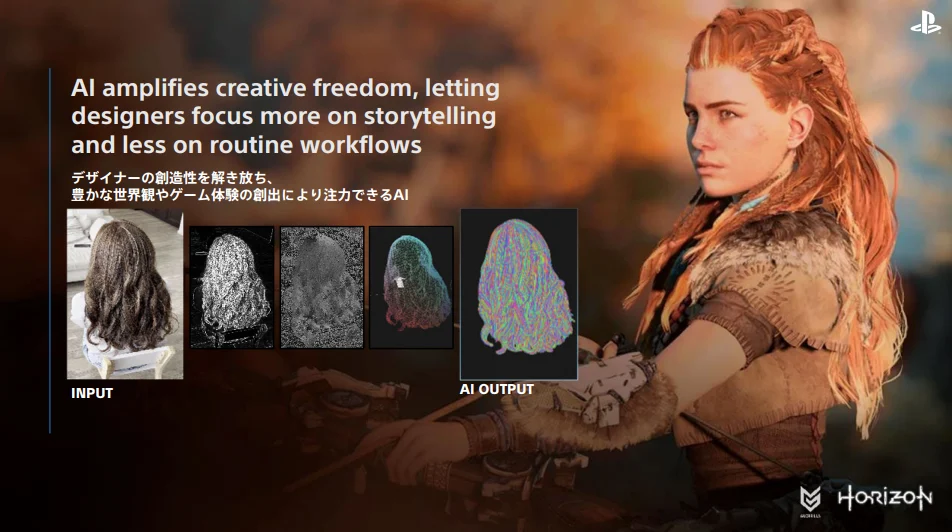
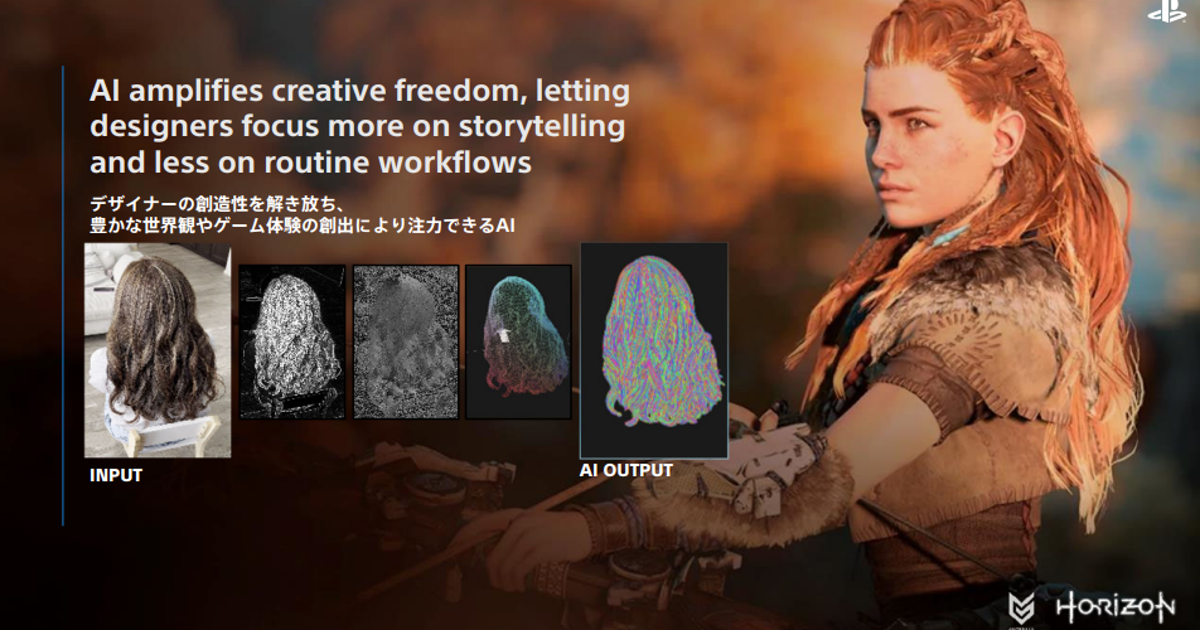
Another area where AI is making significant inroads is in the animation of hair. Nishino described hair animation as particularly "labour-intensive due to the large number of strands required" to achieve realistic movement and volume. Creating believable hair in games involves intricate physics simulations and often requires artists to manually sculpt and animate individual strands or groups of strands, ensuring they react naturally to character movement, wind, and other environmental factors.
Sony’s first-party studios are now leveraging an AI tool that streamlines this complex process. "Our teams have accelerated this process by taking videos of real hairstyles and having an AI tool output a 3D model with hundreds of strands modelled," Nishino explained. This innovative approach significantly reduces the manual workload. By learning from real-world examples, the AI can generate highly detailed and physically accurate hair simulations that would be prohibitively expensive and time-consuming to create manually. This not only enhances visual realism but also allows developers to dedicate more resources to other creative aspects of game design, ultimately contributing to the "richer worlds and gameplay" vision.
Gran Turismo Sophy: The Next Generation of AI Opponents
Beyond asset creation, AI is also fundamentally reshaping gameplay itself. Nishino highlighted the continued advancements in Gran Turismo, particularly with its AI-powered racing agent, Sophy. Gran Turismo Sophy, developed in collaboration with Sony AI, is a revolutionary AI that learns to drive and race at an incredibly high level, often surpassing human capabilities. Unlike traditional racing game AI, which relies on pre-programmed scripts and fixed difficulty levels, Sophy uses deep reinforcement learning to adapt and strategize in real-time.
"Taking this further, our world-class creatives have already shown the ability to create amazing prototypes where NPCs with their own personalities can create a living, dynamic world for the players to explore," Nishino stated. Sophy’s implications extend beyond mere racing; its ability to learn complex behaviors and adapt to dynamic situations lays the groundwork for more sophisticated and believable AI in all genres. This could lead to NPCs with unique behavioral patterns, emergent decision-making, and even personalized interactions, making game worlds feel more alive and responsive to player actions.
Pushing Visual Fidelity with PlayStation Spectral Super Resolution (PSSR)
On the hardware front, AI is integral to enhancing visual performance. Nishino referenced the updated PSSR (PlayStation Spectral Super Resolution) feature on the PlayStation 5 Pro. PSSR utilizes machine learning to enhance image quality, effectively delivering "4K visuals at high frame rates." This technology is Sony’s answer to upscaling solutions like NVIDIA’s DLSS or AMD’s FSR, using AI algorithms to intelligently reconstruct lower-resolution images into higher-resolution outputs with minimal loss of detail and often improved anti-aliasing.
PSSR’s role is critical in the console space, where developers aim to maximize graphical fidelity while maintaining smooth frame rates on fixed hardware. By offloading resolution scaling to a dedicated AI processor (or leveraging general-purpose compute units with AI optimizations), the main GPU can focus on rendering more complex scenes and effects. "Through our investments in AI and machine learning, we will continue to push the fidelity frontier forward," Nishino concluded, underscoring PSSR’s importance in maintaining PlayStation’s competitive edge in visual prowess. This directly benefits players with sharper images and smoother gameplay, while offering developers more headroom to create stunning visual experiences.
AI for Discovery and Curated Experiences
Beyond these specific examples, Nishino also emphasized that AI supports a more efficient production environment and "improves discovery, helping games reach the right audience." This suggests AI will play a role in optimizing the PlayStation Store, personalizing game recommendations, and perhaps even dynamically adjusting marketing efforts based on player preferences and behaviors. This would create a more curated platform experience, connecting players with titles they are more likely to enjoy, thereby increasing engagement and satisfaction across the PlayStation ecosystem.
Official Responses: Augmentation, Not Replacement
The official responses from Sony’s top leadership consistently reinforced a unified message: AI is a tool for augmentation, not a substitute for human talent. Hiroki Totoki’s initial declaration that "human creativity must remain at the center" established the ethical and philosophical bedrock for Sony’s AI integration. This is not merely a technical strategy but a human-centric one, designed to empower, rather than diminish, the role of creators.
Hideaki Nishino echoed this sentiment with clarity and conviction when discussing the practical applications of AI in game development. He explicitly stated, "The vision, the design, and the emotional impact of our games will always come from the talent of our studios and performers. AI is meant to augment their capabilities, not to replace them." This statement directly addresses one of the most contentious points in the broader discourse surrounding AI in creative fields – the fear of job displacement and the erosion of human artistic value.
Sony’s leadership is carefully positioning AI as a means to free up human talent from the drudgery of repetitive, high-effort tasks. By automating these processes, animators, artists, and designers can redirect their energies towards conceptualization, storytelling, and refining the nuanced details that define truly exceptional games. The goal is to elevate the creative process, allowing artists to focus on the "why" and "what" of their creations, while AI handles the "how" in a highly efficient manner.
This official stance is crucial for fostering trust and collaboration within Sony’s own studios and for reassuring the wider creative community. It reflects an understanding that while AI can generate data and even mimic styles, the unique spark of human ingenuity, empathy, and narrative vision remains irreplaceable. By framing AI as an "amplifier of human imagination," Sony seeks to harness its power while preserving the intrinsic value of human artistic contribution, ensuring that the emotional core of their games continues to resonate authentically with players. This measured and thoughtful approach to AI adoption aims to navigate the complexities of technological advancement with a clear commitment to human-led creativity.
Implications: A Transformative Future for PlayStation
The implications of Sony’s expansive AI strategy are profound and far-reaching, promising to reshape not only the internal operations of its game development studios but also the very nature of the PlayStation experience for players globally.
Elevating Game Development and Creative Scope
For developers, the immediate impact is a significant boost in efficiency. By automating manual and high-effort tasks, studios can achieve more with existing resources or tackle projects of unprecedented scale and complexity. This means potentially shorter development cycles for certain aspects, allowing teams to dedicate more time to refinement, innovation, and iterating on core gameplay loops. The ability to quickly prototype and test new ideas, enabled by AI-assisted asset creation and procedural generation, could foster a more experimental and agile development environment.
Moreover, the strategic use of AI could unlock entirely new genres or gameplay mechanics previously deemed too complex or costly to implement. Imagine dynamic narratives that adapt in real-time to player choices, truly emergent AI characters with complex motivations, or procedurally generated worlds that feel handcrafted due to AI-driven detail injection. The "richer worlds and gameplay" that Nishino envisions could manifest as environments that evolve dynamically, NPCs that remember past interactions, and challenges that intelligently adapt to individual player skill levels, leading to highly personalized and immersive experiences.
Enhancing the Player Experience
For players, the benefits are tangible. The advancements in visual fidelity, powered by tools like PSSR, mean sharper images and smoother frame rates, pushing the boundaries of realism on PlayStation consoles. The sophistication of AI opponents like Gran Turismo Sophy promises more challenging, engaging, and varied gameplay, moving beyond predictable patterns to intelligent, adaptive adversaries that genuinely test player skills.
Beyond performance and challenge, AI could lead to more "living, dynamic worlds" where NPCs possess greater personality and agency. This could result in more believable interactions, emergent storylines, and a deeper sense of immersion, making players feel like active participants in a truly reactive world rather than observers in a static one. Furthermore, AI’s role in "improving discovery" suggests a more curated and personalized PlayStation Store experience, where players are more effectively connected with games and content tailored to their preferences, fostering stronger engagement with the platform’s vast library.
Navigating Industry-Wide Debates and Ethical Considerations
While Sony’s strategy emphasizes augmentation over replacement, the broader industry continues to grapple with the ethical dimensions of AI in creative fields. Concerns around intellectual property, the potential for job displacement in specific roles, and the ethical sourcing of training data remain prominent. Sony’s clear stance that human creativity remains central is a crucial step in building trust, but the company will inevitably need to navigate these complex discussions as AI adoption becomes more pervasive. This will likely involve transparent policies regarding AI tool development, fair compensation for human artists whose work might inform AI models, and robust frameworks to ensure AI is used responsibly and ethically.
Sony’s Strategic Advantage in a Competitive Landscape
Sony’s comprehensive AI investment positions it strongly in a highly competitive market. By integrating AI at every layer – from hardware (PS5 Pro’s PSSR) to software (development tools, in-game AI) and platform services (discovery) – PlayStation aims to create a distinct ecosystem advantage. Its "global player base, deep library of IP, and integrated ecosystem" provide a fertile ground for AI to deliver truly unique and cutting-edge entertainment experiences that differentiate it from competitors. This holistic approach could enable Sony to maintain its leadership in console gaming and expand its influence across the broader entertainment landscape.
The Future Outlook: An Evolving Ecosystem
Looking ahead, Sony’s AI strategy is not a static endpoint but an evolving journey. The continuous refinement of AI models, the development of new applications, and the iterative feedback loop between developers and AI tools will progressively shape the future of PlayStation. The vision is clear: an intelligent ecosystem where technology empowers creativity, enriches player experiences, and pushes the boundaries of what is possible in interactive entertainment. By placing human ingenuity at the core and leveraging AI as a powerful accelerant, Sony aims to cement its legacy as a pioneer in digital storytelling and immersive worlds for years to come.












No comments yet. Be the first to join the conversation!