Layla Zulfa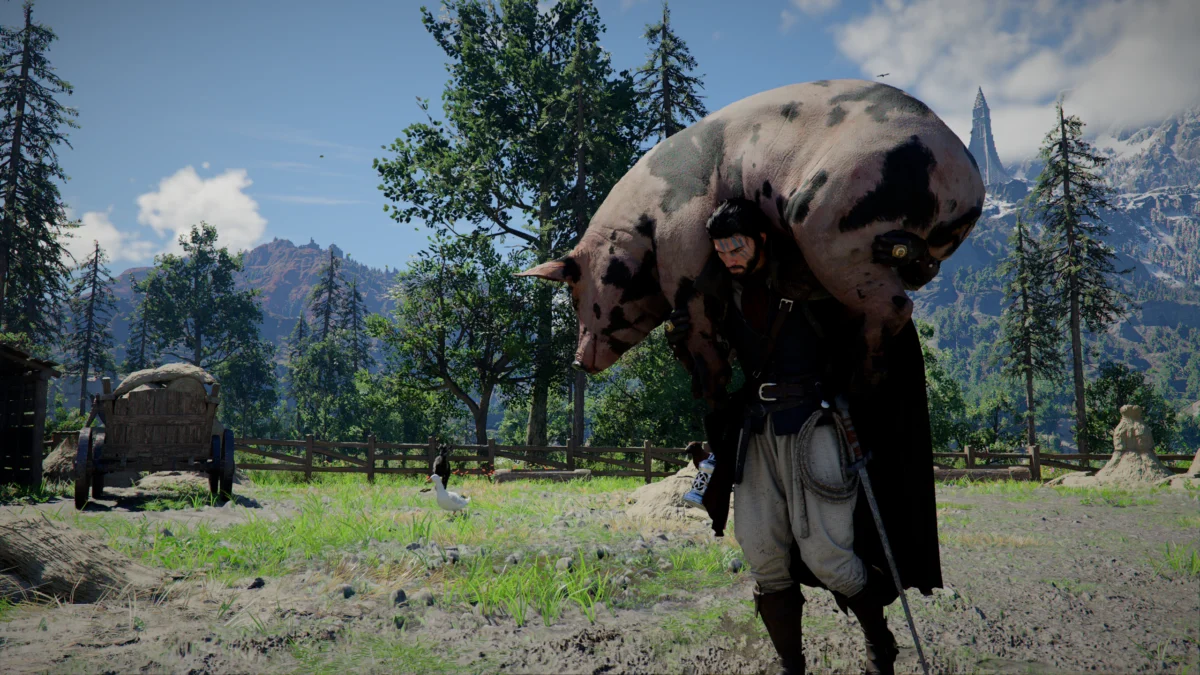
Crimson Desert, the latest ambitious title from developer Pearl Abyss, is a study in extreme dualities. It is a game that simultaneously reaches for the stars with its breathtaking technical prowess and stumbles over its own feet due to baffling narrative and design choices. For every moment of genuine, jaw-dropping wonder, there is a tedious system or a jarring storytelling beat waiting to pull the player back to earth.
The Architectural Marvel: Technical Scale and Visual Fidelity
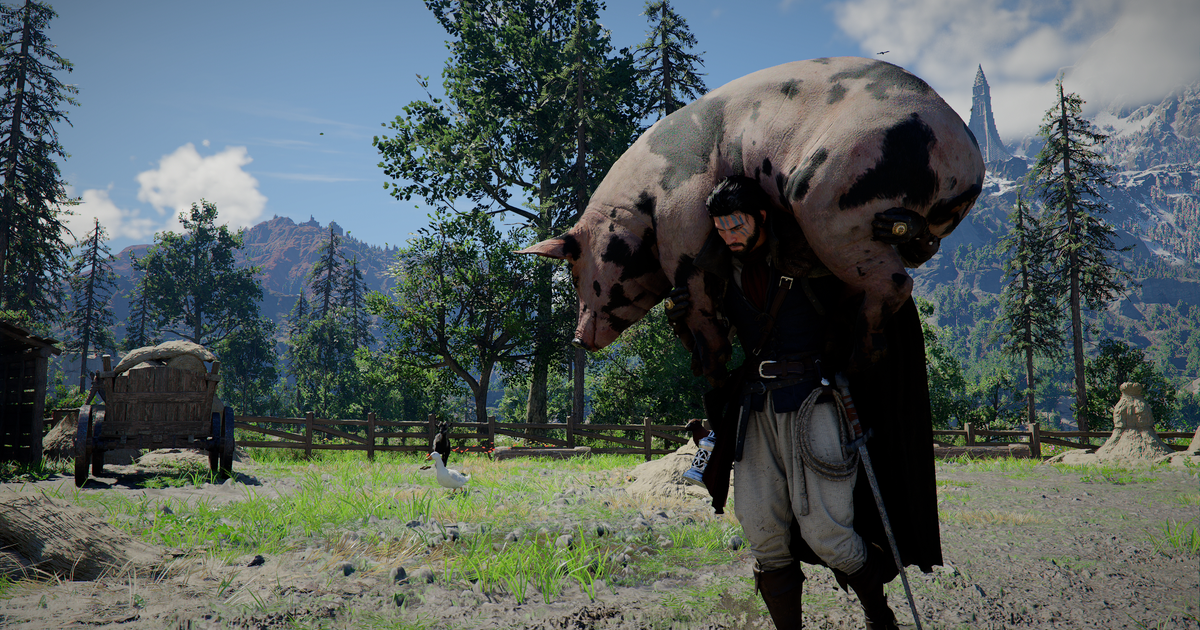
At its core, Crimson Desert is a technical tour de force. Much like a champion bodybuilder, the game presents a physique of incredible scale and definition. From the very first moment the player assumes control, walking along a twilight-dappled ridge as the sun dips below the horizon, it is clear that Pearl Abyss has pushed the boundaries of modern graphical fidelity.
The world-building is not merely window dressing; it is a sprawling, living sandbox that invites exploration. Whether you are gliding across deep, treacherous ravines on magical wings or galloping on horseback through high-altitude cliffs and yawning valleys, the sense of scope is genuinely unparalleled in recent memory. The environment feels heavy, tactile, and alive, creating an atmosphere of epic adventure that is hard to ignore.
However, beneath this polished exterior, the structural integrity of the game begins to waver. The connective tissue that should bind these beautiful environments together—the narrative flow and the user experience—often feels disjointed, suggesting that while the game’s muscles are well-developed, its internal systems are struggling to keep pace.
A Narrative of "If Only": The Storytelling Struggle
The central narrative premise of Crimson Desert follows Kliff and his band of mercenaries, the Greymanes. After being displaced from their homeland of Pailune by the expansionist Black Bears, the Greymanes are scattered, their king slain, and their morale crushed. Kliff’s journey begins in earnest after he is left for dead, only to be resurrected by a mysterious, otherworldly power that transports him to "The Void."
Armed with new abilities and a thirst for vengeance, Kliff must navigate a continent thick with political intrigue, dealing with counts, coinmasters, and various ne’er-do-wells. On paper, it is a recipe for a gritty, Game of Thrones-inspired epic. In practice, however, the execution is a chaotic mess of tonal shifts and bizarre creative choices.
The Problem of Kliff
Perhaps the most perplexing decision in the game is the forced focus on a pre-defined protagonist. Pearl Abyss built its reputation on Black Desert Online, a game celebrated for its industry-leading, hyper-detailed character creator. By opting for a fixed character like Kliff, the developers have seemingly locked away their greatest toy.
To make matters worse, Kliff’s characterization is erratic. In one scene, he is a stoic, unstoppable force of nature, performing gravity-defying combat maneuvers with the cold efficiency of a machine. In the very next, he is relegated to a passive, almost sycophantic role, performing trivial tasks for random NPCs without a hint of the gravitas established in the prologue. This inconsistency makes it impossible for the player to anchor themselves in his journey, as the "real" Kliff seems to shift depending on the whim of the current quest designer.
Incongruent Tones and Flat Pacing
The game’s writing further complicates the experience. The dialogue is frequently sparse to the point of absurdity. One interaction involving a side quest—a simple "Are you up to the task?" followed by a curt "Yes"—exemplifies the lack of effort put into world-building through conversation.
Furthermore, the narrative pace suffers from significant logical gaps. A major plot point involves the arduous task of reuniting the scattered Greymanes, a process that occupies the first 20 hours of gameplay. Yet, when they finally arrive, they simply materialize at the player’s camp with little fanfare or emotional weight. When combined with the occasional slip into tired, offensive tropes—such as the "Goldleaf" guild, a group of predatory, money-lending goblins—the narrative often feels less like a grand fantasy epic and more like a collection of disconnected, poorly aged tropes.

The UI: A Masterclass in Frustration
If the narrative is the game’s enlarged heart, the User Interface (UI) is its failing circulatory system. Crimson Desert features an inventory and looting system so cumbersome it feels intentionally obstructive.
Unlike most modern RPGs, players cannot view an enemy’s inventory before looting. Instead, you are forced to pick up every item an enemy drops—regardless of whether you need it—filling your limited inventory with trash that must be manually discarded. This creates a gameplay loop of constant inventory management that serves no purpose other than to waste the player’s time.
The most egregious example of this design philosophy is the coin system. Enemies drop pouches of currency that must be manually "opened" in the inventory menu before the value is added to the player’s total. It is a tedious, repetitive chore that adds nothing to the immersion. It feels as if the game is mocking the player, forcing them to perform menial labor for a pittance of copper, mirroring a billionaire having to manually sort through loose change to pay for a cup of coffee.
Combat: The Saving Grace
Despite the narrative and UI shortcomings, the combat system is where Crimson Desert truly shines. The variety of options available to the player is staggering. Whether you prefer the weight and impact of traditional sword-and-board combat or the visceral, over-the-top nature of unarmed grappling combos, the game offers a playground for the combat-obsessed.
The combat feels balanced and deep. Engaging with large, Musou-style hordes of enemies provides a sense of power, while the boss battles require genuine tactical thinking and mastery of the game’s deeper mechanics. It is the one area where the game’s "muscle" is fully utilized, making it the primary reason players will find themselves compelled to push through the narrative sludge.

Implications for the Future
The core issue with Crimson Desert is the lack of a cohesive identity. It attempts to emulate the political depth of The Witcher 3 and the reactive, systemic freedom of Dragon’s Dogma, but it fails to understand why those games succeeded. The Witcher 3 thrived because of a strong, consistent central character, while Dragon’s Dogma thrived because its systemic world was designed to create organic, memorable stories even in the absence of a strong narrative focus.
Crimson Desert sits in an uncomfortable middle ground. It is too rigid to be a true sandbox and too poorly written to be a narrative masterpiece.
Conclusion
As it stands at launch, Crimson Desert is a paradox. It is a game of immense beauty and potential, buried under layers of absurdity and poor design decisions. Pearl Abyss has built a world that begs to be explored, but they have failed to provide the necessary structure to make that journey feel meaningful.
While the combat and the visual fidelity are enough to recommend the game to those who prioritize mechanics over narrative, the average player may find themselves frustrated by the "connective sinew" of the game failing at every turn. If Pearl Abyss can commit to a substantial overhaul of its narrative content and streamline its bloated UI, Crimson Desert could still rise to become one of the generation’s greats. But until then, it remains a monument to what could have been.


 Asro
Asro
 Muslim