

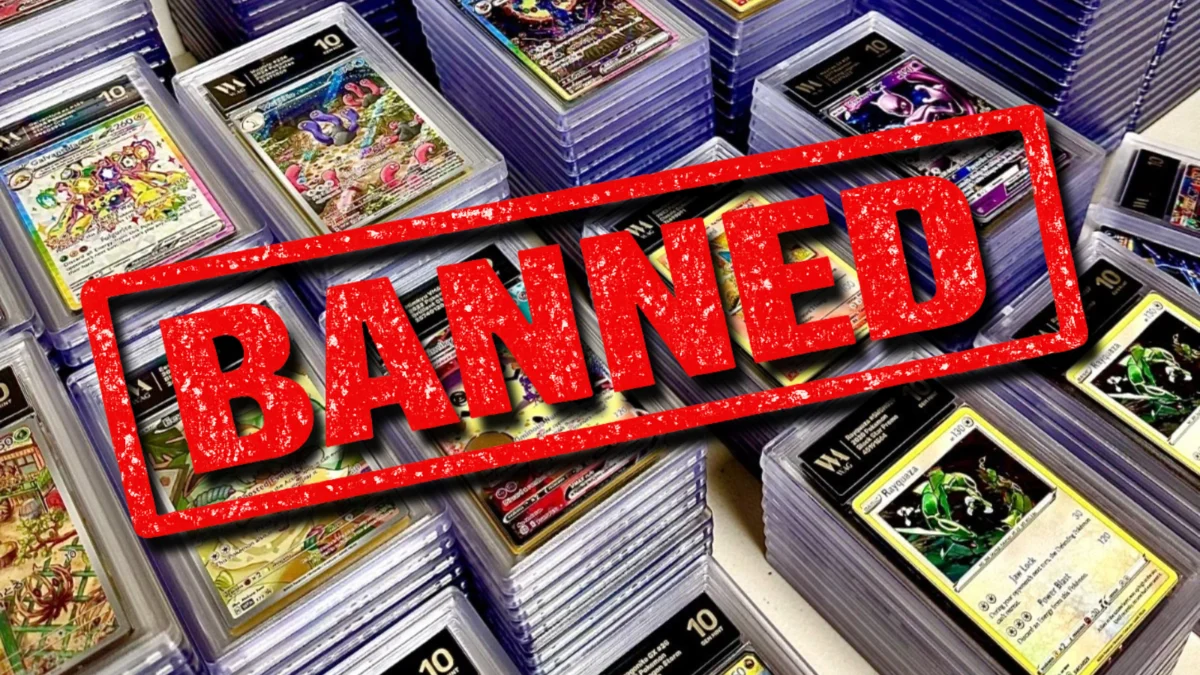
In a move that signals a significant philosophical shift for the Pokémon Trading Card Game (TCG) ecosystem, The Pokémon Company International (TPCi) has reportedly implemented strict new guidelines for vendors operating at official tournament events. According to internal reports, vendors are now prohibited from selling graded card "slabs"—a staple of the modern collector market—alongside a broad range of high-value merchandise.
The policy, which reportedly took effect during the Indianapolis Regional Championships held from May 29–31, 2026, marks an aggressive pivot away from the secondary market culture that has increasingly dominated the floor space at large-scale competitive gatherings like the North American International Championships (NAIC) and the World Championships.
The Core Policy: What Has Changed?
The new restrictions represent a comprehensive overhaul of what authorized vendors are permitted to display and sell. While TPCi has maintained a policy of silence regarding a public announcement, reports from industry analysts—most notably PokeBeach—have clarified the scope of these new limitations:
- Graded Slabs Prohibited: Vendors are no longer permitted to offer third-party graded cards (such as those from PSA, BGS, or CGC) for sale.
- Price Ceiling: Items valued at over $1,000 are effectively banned from vendor tables. This creates a hard cap on the types of luxury collectibles and rare "chase" cards that can be sold on-site.
- Japanese Pokémon Center Imports: A wide swath of products sourced from the Japanese Pokémon Center—including exclusive plushies, playmats, and specialized TCG products—has been restricted. This is particularly impactful for collectors who rely on events to acquire these rare imports without navigating the complexities of international shipping or secondary market markups.
These restrictions appear aimed at "de-commercializing" the hobbyist aspects of official events, steering the atmosphere back toward the gameplay experience rather than the speculative investment market.
A Chronology of the Market Shift
To understand why TPCi has moved toward such a restrictive policy, one must look at the meteoric rise of the "slab" market over the last decade.
The Pandemic Boom (2020–2022)
During the COVID-19 pandemic, the Pokémon TCG experienced an unprecedented surge in popularity. Influencers and investors flooded the market, driving the price of vintage and modern chase cards to record highs. Graded slabs became the gold standard of this asset class, transforming the hobby from a game played at local tables into a multi-billion dollar alternative investment vehicle.
The Rise of the "Scalper" Economy (2023–2025)
As events resumed in full force, the presence of high-end vendors at tournaments began to overshadow the actual tournament play. Fans frequently complained that the floor at major championships felt more like a "flea market" than a celebration of the TCG. The prevalence of Japanese imports, often sold at a 200% to 300% markup, became a point of contention for local players who felt priced out of their own community gatherings.
The Enforcement Phase (May 2026)
Following the lead of Pokémon Japan—which has been increasingly aggressive in its efforts to combat mass-reselling—TPCi began internal policy enforcement in late May 2026. The Indianapolis Regional Championships served as the "testing ground" for these rules, setting a new precedent for all future high-level competitive play.
Supporting Data: The Conflict Between Play and Profit
The tension between competitive players and high-end collectors is not merely anecdotal; it is a fundamental clash of incentives.
For the competitive player, the TCG is a game of strategy. A player needs specific, functional cards to build a deck. For the collector, the card is an object of desire—often encapsulated in plastic, making it unplayable in a tournament setting.
Why the Distinction Matters
- The Utility Gap: Graded cards are, by definition, static. They cannot be shuffled or played. TPCi’s decision to ban them suggests a desire to reclaim the "identity" of their events. If the events are branded as "Official Pokémon Tournaments," the company likely wants the products sold there to be relevant to the people actually playing the game.
- The Japanese Market Synergy: The crackdown on Japanese Pokémon Center imports is directly tied to a broader, global effort by the brand to tighten its supply chain. With Pokémon Japan requiring government-issued ID for online purchases starting in August 2026, the company is attempting to stop the flow of limited goods into the hands of international bulk-resellers.
Official Stance and Industry Sentiment
While TPCi has not issued a formal press release—a standard practice for the company when navigating sensitive internal policy changes—the message from the ground is clear. The company is prioritizing its core demographic: the players, the families, and the local game store owners who foster grassroots growth.
The Competitive Player Perspective
For many in the tournament scene, the move is being hailed as a "return to form." Professional players have long expressed frustration that the "noise" of the secondary market distracts from the competition. "When you walk into a convention center, you want to see people testing decks and trading cards to play," one long-time competitor noted on social media. "You don’t want to feel like you’re walking through a high-end investment gallery."
The Collector and Vendor Backlash
Conversely, the vendor community has expressed significant concern. For many independent retailers, the margin on standard TCG product is slim. It is the high-end slabs and the exclusive Japanese imports that allow them to cover the high costs of booth rental, travel, and staffing for major tournaments. By stripping away these high-margin items, TPCi may inadvertently reduce the number of vendors willing to support these events in the future.
Implications for the Future of the TCG
The ripple effects of this policy change will be felt across the global Pokémon ecosystem.
1. The Fragmentation of the Marketplace
Collectors will inevitably shift their focus to platforms that remain unregulated by TPCi. Expect to see an increase in dedicated, non-official "Pokémon Card Shows" that exist outside the jurisdiction of TPCi. These events will likely become the primary hubs for high-value slabs, while official TPCi events will become increasingly "sterile" and focused solely on gameplay.
2. Impact on Japanese Imports
With the combined pressure of ID verification in Japan and the ban on sales at official events, the secondary market for Japanese-exclusive goods will likely undergo a contraction. While scarcity may initially drive prices higher, the long-term effect will be a decrease in the volume of these items circulating in the West.
3. The "Player-First" Model
If successful, this strategy will cement Pokémon’s reputation as a game that values its player base above its speculators. By limiting the commercialization of the game, TPCi is positioning the Pokémon TCG as a sustainable, long-term hobby rather than a speculative bubble. However, the risk remains that the loss of vendor revenue could make it harder for organizers to host events of the current scale.
Conclusion
The ban on graded slabs and high-value items at official TPCi events is more than a change in vendor guidelines; it is an ideological statement. By drawing a line between the game and the investment, The Pokémon Company is attempting to safeguard the culture of the TCG from the volatile influences of the secondary market.
As we look toward the remainder of the 2026 season, the hobby will likely continue to split into two distinct paths: the competitive, tournament-focused world governed by TPCi, and the sprawling, decentralized world of collectors and investors. Whether this bifurcation strengthens the brand or alienates a segment of its most dedicated spenders remains to be seen. For now, the message from the top is clear: at official events, the cards are meant to be played, not graded.












No comments yet. Be the first to join the conversation!