

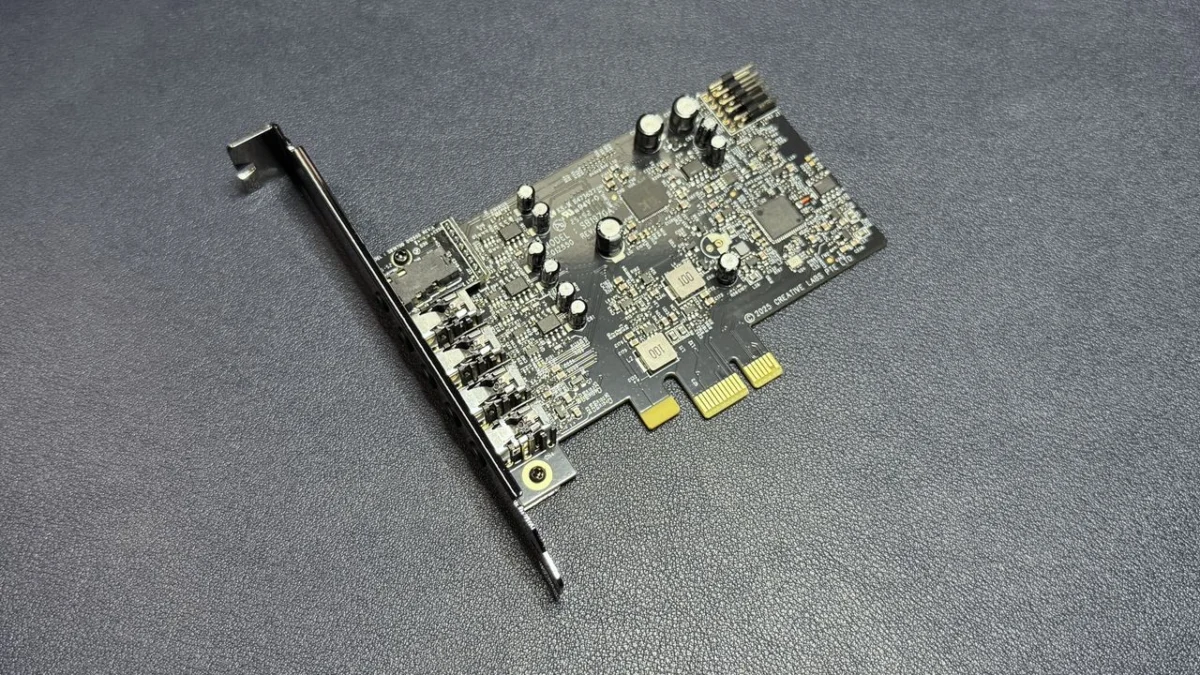
In an era where high-end motherboards boast “audiophile-grade” capacitors, gold-plated shielding, and advanced integrated codecs, the humble internal sound card has largely been relegated to the annals of computing history. For the vast majority of PC builders, the built-in audio solution—integrated directly onto the motherboard—is deemed “good enough.” However, Creative Technology, a name synonymous with the rise of PC audio, isn’t ready to let the internal card disappear just yet. With the release of the Sound Blaster Audigy FX Pro, the company is making a compelling, albeit niche, argument that your PC’s audio path is still an untapped frontier for improvement.
The State of PC Audio: From Necessity to Niche
To understand the position of the Audigy FX Pro, one must look at the evolution of motherboard audio. A decade ago, onboard sound was notoriously noisy, often plagued by electromagnetic interference (EMI) from the GPU and other high-voltage components. Today, manufacturers go to great lengths to isolate audio traces on the PCB, using dedicated layers and high-quality Japanese capacitors to ensure a clean signal.
For the average user, these advancements have rendered discrete cards unnecessary. With the rise of USB-based headsets and DACs, the internal sound card has shifted from an essential upgrade to a niche enthusiast product. Despite this, Creative maintains that the discrete, shielded environment of a PCIe card offers a level of audio purity that even high-end motherboards struggle to replicate consistently. At an $79.99 price point, the Audigy FX Pro isn’t aiming to replace professional-grade external DACs; it is aiming to be the bridge between budget-conscious, integrated audio and the audiophile ecosystem.
Technical Specifications and Architecture
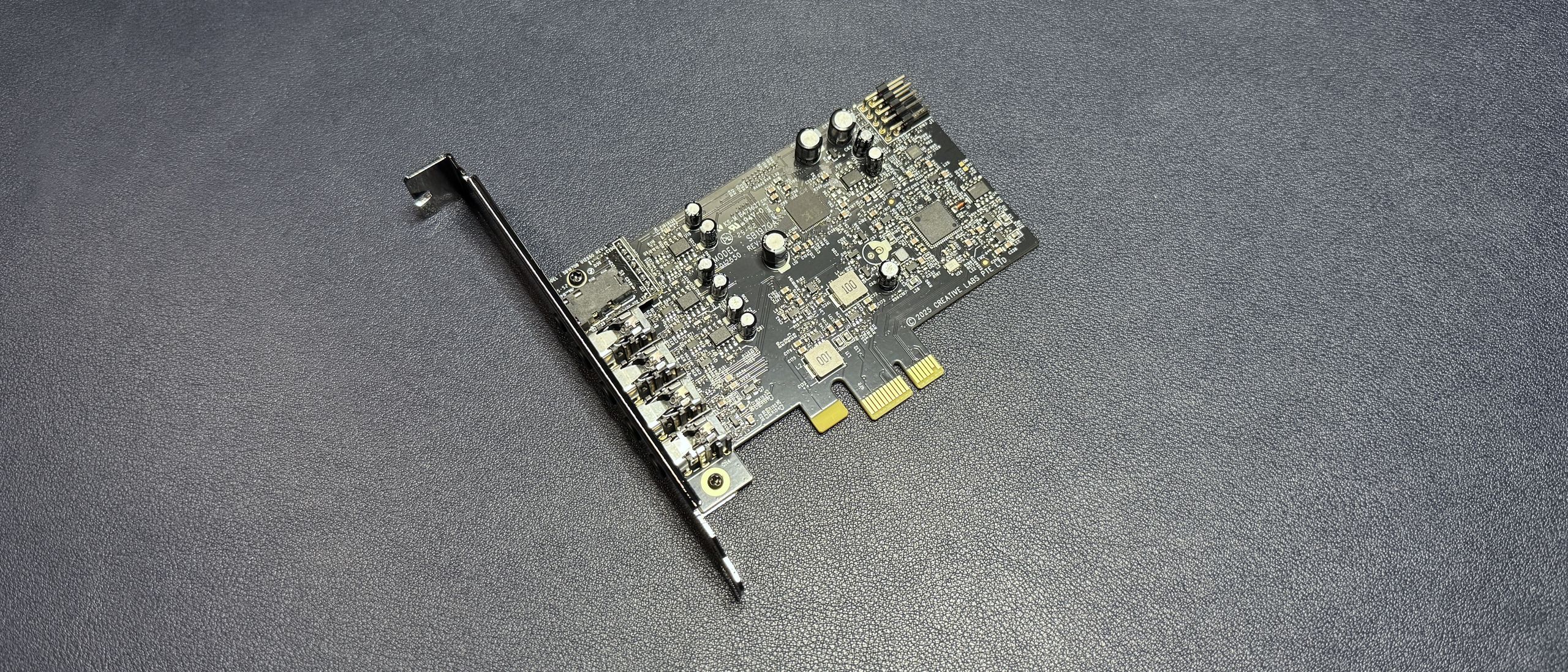
The Audigy FX Pro is a compact, PCIe x1 add-in card designed for versatility. It boasts impressive core specifications, particularly for its price point:
- Playback Resolution: PCM 32-bit / 384 kHz
- Recording Resolution: PCM 32-bit / 192 kHz
- Signal-to-Noise Ratio (SNR): 120 dB
- Headphone Amp Impedance: 4.7 ohms
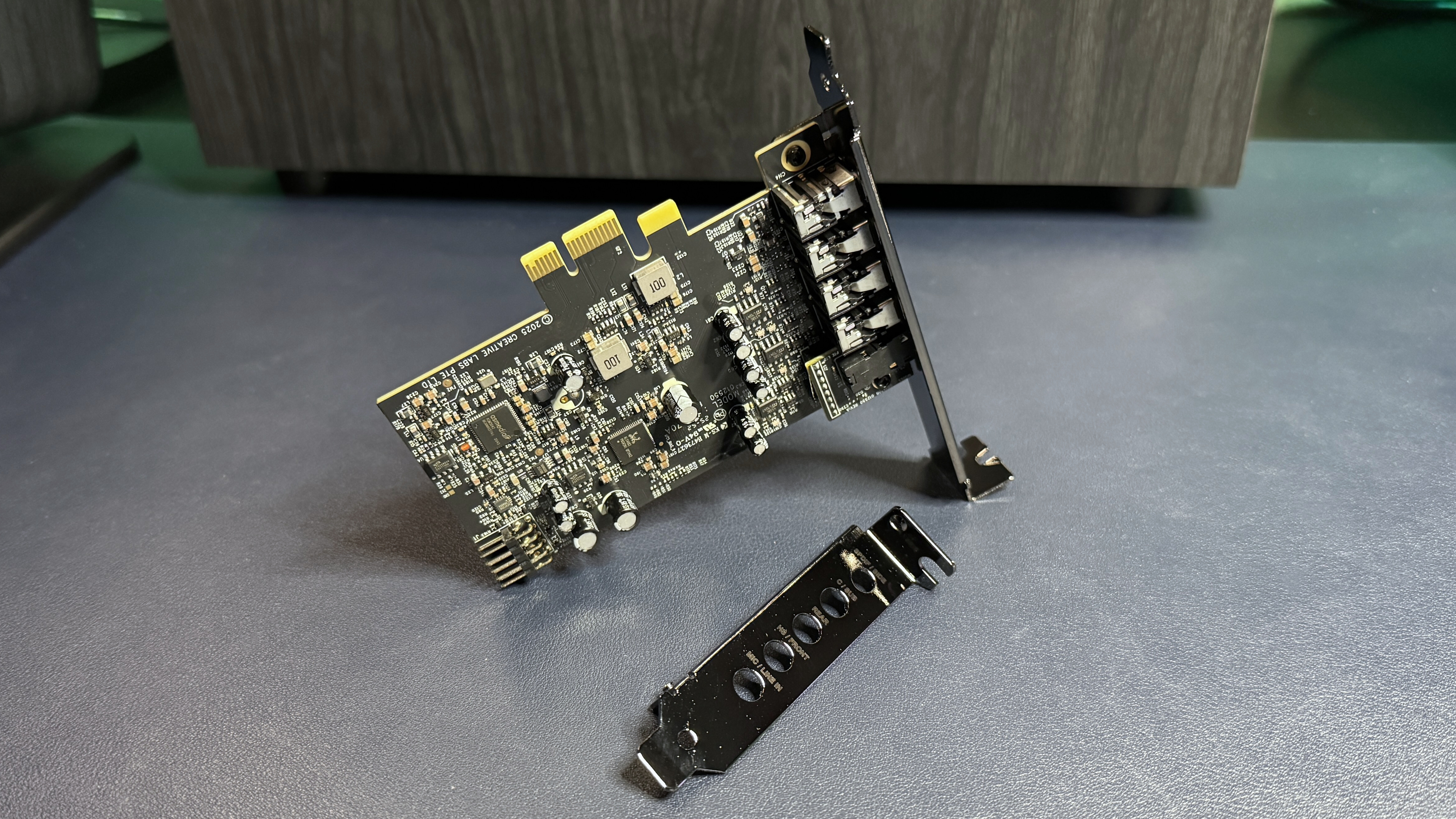
- Connectivity: 5 x 3.5mm analog jacks (including SPDIF/Side, Center/Sub, Rear, Headset/Front, and Mic/Line In)
The card is built to be physically unobtrusive. It ships with a full-height bracket pre-installed, but includes a half-height bracket for users building in compact Mini-ITX chassis. Weighing just 60 grams with the full bracket, it is a lightweight addition that avoids the bulky aesthetic of older, more complex sound cards. Its reliance on a PCIe x1 slot ensures compatibility with almost any modern motherboard, regardless of how many other peripherals are installed.
Chronology of the Audio Upgrade Path
Historically, the trajectory of PC audio has seen three distinct phases.
- The Era of the Sound Blaster: In the 90s and early 2000s, a sound card was mandatory for gaming and MIDI performance, as CPUs lacked the overhead to handle complex audio mixing.
- The Onboard Revolution: As processors grew in power, motherboard manufacturers integrated "good enough" audio. The discrete card market withered, surviving only in high-end enthusiast or studio-focused segments.
- The Modern Renaissance: Today, we see a bifurcation. While most users rely on USB-powered headsets with their own built-in sound processing, there remains a dedicated cohort of users who own high-impedance headphones or complex multi-channel speaker setups (5.1 or 7.1) that require a robust, dedicated interface to function at peak performance.
The Audigy FX Pro arrives in this third phase, targeting the user who finds that their high-end motherboard’s "isolated" audio still suffers from microscopic interference or lacks the power to drive high-fidelity surround sound setups.
Empirical Performance and Subjective Experience
When testing the Audigy FX Pro against a standard, modern, high-end motherboard (such as the MSI MPG Z690 Carbon WiFi), the results provide a nuanced look at the state of audio hardware. The motherboard in question utilizes a Realtek ALC4080 codec, which on paper, matches the Audigy FX Pro’s 32-bit/384 kHz capabilities and 120 dB SNR.
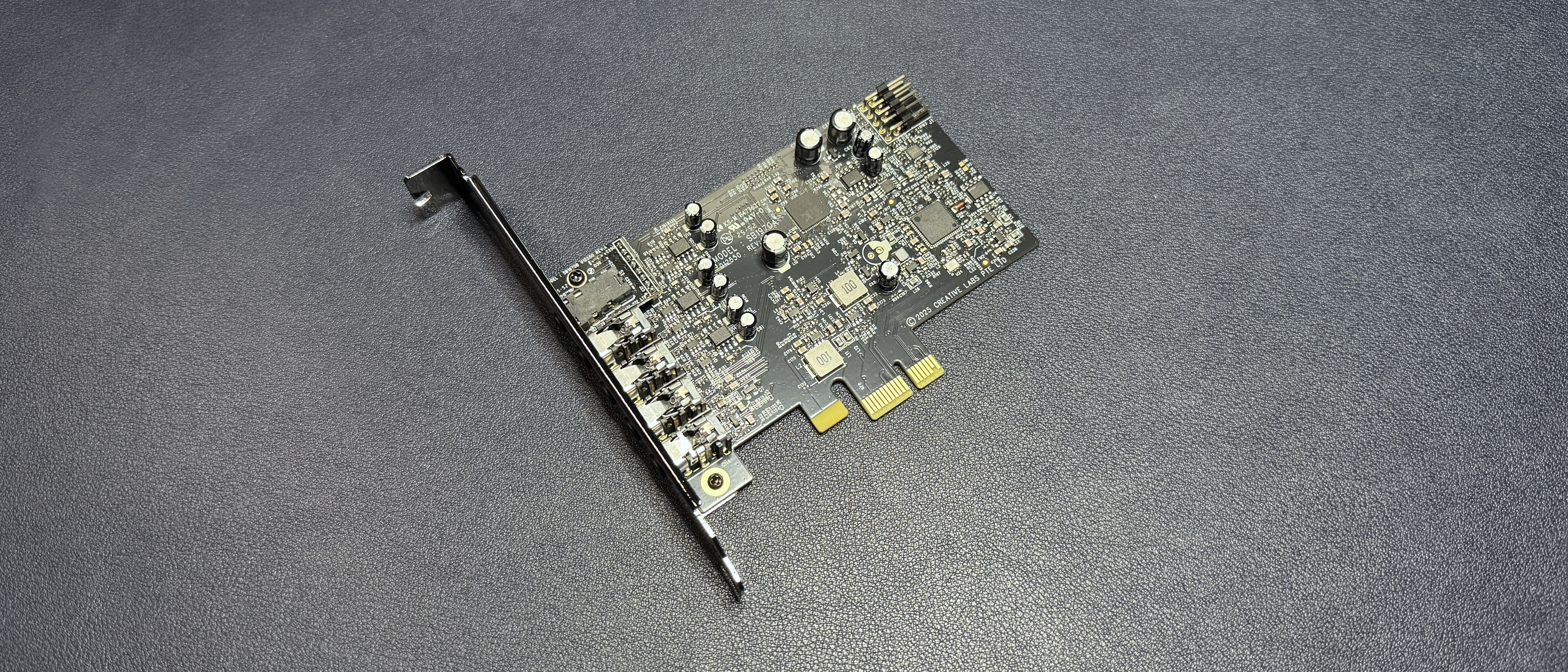
However, theory often differs from practice. While the motherboard’s audio is remarkably clean, the Audigy FX Pro provides a subjectively "tighter" sound. This is likely due to the physical separation of the audio circuitry from the electrically noisy environment of the motherboard’s main power delivery systems. While the onboard audio is not "bad"—it is, in fact, quite capable—the discrete card removes the "veil" that often accompanies integrated solutions.
That said, it is important to temper expectations. When compared to a high-end external USB DAC, such as the AudioQuest DragonFly Cobalt, the internal card falls slightly short. The Audigy FX Pro represents a "middle ground" upgrade: it is undoubtedly better than basic motherboard audio, but it does not claim to be the definitive endpoint for a serious audiophile.
Software Ecosystem: The Creative Nexus App
The Audigy FX Pro is the first product to leverage the new Creative Nexus app. This software suite is a significant departure from the company’s previous, often bloated, drivers. Nexus serves as an all-in-one control center featuring:
- 10-Band EQ: With a searchable database of 70+ presets tailored to specific games (e.g., Counter-Strike 2, Baldur’s Gate 3) and media types.
- Acoustic Engine: A suite of enhancements including "Crystalizer," which restores detail to compressed audio; "Smart Volume," which levels out jarring volume spikes; and "Dialog Plus," which enhances vocal clarity during movies and games.
The software also allows for deep customization of the virtual surround sound experience. While the card lacks the high-end Super X-Fi (SXFI) head-mapping technology found in Creative’s flagship external products, the virtual surround implementation on the Audigy FX Pro is surprisingly effective. It creates a wide, convincing soundstage that aids in positional audio during competitive gaming sessions without introducing the unnatural "tinny" quality often found in lesser software solutions.
Implications for the Modern PC Builder
Should you buy a discrete sound card in 2026? The answer depends entirely on your specific hardware configuration and usage habits.
The Case for Buying:
If you are a fan of traditional 5.1 or 7.1 surround sound speaker systems, a discrete sound card is almost mandatory. Modern motherboards rarely provide enough analog outputs for true 7.1 setups, and many modern speakers rely on analog connections that simply cannot be replicated by a USB headset or a basic stereo jack. Furthermore, if you are a content creator or gamer experiencing ground-loop hum or electromagnetic static in your recordings or playback, the Audigy FX Pro offers a cost-effective, shielded solution that can clean up your signal path.
The Case Against Buying:
If your primary audio experience involves modern, USB-connected gaming headsets or wireless solutions, a sound card is an unnecessary expense. These peripherals carry their own DACs and audio processing units, effectively bypassing the sound card entirely. For these users, the money would be better spent on higher-quality headphones or a dedicated external DAC if they eventually migrate to analog, high-fidelity cans.
Final Verdict
The Creative Sound Blaster Audigy FX Pro is a reminder that while the industry has largely moved toward integration, there is still value in specialization. It is a niche product, but for those in that niche—whether they are maintaining a legacy 7.1 speaker setup or looking to extract a bit more clarity from their analog headphones without breaking the bank—it offers a tangible, noticeable improvement.
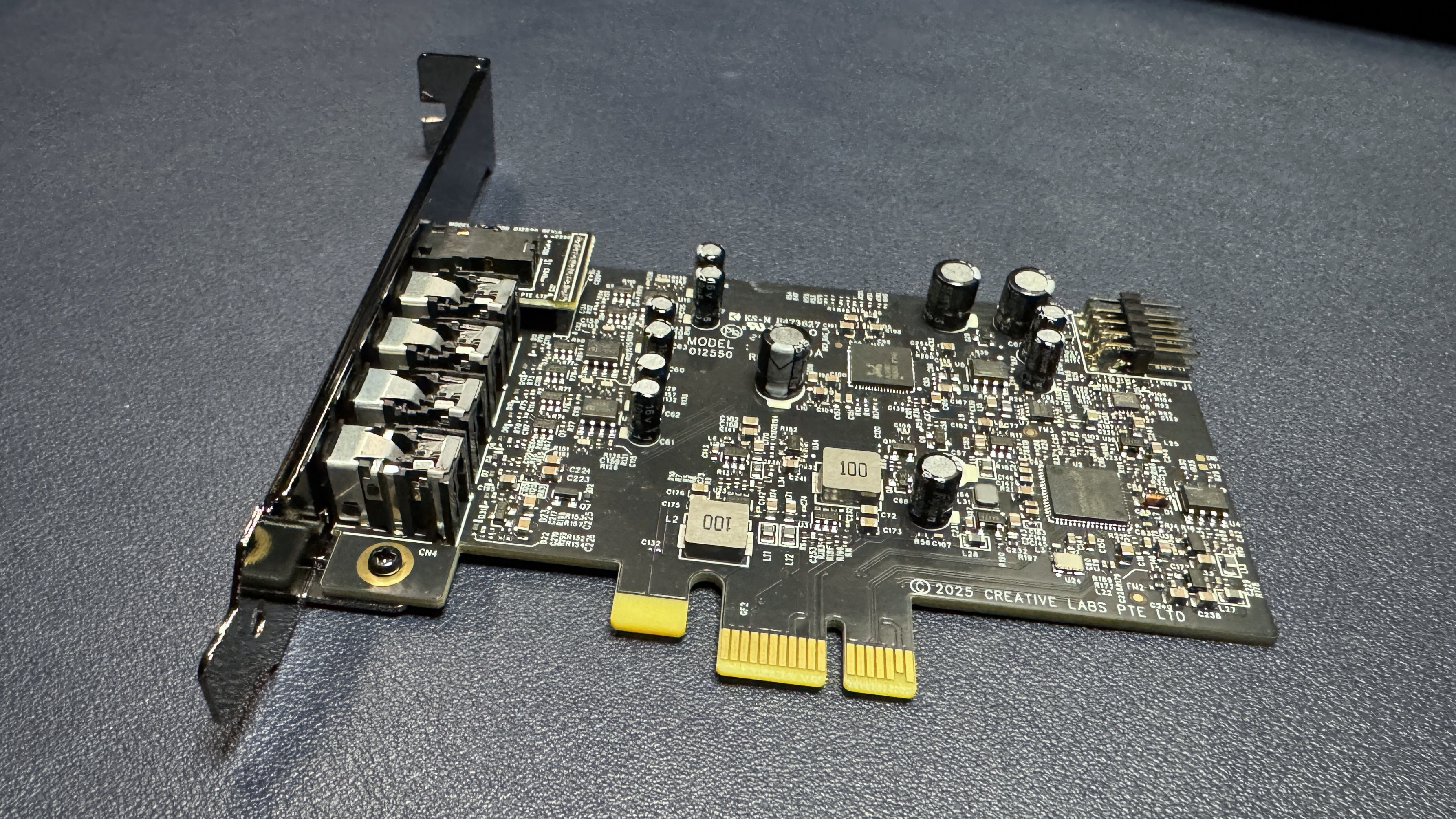
While it may not be a revolutionary leap forward, it is a polished, well-executed piece of hardware that proves that even in the age of onboard audio, there is still a place for the discrete sound card in a enthusiast’s rig. It is an affordable, functional, and effective "last mile" upgrade for the audio-conscious gamer.










No comments yet. Be the first to join the conversation!