

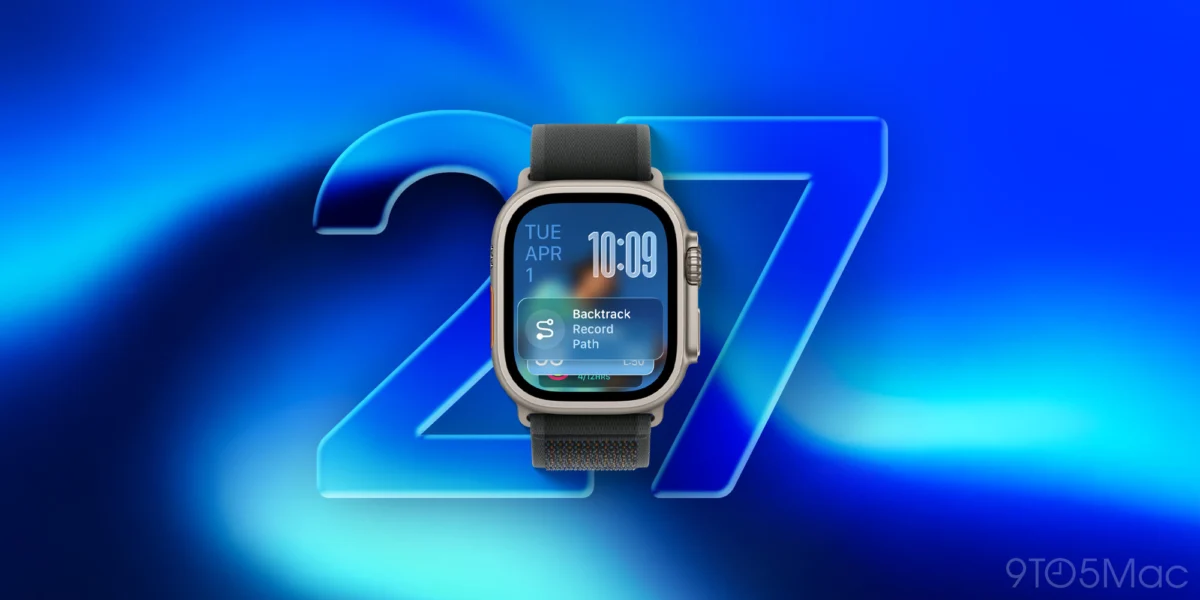
As the digital health landscape becomes increasingly crowded with specialized competitors like WHOOP, Oura, and Fitbit, Apple is recalibrating its long-term strategy for the Apple Watch and the broader Health ecosystem. Recent reports from industry observers, most notably Mark Gurman in his Power On newsletter, suggest that while the upcoming watchOS 27 update will prioritize core stability, significant shifts are occurring behind the scenes regarding the company’s ambitious AI-powered health initiatives.
The central narrative surrounding Apple’s current health trajectory involves two distinct but overlapping pillars: the refinement of hardware-based biometrics through watchOS 27 and the iterative, albeit delayed, rollout of the much-anticipated "Project Mulberry."
Main Facts: The Current State of Play
The primary takeaway from the latest industry intelligence is that Apple is taking a pragmatic, "quality-over-quantity" approach to its health suite.
- watchOS 27 Focus: Contrary to rumors of a massive, feature-heavy overhaul, watchOS 27 is shaping up to be a refinement-focused update. Apple appears to be prioritizing system stability, performance optimization, and battery efficiency—areas that have long been requested by the power-user community.
- Heart-Rate Tracking Enhancements: Despite the focus on stability, Apple is preparing a meaningful improvement to heart-rate tracking. While specifics are sparse, this is a critical move, as granular, consistent data is the backbone of any serious fitness analytics platform.
- Project Mulberry Delays: The AI-powered health coach, internally codenamed "Project Mulberry," has officially been pushed back. Originally slated for a high-profile debut, the project is now expected to arrive later in the iOS 27 update cycle rather than at the initial launch.
A Chronology of Development
To understand why Apple is recalibrating its health strategy, one must look at the timeline of Project Mulberry’s development.

- Early 2025: The first credible reports regarding "Project Mulberry" surfaced. The vision was ambitious: an AI-driven health agent capable of ingesting raw data from the Apple Health app to provide hyper-personalized insights, coaching, and potentially real-time workout feedback via camera integration.
- Late 2025 – Early 2026: The project was initially targeted for inclusion in the iOS 26.4 cycle, paired with a comprehensive redesign of the Health app. However, as the project matured, internal testing reportedly indicated that the experience did not yet meet Apple’s notoriously high "Gold Standard" for user-facing features.
- February 2026: Reports confirmed that Apple had officially scaled back its initial plans for the health coach. The move coincided with a leadership shuffle in the health division, with Eddy Cue taking a more prominent oversight role in the department.
- May 2026: The most recent updates indicate that the project remains active but is being treated with a "slow and steady" deployment strategy. Rather than forcing a launch with iOS 27, Apple is allowing the development team the runway needed to ensure the AI insights are accurate, actionable, and differentiated from existing market competitors.
Supporting Data: Why Accuracy and Interface Matter
The pressure on Apple to improve its health metrics comes from a market that has moved past simple step-counting and basic heart-rate monitoring. Competitors like WHOOP have built entire business models around "Recovery" scores and "Strain" metrics, which rely heavily on consistent, high-frequency heart-rate variability (HRV) sampling.
The Granularity Gap
Currently, many users feel that while the Apple Watch collects a vast amount of data, the device often suffers from inconsistent sampling rates compared to dedicated fitness trackers. If the Apple Watch is to serve as the foundation for an AI-powered coach, the baseline data must be beyond reproach. Improving the sensor firmware in watchOS 27 is not just a hardware fix; it is a prerequisite for the AI’s success.
The UI Challenge
Beyond data collection, the interface remains a point of contention. Apple’s Health app is information-dense, which is a strength, but it is often criticized for lacking the "at-a-glance" interpretability found in third-party apps. A successful AI health coach must do more than display charts; it must synthesize that data into plain language that a user can understand immediately after a workout or upon waking up.
Implications: The Strategic Pivot
The delay of Project Mulberry carries significant implications for Apple’s business model and competitive positioning.
1. Competitive Parity vs. Market Leadership
Apple is acutely aware that if it launches a "Health+ AI" service, it cannot be a "me-too" product. By delaying the release, Apple is effectively signaling that it would rather miss a product cycle than release a sub-par AI assistant that could harm the company’s reputation for reliability.
2. The Shift to "Service-Led" Health
The ultimate goal for Apple is clearly the integration of a paid subscription tier within the Health ecosystem. If Mulberry succeeds in providing truly transformative coaching—such as suggesting rest days based on complex biometrics or providing real-time form correction through a connected iPhone camera—it justifies a higher price point for Apple’s health services, potentially creating a new recurring revenue stream that mimics the success of Apple Fitness+.
3. Ecosystem Lock-in
By deepening the capabilities of the Apple Watch through watchOS 27, Apple is increasing the "switching cost" for its users. As the watch becomes more than just a wearable—evolving into a personalized, AI-powered health consultant—the incentive to remain within the Apple ecosystem grows. A user who relies on an Apple-exclusive AI coach to manage their fitness, recovery, and sleep is significantly less likely to switch to an Android-based wearable.
Official Responses and Industry Outlook
While Apple maintains its characteristic silence on unreleased projects, the shifting internal priorities under leadership like Eddy Cue suggest a move toward more cohesive, cross-platform integration.

Industry analysts suggest that the "scaled-back" nature of Mulberry may actually be a blessing in disguise. By stripping away the overly ambitious features that were deemed "not quite competitive" during early testing, the team can focus on the core value proposition: actionable health insights.
What to Expect in the Coming Months
As we approach the public release of iOS 27 and watchOS 27, the focus will remain on the stability of the core OS. However, users should keep a close eye on "point releases" (such as 27.1 or 27.2) arriving in late 2026. These updates are the most likely candidates for the initial rollout of the redesigned Health app and the first glimpses of the refined Mulberry AI.
For the everyday user, these developments are promising. They suggest that Apple is listening to the feedback regarding the need for better data accuracy and more meaningful insights. While the "AI revolution" on the wrist is taking slightly longer than anticipated, the focus on technical maturity over marketing hype is a sign of a company committed to the long-term health of its users—and its products.
Summary of Expectations
- Short-Term: Expect a polished, stable release of watchOS 27 with subtle but impactful improvements to biometric sensor processing.
- Mid-Term: Watch for the rumored Health app redesign, which will provide the infrastructure for future AI integration.
- Long-Term: Anticipate the debut of Project Mulberry in a future point release of iOS 27, likely accompanied by new, premium subscription tiers that offer the most advanced AI-driven health insights Apple has ever produced.
As the lines between consumer electronics and medical-grade monitoring continue to blur, Apple’s patient, calculated approach to watchOS 27 demonstrates that the company is playing a long game—one where the Apple Watch remains not just a smartwatch, but an essential tool for the modern, health-conscious individual.












No comments yet. Be the first to join the conversation!