Sagoh
Sagoh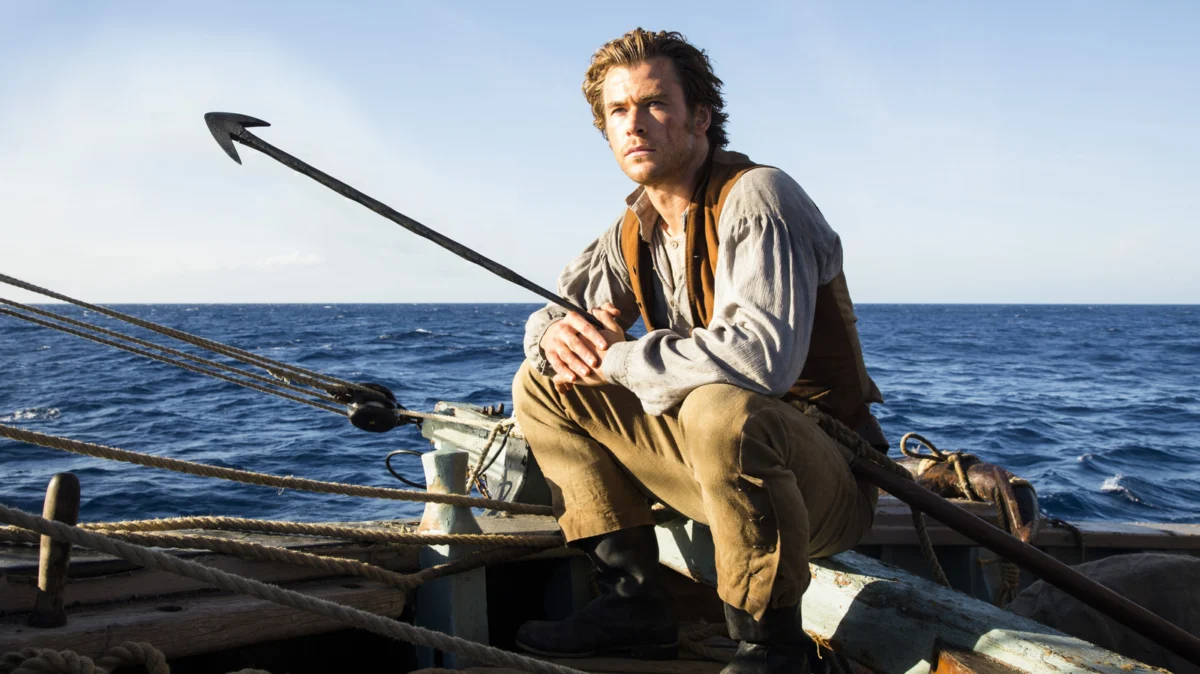
Before Tom Holland donned the iconic red-and-blue spandex to swing through the streets of Queens as Spider-Man, and before Chris Hemsworth became synonymous with the thunderous power of Thor, the two shared the screen in a high-stakes, maritime historical drama that promised a blockbuster spectacle but delivered a sobering, atmospheric meditation on survival. Ron Howard’s 2015 feature, In the Heart of the Sea, remains a fascinating cinematic anomaly—a film that attempted to bridge the gap between historical tragedy and the literary legend that it birthed.
The Genesis of a Maritime Epic
Released in December 2015, In the Heart of the Sea was directed by Academy Award-winner Ron Howard, whose filmography ranges from the gripping space-race drama Apollo 13 to the high-stakes thrills of Rush. Rather than offering a direct adaptation of Herman Melville’s 1851 literary masterpiece Moby-Dick, Howard chose a more indirect path. He adapted Nathaniel Philbrick’s 2000 non-fiction bestseller, In the Heart of the Sea: The Tragedy of the Whaleship Essex.
The film utilizes a clever, if divisive, narrative framing device. Set in 1850, the movie features a young Herman Melville (played by Ben Whishaw) seeking out the last survivor of the Essex disaster, an aging Thomas Nickerson (Brendan Gleeson). Through these bookend sequences, the audience learns how the real-life maritime catastrophe served as the primary inspiration for Melville’s white whale. The bulk of the film, however, transports the viewer back to 1820, detailing the doomed voyage of the Essex and the harrowing aftermath that followed an encounter with an enraged, albino sperm whale.
A Convergence of Future Superstars
For modern audiences looking back at the cast list, the film serves as a "who’s who" of contemporary franchise icons. Beyond the central pairing of Chris Hemsworth and Tom Holland, the film boasts a staggering collection of talent:
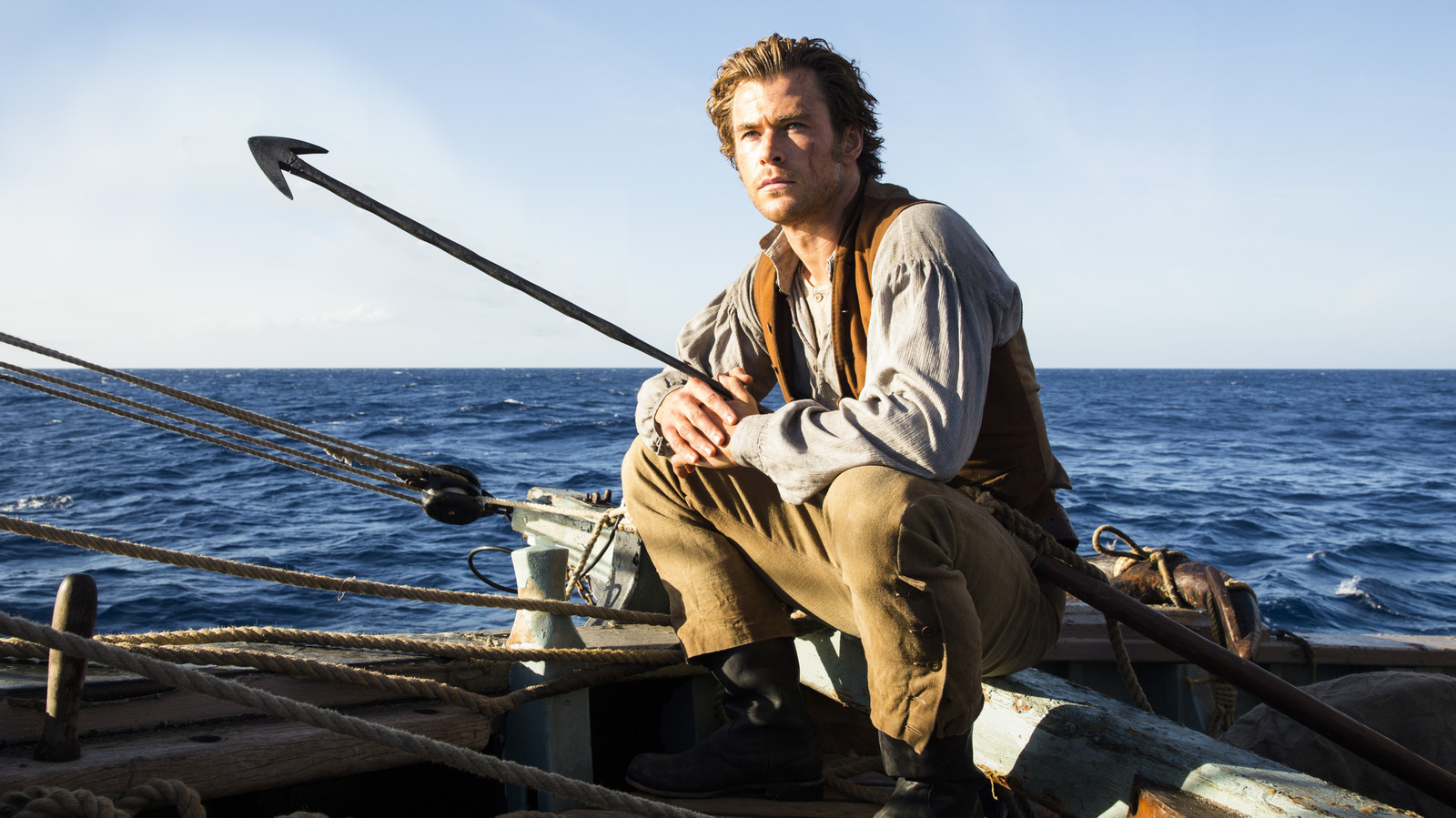
- Chris Hemsworth: Playing the first mate, Owen Chase, Hemsworth shed his superhero physique to portray a rugged, hardened 19th-century seaman.
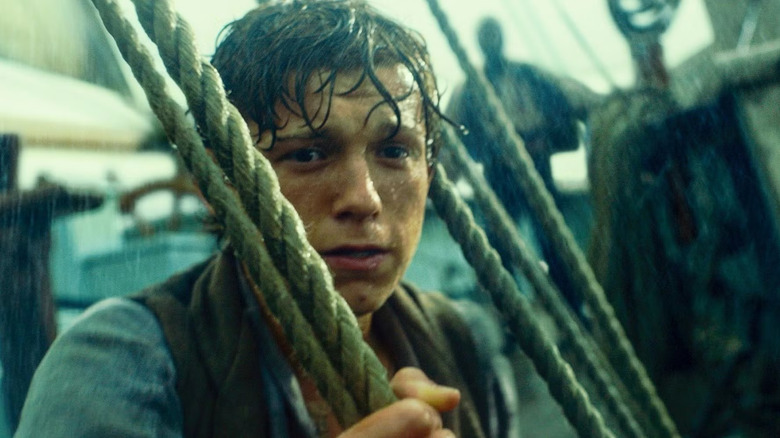
- Tom Holland: In one of his earliest major roles, Holland plays the young cabin boy Thomas Nickerson, providing the audience with a youthful, vulnerable perspective on the trauma of the voyage.
- Cillian Murphy: The Oppenheimer star appears as Matthew Joy, the ship’s second mate, adding a layer of gravity and intensity to the ensemble.
- Ben Whishaw: Best known as the tech-savvy "Q" in the Daniel Craig James Bond era, Whishaw provides the intellectual curiosity of Melville.
- Brendan Gleeson: The Harry Potter veteran provides the emotional anchor as the haunted, elderly survivor.
This convergence of talent makes the film a unique historical footnote—a "what if" scenario where the gods of the Marvel Cinematic Universe and the titans of prestige drama collide on the open ocean.
Chronology of the Tragedy: From Nantucket to the Pacific
The narrative of In the Heart of the Sea follows a linear progression of escalating misfortune, grounded in the historical records of the Essex.
The Departure (1820)
The story begins in Nantucket, Massachusetts, the epicenter of the whaling industry. The ship Essex is prepared for a voyage in search of whale oil, a vital commodity of the era. The internal friction of the film is established early: Captain George Pollard Jr. (Benjamin Walker), a man of high lineage but questionable experience, is forced to share authority with Owen Chase (Hemsworth), a naturally talented but lower-born mariner.
The Encounter
The voyage initially yields little success, leading the crew to cross the Atlantic and round Cape Horn into the Pacific Ocean. Their discovery of a massive pod of whales is met with success until they cross paths with a rogue, white-skinned sperm whale of unprecedented size and intelligence. In a sequence that functions as the film’s centerpiece, the whale initiates a tactical, retaliatory strike, effectively sinking the Essex and leaving the crew stranded in the middle of the Pacific.
The Descent into Savagery
The remainder of the film chronicles the struggle for survival in three small whaleboats. As weeks turn into months, the film pivots from an adventure narrative to a harrowing survivalist horror. The crew faces starvation, dehydration, and the psychological breaking point of cannibalism. The narrative tension is sustained by the knowledge that while some will survive, the psychological scars will endure for a lifetime.
Supporting Data: Production and Performance
When analyzing the film’s performance, one must look at both the financial figures and the critical reception. With a production budget of approximately $100 million, In the Heart of the Sea carried the weight of high expectations. However, the film failed to capture the zeitgeist, grossing roughly $94 million globally.
Critical Reception
Critics were largely divided, resulting in a 42% approval rating on Rotten Tomatoes. The consensus often pointed to a disconnect between Howard’s direction and the tone of the material. While Howard is often praised for his technical prowess and humanistic storytelling, many critics felt the film was "dour" and "muddy."
Prominent critic Anthony Lane of The New Yorker provided a scathing critique of the film’s action sequences and digital cinematography. He noted that the reliance on CGI waves and erratic editing made the physical stakes feel less "real" than the practical, visceral filmmaking of the 1990s. The critique highlights a broader shift in the 2010s regarding how blockbuster action was constructed, often sacrificing clarity for sheer visual spectacle.
The Implications of the "First Draft" Concept
One of the most interesting aspects of the film is its thesis: that In the Heart of the Sea is essentially the "first draft" of Moby-Dick. By showing the historical reality—the cannibalism, the political infighting, and the mundane reality of the whaling industry—the film attempts to ground the literary myth in blood and salt.
However, this creates a thematic conflict. The film exists in a strange limbo: it is too grim to be a classic swashbuckling adventure, yet it is too tethered to historical record to lean fully into the allegorical, gothic terror that makes Moby-Dick a masterpiece. By framing the story through the lens of Melville’s creative process, Howard invites the audience to compare his film to the greatest novel of the sea ever written—a comparison that few films can survive.
Official and Industry Reflections
In the years since its release, the film has found a second life on streaming platforms, where audiences have revisited it with the benefit of hindsight. Chris Hemsworth’s performance, in particular, is often cited as a demonstration of his range beyond the "God of Thunder" archetype.
The failure of the film at the box office served as a warning to studios regarding the viability of mid-budget historical epics. In an era increasingly dominated by established IP and superhero sequels, a story about 19th-century whaling, while technically impressive, struggled to find a modern audience. The "flop" status of the film, as noted by recent industry analysis, also highlights the difficulty of marketing a film that is fundamentally about the futility of human ambition against the indifference of nature.
Conclusion: A Legacy of Ambition
In the Heart of the Sea remains a quintessential example of "noble failure" in Hollywood. It was an ambitious project with an incredible cast, a visionary director, and a profound source material. While it did not achieve the critical or commercial success its creators hoped for, it serves as a fascinating time capsule.
It captures Tom Holland on the cusp of superstardom, Chris Hemsworth proving he could carry a non-superhero lead, and Ron Howard attempting to modernize a classic American story. Though the film may be remembered as a "dour" or "baffling" entry in Howard’s career, its visual ambition and the sheer technical effort involved in recreating the whaling life of the 1800s demand respect. Ultimately, the film teaches us that while the sea may be vast and unforgiving, the stories we tell about it—whether on the page or on the screen—are defined by the humanity of those who survive the voyage.


 Nana
Nana
 Jia Lissa