Ali Ikhwan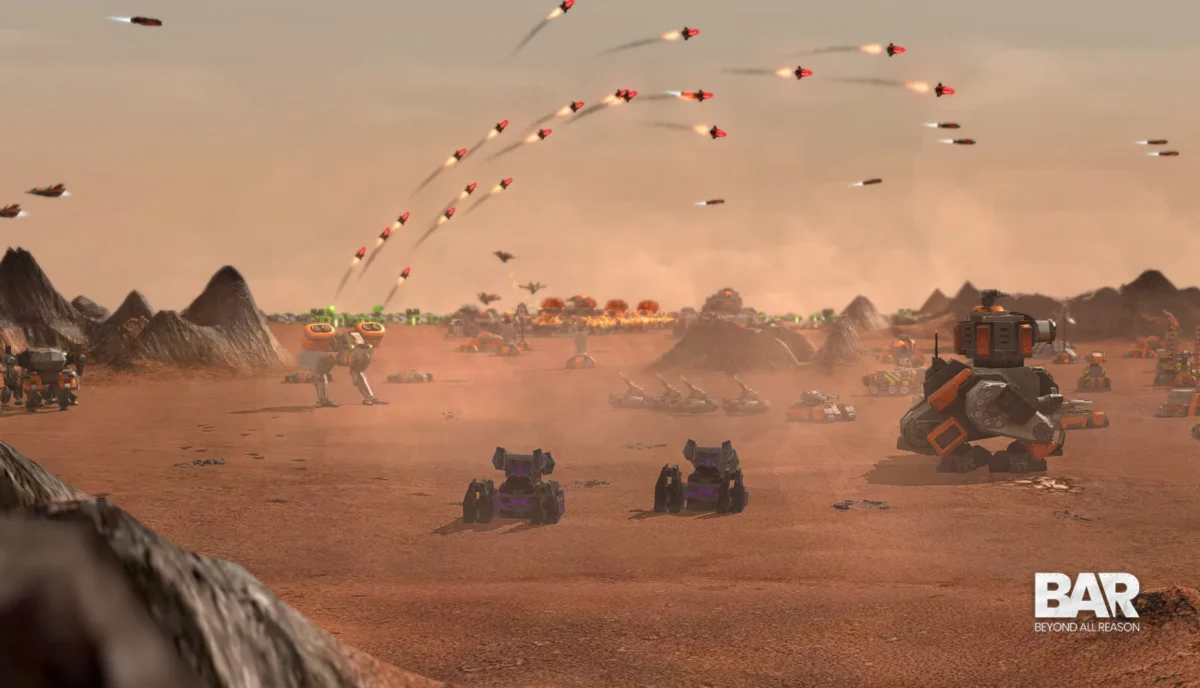
After seven years of relentless volunteer-led development, the acclaimed real-time strategy (RTS) project Beyond All Reason (BAR) has announced a watershed moment in its history. The team behind the game has officially entered into a publishing partnership with Hooded Horse, the industry-leading powerhouse known for its specialization in strategy and simulation titles. This move marks the transition of a grassroots, community-driven project into a professionalized entity, aiming to bridge the gap between hobbyist ambition and a commercial Steam release.
The announcement, which has rippled through the RTS community, promises to preserve the core values of the project—namely its open-source nature and free-to-play multiplayer model—while injecting the necessary resources to tackle the "unglamorous" work required for a polished, full-scale commercial launch.
Main Facts: A New Chapter for BAR
The partnership between Beyond All Reason and Hooded Horse is designed to solve a classic "indie paradox": how to maintain the creative velocity of an open-source community while securing the stability needed for a global commercial release.
Key tenets of the deal include:
- Intellectual Property: The BAR team retains full ownership of the project’s IP.
- Open-Source Commitment: The game’s code remains under the GPL license, ensuring the project remains open-source.
- The "Free Forever" Promise: The multiplayer experience remains free to play through the game’s existing official channels.
- Steam Strategy: A "BAR Premium Edition" will be launched on Steam. This version will feature additional single-player content and serve as a vehicle for the project’s long-term sustainability.
- Feature Parity: The team has confirmed that the Steam and non-Steam versions will share full feature parity, including cross-play, unified matchmaking, and shared server infrastructure.
Chronology: From Mod Roots to Market Force
The trajectory of Beyond All Reason is a testament to the power of community-driven development.
The Early Years (2017–2020)
Born from the legacy of titles like Total Annihilation and Supreme Commander, BAR emerged as a project focused on "epic scale" warfare. During its first few years, it existed primarily as a passion project for a small group of developers and contributors who shared a vision of a modern, highly responsive RTS that could handle thousands of units on screen simultaneously without the technical debt of aging engines.
Scaling the Community (2021–2023)
As the game matured, it gained traction on social media and gaming forums. The "volunteer-only" model proved remarkably successful, allowing the team to iterate rapidly on balance, visuals, and UI. During this period, the project transitioned from a niche mod-like experience to a standalone client, attracting a dedicated competitive player base that demanded higher stability and better onboarding.
The Professional Pivot (2024–2026)
By 2025, the team realized they had hit a ceiling. The "Steam Roadmap"—a list of requirements including a coherent campaign, professional-grade onboarding, QA, and release-wide coordination—proved too daunting for a purely volunteer-based structure. After months of deliberation and internal polling (which saw 68% of contributors approve the partnership), the team engaged with Hooded Horse.
Supporting Data and Strategic Rationale
Why does a successful, free-to-play project need a publisher? The BAR leadership provided a candid assessment of the project’s current state. They noted that while the volunteer model is perfect for "creating amazing things," it is inherently ill-suited for the "long, sustained, often unglamorous effort" required for a retail launch.
The "Volunteer Paradox"
In the world of open-source development, developers gravitate toward exciting technical challenges: writing new shaders, balancing unit stats, or creating new maps. They rarely volunteer for the tasks that keep a business afloat:
- Onboarding: Designing a seamless experience for new players who are unfamiliar with the complexities of "epic scale" RTS games.
- QA and Polish: The tedious, repetitive work of bug-squashing and performance optimization across a myriad of hardware configurations.
- Release Coordination: The legal, logistical, and marketing efforts required to manage a storefront presence on platforms like Steam.
By outsourcing these "unglamorous" tasks to Hooded Horse, the BAR developers are effectively purchasing the time and space to focus on what they do best: building the game’s core mechanics and content.
Official Responses: The Philosophy of Partnership
The decision to sign with Hooded Horse was not taken lightly. The BAR team emphasized that "safety provisions" were built into the contract to protect the project’s future, regardless of the partnership’s outcome.
From the BAR Team
In an official statement, the team described the partnership as "the single biggest step in BAR’s history." They highlighted that the decision was put to the community of contributors before any ink touched paper. By involving the people who actually write the code and create the assets in the decision-making process, the leadership ensured that the move to professionalization was a consensus-driven evolution rather than a top-down mandate.
The Hooded Horse Influence
Hooded Horse, led by CEO Tim Bender, has established itself as the "gold standard" for strategy publishers. Their portfolio—which includes titles like Manor Lords and Against the Storm—aligns perfectly with the ethos of Beyond All Reason.
Notably, this deal arrives on the heels of major financial shifts in the industry. Last month, Griffin Gaming Partners, where Tim Bender serves as an operating partner, announced a $100 million fund specifically for indie developers. This suggests that the partnership between BAR and Hooded Horse is part of a broader, well-capitalized strategy to elevate niche, high-potential indie projects into major market contenders.
Implications for the RTS Genre
The implications of this partnership for the broader strategy genre are significant.
The Future of Open-Source Commercialization
BAR is testing a hybrid model that could become a blueprint for other open-source projects. By maintaining a free-to-play, open-source core while offering a paid "Premium" version on Steam, they are creating a sustainable financial engine that doesn’t rely on predatory monetization like microtransactions or loot boxes. If successful, this could prove that "donations and premium convenience" are a viable alternative to the aggressive monetization schemes currently dominating the AAA space.
The "Epic Scale" Renaissance
The RTS genre has long been viewed by some analysts as "stagnant," with many developers fearing the technical complexity of large-scale unit management. Beyond All Reason has spent years perfecting its engine to handle thousands of units with minimal lag. With the marketing and QA backing of Hooded Horse, BAR is now positioned to bring this "epic scale" to a much wider audience, potentially reigniting mainstream interest in the RTS genre.
Community Trust
The biggest challenge moving forward will be maintaining community trust. The 32% of contributors who polled against the partnership will be watching closely to see if the "corporate" side of the game begins to overshadow the community-driven soul of the project. The team’s commitment to "full feature parity" and open-source licensing will be the primary metrics by which the success of this partnership is judged by the player base.
Conclusion: A New Horizon
As Beyond All Reason moves toward its full Steam release, it stands at the threshold of a new era. The project has moved past its infancy as a mod-like curiosity and is now preparing to compete on a global stage. By combining the agility of an open-source development team with the infrastructure of a specialized publisher, the creators of BAR are aiming for something rare in modern gaming: a professionalized, high-quality experience that never loses sight of its grassroots, community-first roots.
For fans of the genre, this isn’t just about a new game launching on Steam—it is a bold experiment in how the next generation of strategy games will be built, funded, and sustained. The dust of the battlefield is just beginning to settle, but for the team behind BAR, the war for the future of RTS has only just begun.

 Laily UPN
 Jia Lissa