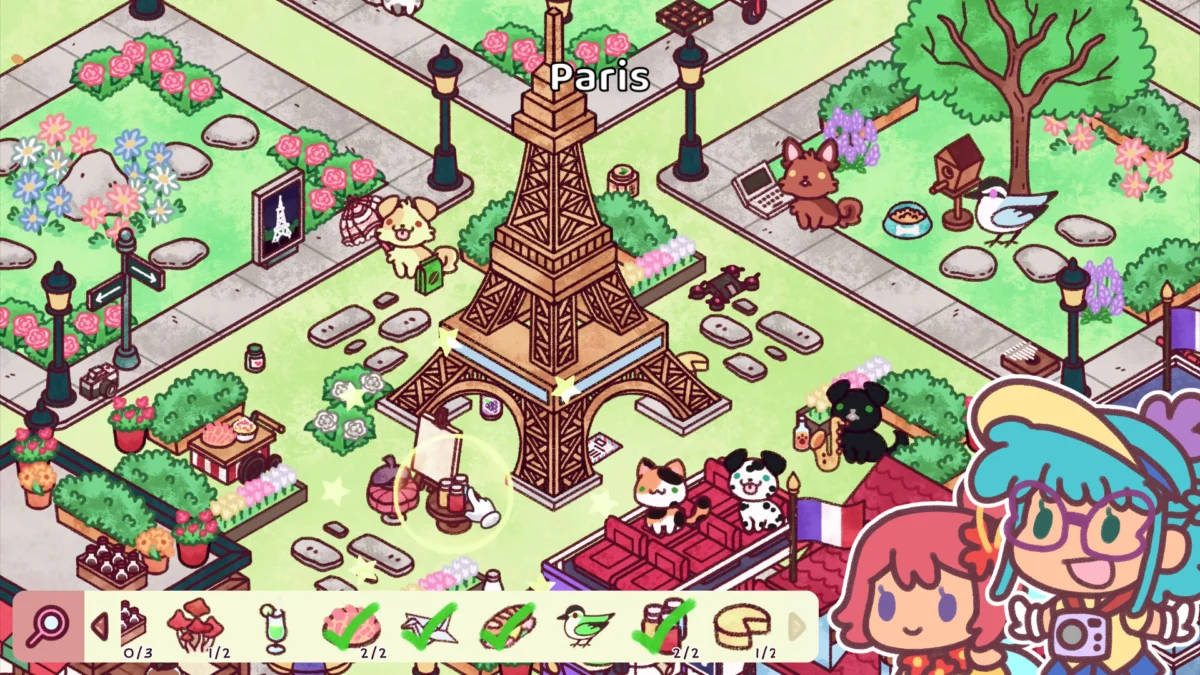
In the saturated landscape of casual gaming, the "hidden object" genre has long been defined by static images and repetitive "find-the-list" mechanics. However, a new contender has emerged to challenge these conventions. Hidden Around the World—a charming, hand-drawn puzzle experience—transcends the limitations of the traditional genre by transforming a simple search-and-find task into a tactile, imaginative, and deeply interactive journey.
By blending the meditative pace of a classic scavenger hunt with a robust, user-friendly creative suite, the game offers more than just a momentary distraction; it offers a digital playground. While the experience is not without its minor technical frictions, it stands as a testament to how "cozy" gaming can successfully marry aesthetic appeal with meaningful, player-driven agency.
The Core Experience: A World of Intricate Detail
At its heart, Hidden Around the World is an exercise in mindfulness. Players are invited to traverse beautifully rendered, hand-drawn interpretations of iconic global locales—from the neon-drenched alleys of Tokyo to the romantic, cobblestone streets of Paris. Unlike conventional games in this genre that rely on flat, static screens, Hidden Around the World demands a higher level of cognitive engagement.
The gameplay loop is deceptively simple: you are tasked with identifying specific items scattered throughout a bustling environment. However, the game eschews the "checklist" mentality that plagues its peers. Here, the world feels alive. Objects are not merely painted onto the background; they are integrated into the scene. You might find a key tucked behind a movable café chair, or a specific accessory hidden behind the shutter of a building. This design choice forces the player to slow down. It turns the experience into a thoughtful, deliberate scan rather than a frantic click-fest.
The game’s charm is amplified by its visual style. The hand-drawn aesthetics lend the title a warm, personal feel that makes the act of discovery feel rewarding. Each level is densely packed with personality, turning every search into a narrative exploration of the setting.
Interactive Mechanics: More Than Just a Point-and-Click
One of the primary factors that allows Hidden Around the World to distinguish itself is its interactivity. In many hidden object games, the player is a passive observer, clicking on items that are already visible if one looks hard enough. In this title, the player is an active participant.
The game encourages physical engagement with the environment. You are tasked with dragging, pushing, and shifting elements of the map to reveal what lies beneath. This mechanic elevates the game from a test of visual acuity to a test of spatial reasoning. You aren’t just looking for an object; you are curating the scene to make it visible.

However, this ambition comes with a slight trade-off. Because the game relies on precise interaction with multiple layers of objects, it can occasionally feel "fiddly." Lining up an interaction or moving a specific piece of scenery sometimes requires a level of pixel-perfect precision that can be frustrating, particularly during fast-paced moments or on devices with smaller displays. Despite these minor technical hurdles, the sheer satisfaction of "peeking" behind a building to find a hidden treasure remains a unique highlight of the game’s design.
The Sandbox Revolution: Building a Legacy
While the campaign offers a robust set of levels, the true longevity of Hidden Around the World lies in its "Sandbox Mode." This feature shifts the game from a consumer experience to a creator’s toolkit. Players are given access to a variety of assets and environmental pieces, allowing them to construct their own bespoke puzzles.
This is not merely a gimmick; the sandbox tools are surprisingly flexible and intuitive. They allow for a depth of complexity that challenges both the creator and the solver. In many ways, the game functions as a "digital toybox," encouraging players to share their creations with the wider community.
The implications of this mode are profound. By empowering the player base to generate content, the developers have ensured that the game’s lifespan is not dictated by the number of levels included at launch, but by the creativity of the users. Anecdotal evidence suggests this mode holds massive appeal across generations. From younger players finding joy in the simple act of placing objects, to adults crafting intricate, multi-layered puzzles for their families, the sandbox mode turns a solitary puzzle game into a social, collaborative activity.
Addressing the Technical Hurdles
Despite the critical acclaim surrounding its creative vision, Hidden Around the World is not without its flaws. In our analysis, two primary pain points emerged that may affect the user experience:
- Scaling and Visual Density: On smaller screens, the density of the hand-drawn art can become a disadvantage. Some items are inherently small or share color palettes with the background, making them exceptionally difficult to spot. This leads to a sense of frustration that is not necessarily a result of a "hard puzzle," but rather a limitation of the display.
- Interaction Precision: As previously mentioned, the "fiddly" nature of the game’s physics can be a drawback. In snapshot challenges, where speed or precise placement is required, the control scheme can feel slightly unresponsive or difficult to calibrate.
These issues, while minor in the context of the overall experience, are worth noting for players who may be sensitive to UI responsiveness. The developers have created a game that prioritizes charm and depth, but there is certainly room for optimization in terms of accessibility and precision controls.
Implications for the Genre
Hidden Around the World sits at an interesting intersection of genres. It carries the cozy DNA of titles like Unpacking or A Little to the Left, while maintaining the structural integrity of a classic hidden object game. Its success suggests a shift in the market: players are increasingly seeking games that allow them to be creative rather than just reactive.

The move toward "creative toybox" gameplay in the hidden object space is a significant trend. By providing tools for user-generated content, developers can foster long-term retention and build a community around the title. This not only increases the game’s value proposition but also creates a feedback loop where the game constantly refreshes itself with new, user-made content.
Chronology of Development and Release
The journey of Hidden Around the World highlights the current trend of indie developers focusing on high-quality, stylized aesthetics paired with deep, repeatable mechanics. Since its announcement, the game has been marketed as a "slow-burn" experience, contrasting sharply with the high-octane competitive titles that dominate the current market.
Following its initial release, the game received several patches aimed at refining the interaction mechanics. These early updates specifically targeted the "fiddly" aspects of moving objects, indicating a responsive development team committed to refining the user experience based on player feedback. The inclusion of the sandbox mode in the base launch was a pivotal decision, allowing the game to survive the post-launch "content drought" that often affects smaller indie titles.
Summary of Findings
Hidden Around the World is a charming, if occasionally imperfect, addition to the puzzle genre. Its primary strengths lie in its:
- Immersive Atmosphere: The hand-drawn art style provides a relaxing, cohesive visual identity.
- Tactile Gameplay: Moving beyond simple clicking adds a layer of depth that keeps the player mentally engaged.
- Creative Longevity: The sandbox mode is a standout feature that provides endless replayability and community engagement.
While the game struggles with some technical precision and visual scaling issues on smaller hardware, it succeeds in its primary goal: providing a cozy, thoughtful space for players to unwind.
Final Verdict
Ultimately, Hidden Around the World earns a solid 7.5/10. It is a title that shines brightest when the player is given the freedom to create. It is a game that respects the player’s time, asking them to observe rather than rush, and to build rather than just consume.
For fans of the hidden object genre looking for something with a bit more soul, or for anyone who enjoys "cozy" games with a creative twist, this title is well worth the investment. It may have a few rough edges, but its heart is firmly in the right place, offering a whimsical and rewarding escape from the stresses of the everyday world. As the genre continues to evolve, it is likely that Hidden Around the World will be remembered as a key stepping stone in the movement toward more interactive, player-driven puzzle design.